Cat Respiratory Rate: What’s Normal? (Vet Verified)

A cat’s breathing is usually quiet and subtle, which means changes in breathing patterns can be easy to overlook. However, a cat’s respiratory rate is one of the most useful indicators of overall health.
For cat parents – especially those caring for senior cats or cats with known heart or respiratory risk -understanding what is a cat’s normal respiratory rate and how to measure it at home can be extremely valuable. Monitoring your cat’s normal resting respiratory rate helps detect potential health issues earlier and provides helpful information for your veterinarian.
What’s The Normal Range For Cat Respiratory Rate?
A healthy cat respiratory rate at rest is typically 16–30 breaths per minute. This measurement should be taken while your cat is relaxed or sleeping, as activity or stress can temporarily increase breathing. A normal resting respiratory rate in cats should stay within this range. Consistently higher rates may indicate pain, respiratory illness, or heart disease and should be evaluated by a veterinarian.
Key Takeaways
- The normal cat respiratory rate at rest is usually 16–30 breaths per minute.
- Breathing should be measured while your cat is fully relaxed or sleeping.
- Temporary increases can occur with exercise, stress, or heat.
- Persistent increases in respiratory rate may signal heart disease, respiratory illness or foreign bodies, or pain.
- Tracking resting respiratory rate trends over time is one of the most effective ways to detect health changes early.
What Is a Normal Cat Respiratory Rate?
The normal cat respiratory rate refers to the number of breaths a cat takes per minute while resting. For most healthy cats, the typical range is below 30 breaths per minute at rest.
Breathing is usually quiet and steady. You may only notice the gentle rise and fall of your cat’s chest.
Several factors can temporarily influence breathing rate, including:
- Physical activity
- Stress or excitement
- High environmental temperatures
- Mild discomfort
Because of these factors, veterinarians recommend measuring the normal resting respiratory rate in cats when the cat is sleeping or deeply relaxed.
If your cat consistently breathes faster than 30 breaths per minute while resting, it may indicate a health issue that requires closer observation or veterinary evaluation.
How to Measure Your Cat’s Respiratory Rate at Home
According to VCA hospitals, learning how to measure your cat’s breathing is simple and can provide important health insights.
Follow these steps to measure cat respiratory rate accurately:
1. Wait until your cat is asleep or very relaxed
Breathing rates are most accurate during true rest or sleep.
2. Watch the chest movement
Observe the rise and fall of your cat’s chest or abdomen.
3. Count breaths for 30 seconds
Each full rise and fall counts as one breath.
4. Multiply by two
This gives you the number of breaths per minute.
For example:
- 10 breaths in 30 seconds = 20 breaths per minute
- 14 breaths in 30 seconds = 28 breaths per minute
5. Track the number over time
Recording measurements over several days helps establish your cat’s personal baseline.
Regular monitoring helps you recognize subtle increases in normal resting respiratory rate in cats before other symptoms appear.
“Every time Umi is hospitalized, it’s for like four days and it costs over $5,000… Maven has helped me not only save money but also save his life”

★★★★★
Jessica Ortiz
Umi
What Causes an Elevated Cat Respiratory Rate?
An elevated cat respiratory rate can have many possible causes. Some are temporary and harmless, while others may require veterinary care.
Common causes include:
Stress or Anxiety
Cats may breathe faster during stressful events such as:
- Travel
- Vet visits
- Loud noises
- Changes in their environment
Heat or Overheating
Warm temperatures can increase breathing rate as cats attempt to regulate body temperature.
Pain or Injury
Pain from injury, illness, or surgery can increase respiratory rate.
Respiratory Conditions
Problems affecting the lungs or airways may cause breathing changes, including:
- Asthma
- Respiratory infections
- Pneumonia
- Fluid accumulation in the lungs
Heart Disease
Certain heart conditions can cause fluid buildup around the lungs, making breathing more difficult and increasing the respiratory rate.
Systemic Illness
Conditions such as anemia or metabolic disease can also affect oxygen levels and breathing patterns.
“Even small increases in a cat’s resting respiratory rate can signal early heart or lung disease. Tracking trends over time is far more valuable than relying on occasional spot checks.” — Sara Leitão, DVM, Veterinarian at Maven Pet
Because respiratory changes can occur gradually, tracking patterns over time is often more informative than a single measurement.
When Should You Worry About Breathing Changes?
Not every change in breathing is an emergency, but certain signs should prompt immediate attention.
You should contact a veterinarian if your cat shows:
- Rapid breathing that continues for several hours
- Visible breathing effort or labored breathing
- Open-mouth breathing or panting
- Blue or pale gums
- Severe lethargy or weakness
These symptoms may indicate oxygen deprivation. When in doubt, it’s always safest to consult a veterinarian for guidance.
How Maven Helps Monitor Respiratory Health
Manually counting breathing occasionally can be helpful, but subtle changes are easy to miss. Respiratory rates can fluctuate throughout the day, and measurements taken when a cat is awake may not reflect true resting values.

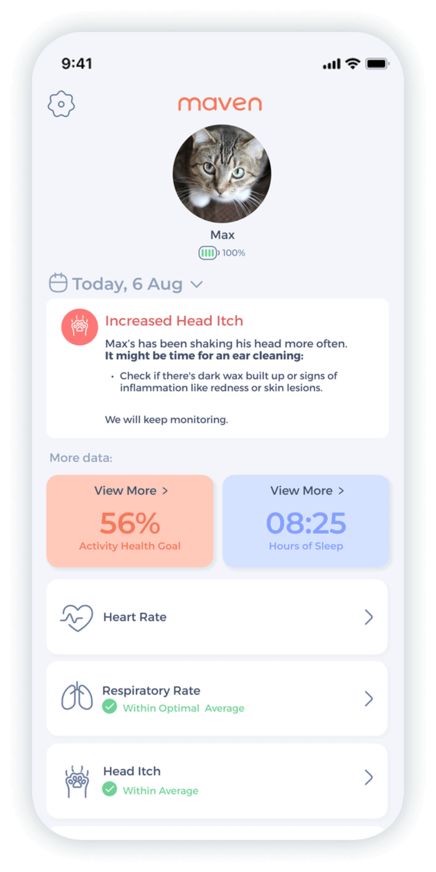
Monitor heart rate, respiratory rate, activity & rest, itch behavior.
The Maven Pet Health Monitor continuously tracks important health metrics, including:
- Resting respiratory rate
- Heart rate
- Activity levels
- Rest patterns
- Scratching behavior
Maven measures breathing during true sleep, when respiratory patterns are most stable. Over time, the system builds a personal baseline for your cat.
If your cat’s resting respiratory rate rises above its normal pattern, owners receive alerts that may indicate:
- Early heart disease
- Respiratory illness
- Pain or discomfort
- Stress or environmental changes
By identifying gradual increases rather than isolated measurements, Maven helps detect health issues earlier than manual counting alone.
FAQ (Vet-Reviewed)
A normal cat respiratory rate at rest is typically 16–30 breaths per minute. Measurements should be taken while the cat is sleeping or completely relaxed.
Watch your cat’s chest rise and fall while they are resting. Count the number of breaths in 30 seconds, then multiply by two to determine breaths per minute.
An elevated resting respiratory rate may occur due to stress, heat, pain, respiratory illness, or heart disease. If breathing remains elevated while your cat is resting, veterinary evaluation is recommended.
You should contact a veterinarian if your cat’s respiratory rate consistently exceeds 30 breaths per minute, or if rapid breathing occurs alongside symptoms such as lethargy, open-mouth breathing, or gum color changes.
Conclusion
Understanding your cat’s respiratory rate is one of the simplest and most valuable ways to monitor their health at home. A normal resting respiratory rate in cats generally falls between 16 and 30 breaths per minute, and consistent increases can provide an early clue that something may be wrong.
Regularly measuring breathing during true rest or sleep helps establish a reliable baseline for your cat. Over time, tracking respiratory rate trends can reveal subtle changes long before other symptoms develop.
Whether measured manually or monitored with tools like the Maven Pet Health Monitor, paying attention to breathing patterns allows cat owners to detect potential health issues earlier—and seek veterinary care when it matters most.
Maven Pet focuses on improving the quality of life of our pets with technology, using artificial intelligence (AI) to enable proactive pet care. By accurately collecting and monitoring pet data 24/7 and flagging any irregularities, Maven Pet empowers pet parents and veterinarians to stay ahead of potential health issues, ensuring the well-being and longevity of our beloved companions.