Heart disease in dogs stays quiet, until these signs show up.
Heart disease in dogs happens when the heart can't pump blood as efficiently as it should, most often from mitral valve disease (MMVD) or dilated cardiomyopathy (DCM). Both usually progress silently for months before any symptoms appear. Maven's dog health tracker clips onto your dog's existing collar and tracks resting respiratory rate, heart rate, sleep, and activity every night, so you catch changes before they become a crisis.
Heart disease in dogs shows up in the data first.
We looked at 2,533 dogs, healthy and cardiac. These three numbers are among the earliest signs of heart disease in dogs, long before an owner would notice by watching. The pattern covers the main dog heart conditions in our study.
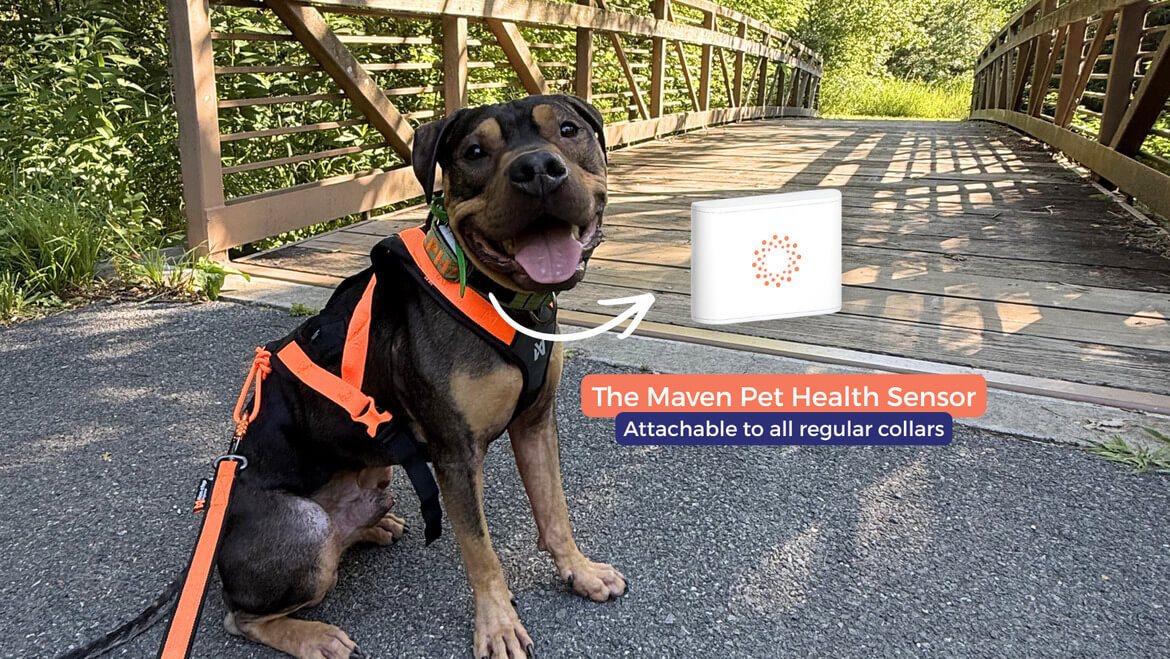
Signs of heart disease in dogs
These are the changes that tend to show up first, usually gradual enough to explain away as "just getting older." If they escalate into heart failure, rapid breathing at rest, severe lethargy, or collapse, that's an emergency: get to a vet immediately, don't wait to see if it passes.
Breathing faster at rest
When a dog is truly resting, you might notice the chest rising more than usual. A higher resting respiratory rate can signal fluid in or around the lungs.
Resting heart rate creeping up
Subtle increases over days or weeks matter. Trending up can be an early clue the heart is working harder.
Exercise intolerance
Shorter walks, more stopping, or skipping play. Parents often describe it as "he just seems tired" or "she won't chase like before."
Common heart conditions in dogs
"Heart disease" is the umbrella term. Here's what usually falls under it, and where to look for more detail on each.
Heart murmur
An abnormal sound your vet hears through a stethoscope, graded 1 to 6. Not a disease itself, but often the first clue of MVD.
Watch for: usually no symptoms at low grades, found at a routine exam.
Mitral valve disease (MVD)
A leaking heart valve, the top cause of heart disease in small and medium breeds like Cavaliers and Dachshunds.
Watch for: gradual exercise intolerance, a rising resting breathing rate.
Dilated cardiomyopathy (DCM)
A weakening heart muscle, most common in large and giant breeds, that reduces how efficiently the heart pumps.
Watch for: lower stamina, a higher resting heart rate, a swollen belly.
Congestive heart failure (CHF)
What happens when heart disease progresses far enough that fluid builds up around the lungs or belly.
Watch for: a persistent cough, rapid breathing at rest. Collapse is an emergency.
How vets diagnose heart disease in dogs
A murmur or a symptom you've noticed at home is a starting point, not a diagnosis. Confirming what's actually going on, and how advanced it is, usually involves a combination of these.
Physical exam and history
The starting point. Your vet listens with a stethoscope for a murmur or irregular rhythm and asks about symptoms you've seen at home.
Chest X-rays
Show the heart's size and shape, and reveal whether fluid has started building up in or around the lungs.
Echocardiogram
An ultrasound of the heart. Watches blood flow in real time to evaluate valve and muscle function, usually the test that confirms staging.
ECG (electrocardiogram)
Measures the heart's electrical activity to catch arrhythmias, an irregular rhythm that a stethoscope alone can miss.
Blood pressure and bloodwork
Rules out or identifies contributing factors, like high blood pressure, thyroid disease, or heartworm infection.
Referral to a cardiologist
For advanced or unclear cases, a veterinary cardiologist can run more specialized imaging and recommend a treatment plan.
These tests capture a single moment in time, usually a stressful one at the clinic. Maven fills the gap between visits with nightly trend data your vet can act on, not a replacement for diagnosis, but context no single appointment can give them.
Turn "something feels off" into clear next steps.
Maven learns your dog's personal normal, then watches for meaningful changes. When something drifts, you get a friendly insight and what to do next.
Resting Respiratory Rate (RRR)
Looks for sustained increases that can suggest fluid build-up. You get context like "above your dog's usual" instead of random numbers.
Resting Heart Rate (RHR)
Watches for a persistent climb that may indicate the heart is under strain. Updates through the day when your dog is still.
Activity and exercise intolerance
Sees if walks are getting shorter or play is fading. Helpful for MMVD and DCM, where stamina changes early.
Night Insights
Flags disrupted nights and clusters of wake-ups that often pair with cough or breathing effort.
Monthly vet-ready reports
Weeks of trend data on breathing, heart rate, and activity, ready to download or share at every cardiology appointment.
Personalized alerts
No generic ranges. Maven compares today to your dog's usual, so a real shift stands out from normal day-to-day noise.
Does Maven's sensor actually measure what your vet needs it to?
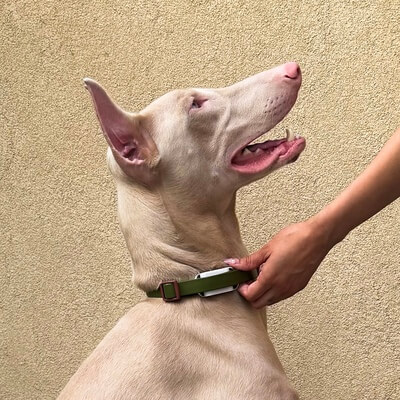
Does the sensor agree with a vet's manual count?
Independent researchers tested Maven's resting respiratory rate readings against the clinical gold standard: manual breath counts from video-recorded dogs at rest. The study covered 19 healthy dogs across 120 paired measurements.
The result: a bias of just −0.78 breaths per minute compared to manual counts, with 95% limits of agreement of −6.81 to 5.26 breaths/min. Close enough to trust for day-to-day trend tracking, which is exactly what it's used for.
How to check your dog's breathing rate at home
Resting respiratory rate (RRR) is the single most useful number for catching heart disease early, and vets will often ask you to track it yourself. Here's the method they'll walk you through.
Not just lying down, actually still and settled, and not panting from heat or activity. A reading taken any other time won't be accurate.
One full rise and fall of the chest counts as one breath. Use a timer or your phone's stopwatch.
That gives you breaths per minute. For example, 11 chest rises in 30 seconds is 22 breaths per minute.
One reading tells you almost nothing. A trend over days and weeks is what actually matters, which is also where this gets hard to keep up manually.
What your vet asked you to do at home, and why most people quietly stop.
Wait until your dog is fully asleep, count chest rises for 30 seconds, multiply by two, write it down, every night. It's hard to do consistently, and the vets know it.
Set it up tonight. Your dog's baseline is ready in a week.
Attaches to whatever collar your dog already wears. Small, light, and most dogs stop noticing it within an hour.
The first week, Maven learns what normal looks like for your specific dog, so later alerts mean something.
If breathing, heart rate, or activity drifts from your dog's personal normal, you get a notification, with enough time to act before it becomes urgent.
Download a monthly health report PDF covering activity, heart rate, breathing rate, and sleep. Walk in with actual trend data instead of a vague impression.

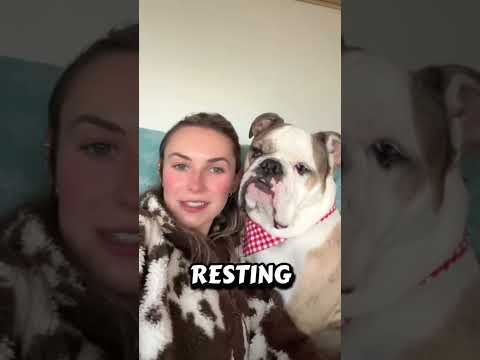

What heart-disease dog parents say about Maven
"The tracker is really impressive. My dog has heart disease, and I wanted a way to stop worrying about his breathing day to day. Maven has been the perfect solution. It's already given me peace of mind, and I recommend it to anyone with an older pet or health concerns."
"About a month ago my dog was diagnosed with CHF and a murmur. The vet told me to get a cardio and respiratory tracker that cost almost $400. After doing my own research I found Maven. This tracker is affordable, accurate, and sends alerts when needed so I can take emergency action if I need to."
"My dog has mitral valve disease. Instead of guessing I know exactly how he's doing every day. If there's even a slight shift in his breathing I have the data to act immediately and advocate for him at the vet."
FAQs about heart disease in dogs
Can you prevent heart disease in dogs?
Not entirely, inherited valve disease in predisposed breeds can't be avoided outright. But several things measurably lower the risk or catch it earlier, when treatment options are still widest open.
Regular wellness exams
Annual or twice-yearly vet visits catch a new murmur before it's a symptom. Ask about early screening if your breed is predisposed.
Heartworm prevention
Monthly preventives protect against heartworm disease, a preventable parasite infection that damages the heart and major vessels.
Quality diet and healthy weight
Extra weight adds strain to a heart that's already compensating. Ask your vet before switching to boutique or grain-free diets.
Dental care
Severe untreated periodontal disease lets bacteria travel from the mouth to the heart valves. Routine cleanings are cheap insurance.
Know your dog's breed risk
Cavaliers, Dachshunds, and Chihuahuas skew toward MVD. Boxers, Dobermans, and Great Danes skew toward DCM. Ask your vet what that means for screening.
Track vitals between visits
The earlier a change is caught, the more treatment options stay on the table. That's the gap continuous monitoring is built to close.
Start monitoring your dog's heart tonight
Maven is $13.99 a month with the sensor included. 30-day risk-free return policy.
Plans cover 1 pet. 2 and 3 pet options available at checkout. The sensor fits most standard collars and works for both dogs and cats.
Keep learning about heart health in dogs
Everything from spotting the first signs, to understanding what a diagnosis actually means, to what changes day to day life. Written by our in-house veterinarians.
Catch heart disease in dogs before it catches them.
Heart disease in dogs does not wait for your next appointment. Start tracking resting respiratory rate, resting heart rate, sleep, and activity today. See small changes early and walk into the clinic with confidence.
Explore Dog Health Tracker30-day risk-free return policy · Free worldwide shipping · 6-month minimum commitment