Save 30%! Subscribe to the Annual Plan for just $13.99/month!
Save 30%! Subscribe to the Annual Plan
for just $13.99/month!
Clinically validated

What is a normal resting respiratory rate for dogs and how do you actually track it?

A normal resting respiratory rate for dogs is 15 to 30 breaths per minute, measured while your dog is fully relaxed or asleep. Anything consistently above 30 breaths per minute at rest is a signal to call your vet. Above 40 is urgent. Maven Pet tracks this automatically on the collar so you get a nightly baseline you can share with your veterinarian.

★★★★★ 4.7/5 on Trustpilot
Trusted by 1,000+ families
The Maven Study, 2026

The normal respiratory rate for dogs, measured across 2,533 dogs.

The normal respiratory rate for dogs is one of the most commonly asked questions in veterinary care, and an important vital to monitor 24/7. Here's the number, the range, and the line where a healthy dog breathing rate ends.
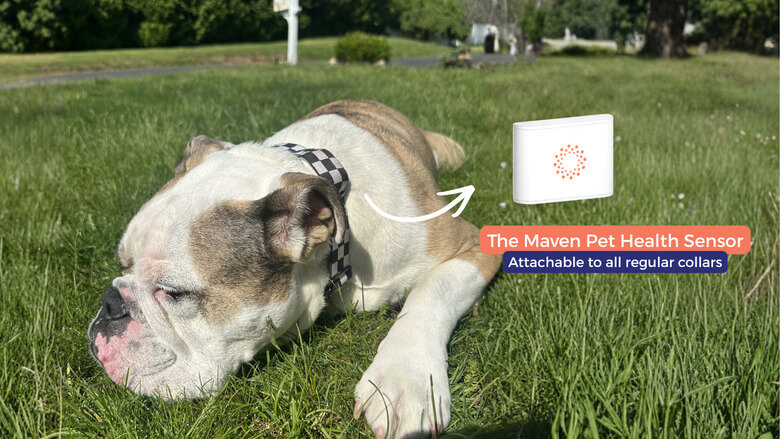
Dog wearing a collar with the Maven Pet sensor attached
The Normal Number
14
breaths per minute
The typical normal respiratory rate for dogs, at any size.
In our study of 1,376 healthy dogs, the median resting respiratory rate for dogs was 14.4 breaths per minute. Mini dogs averaged 14.8. Small, medium, and large dogs all sat between 14.1 and 14.6. Unlike heart rate, dog breathing rate barely changes with body size. A healthy Chihuahua and a healthy Great Dane breathe at nearly the same rate at rest.
The Normal Range
11-20
breaths per minute
The healthy range from the 10th to 90th percentile.
Not every healthy dog breathes at exactly 14 breaths per minute. In our study, 80% of healthy dogs fell between 11 and 20 dog breaths per minute at rest. Your dog's personal normal sits somewhere in that range, and knowing yours is what makes any change meaningful.
The Line To Watch
30
breaths per minute
The threshold above which vets want to hear from you.
A sustained resting respiratory rate above 30 breaths per minute is the veterinary red flag every cardiologist watches for, especially for dogs with known heart or lung conditions. In our study, only 0.5% of healthy dogs lived above this line. If throughout the day or night your dog is above 30 breaths per minute at rest, it's time to call the vet.
Do you know your dog's normal?
Counting breaths by hand is possible, but hard to do consistently. Maven learns your dog's personal normal in the first week and monitors it every night, so you always know when something changes.
See Your Dog's Numbers →
About the data. Findings from Maven Pet's June 2026 population study of the normal respiratory rate for dogs. 2,533 dogs analyzed via continuous at-home monitoring. Healthy cohort (1,376 dogs) defined as no chronic conditions declared at onboarding. Measurement begins only after 15 continuous minutes of stillness, mirroring the veterinary sleeping-respiratory-rate standard. Median values are expressed with decimals to show population-level differences across body sizes. Any individual per-minute reading will always be a whole number (e.g. 14 or 15 breaths).
The basics every dog parent should know

What is the normal resting respiratory rate for dogs?

Resting respiratory rate is how many breaths your dog takes per minute while asleep or fully relaxed. Normal is 15 to 30 breaths per minute. For dogs with heart conditions, it's the number one thing your vet wants you to track at home.

10-15
bpm
Watch
Low-normal

Generally fine. If you're consistently seeing below 10 bpm alongside lethargy or weakness, reach out to your vet.

15-30
bpm
Normal range
Healthy at rest

This is the healthy target zone. A normal dog respiratory rate at rest sits comfortably in this range while sleeping.

30+
bpm
Talk to your vet
Elevated

Consistently above 30 bpm at rest is a warning sign. Over 40 bpm needs urgent attention. Don't wait on this one.

"Maven is truly amazing. As a pet parent who has literally sat there counting breaths, it is a huge weight off my shoulders."

Michelle M. -- Verified Trustpilot
Why it matters

Why monitoring your dog's resting respiratory rate could save their life

Changes in breathing rate often show up days before any visible symptom. For dogs with heart disease, catching that trend early gives your vet time to adjust medication instead of responding to a crisis. The cards below show exactly why it matters for specific conditions.

🫀

Heart murmurs and MVD

A rising resting respiratory rate is often the first sign fluid is building around or inside the lungs. Early detection means medication adjustment, not an ER visit.

🫁

CHF management

When your dog is on diuretics for congestive heart failure, tracking RRR trends tells you and your vet whether the treatment is actually working.

📊

Data your vet can actually use

Maven generates a monthly health report PDF covering all of your dog's tracked signals. Bring real trend data to your next cardiology appointment instead of just saying "she seems okay."

🔔

Personalized alerts for your dog

After 7 days, Maven knows what's normal specifically for your dog. If their breathing rate starts creeping up, you get an alert before you'd ever notice it yourself.

Manual vs. automated

How to measure your dog's resting respiratory rate (and why most people give up)

The manual method: wait until your dog is asleep, creep over, stay completely still, count chest rises for 30 seconds, multiply by two. Except your dog woke up when you walked over. Start again. This is what vets ask people to do every day at home, and it just doesn't stick.

Manual counting
You have to catch your dog sleeping and stay perfectly still nearby
Your dog wakes up the second you approach, reading ruined
One spot check tells you nothing about what happens overnight
No trend data to bring to the vet
Most dog parents give up within a week because it's exhausting
Maven Pet tracker
Clips to your dog's existing collar and runs all night without disturbing them
Lightweight sensor your dog forgets is there within the first hour
Catches overnight spikes your eyes would never see
Weekly RRR trend charts ready to share at every vet visit
Alerts you when your dog's breathing goes above their personal baseline
How it works

Set it up tonight. Your dog is monitored by morning.

1
Clip the sensor to your dog's collar

The sensor attaches to whatever collar your dog already wears. It's tiny and lightweight. Most dogs stop noticing it within an hour.

2
Let your dog wear it for 7 days

Maven spends the first week learning what's normal for your dog specifically, not some generic average. Your dog, their baseline.

3
Check the trends anytime

The app shows your dog's daily and weekly respiratory rate patterns in plain language. Breathing higher than usual? You'll get a notification.

4
Bring real data to your vet

Download your dog's monthly health report PDF directly from the app, or share trend charts on the spot. Show up to cardiology appointments with actual numbers.

Real dog parents, real stories

Watch Maven in the real world

Maven Pet dog parent story
Dog parent story
Maven Pet in action
Maven in action
Maven Pet review
Pet parent review
Real dog parents, real results

What dog parents say about tracking resting respiratory rate with Maven

★★★★★

"My 12-year-old was diagnosed with a heart murmur and MVD. Now I can actually see when he's within a safe resting respiratory rate or when he's creeping into unsafe territory and make a better call about what to do."

★★★★★

"My dog has mitral valve disease. Now instead of guessing I know exactly how he's doing every day. If there's even a slight shift in his breathing I have the data to act immediately and advocate for him at the vet."

★★★★★

"We noticed he was having resting respiratory spikes, which gave me something concrete to bring up with his vet. It's given me real peace of mind as he gets older. I can't imagine not having it."

★★★★★

"I asked how to export my dog's respiratory rate data to a spreadsheet to send to the vet. They sent me an Excel file right away. My vet found it so much more useful than screenshots."

Rated 4.8 out of 5 on Trustpilot based on 366 reviews
The Research

Can you actually trust the number on the app?

A dog with a Maven sensor
Real dogs. At rest. At home. The normal respiratory rate for dogs, measured every night.

Fair question. If your vet has asked you to track your dog's resting respiratory rate at home, the number needs to be right. A cardiology team at the University of Florida decided to check.

Independent vets counted 19 dogs' breaths by hand, the old-fashioned way. At the same moment, the Maven sensor was doing its own count. Across 120 side-by-side checks, the sensor and the vet landed on almost the same number. Big dogs, small dogs, fluffy, sleek. Same result.

Read the study AJVR · January 2026
19
Dogs in the study, across 13 different breeds
120
Side-by-side checks, sensor vs. a real vet counting
<1breath
Average gap per minute between the sensor and the vet
Common questions

Everything about dog resting respiratory rate

A normal resting respiratory rate for dogs is 15 to 30 breaths per minute, measured while your dog is fully relaxed or asleep. Small dogs and puppies sit toward the higher end. Larger and older dogs toward the lower end. Anything consistently above 30 at rest is worth a call to your vet. Above 40 at rest needs same-day attention.
A dog breathing fast at rest may be signaling heart disease, respiratory illness, pain, fever, or heatstroke. Normal resting breathing is 15 to 30 breaths per minute. A sustained rate above 30 while your dog is calm or asleep should always be checked by a vet. Excitement, exercise, or a warm room can briefly raise the number and is usually not a concern.
Heavy or labored breathing while your dog is resting can point to fluid around the lungs, respiratory infection, anemia, or heart failure. Watch for visible chest and belly effort, blue or grey gums, or an extended neck posture. If any of these appear, or if the rate stays above 30 breaths per minute for more than an hour at rest, contact your vet the same day.
Dogs often breathe faster during REM sleep, and this typically passes within a few minutes. If your dog's rate stays above 30 breaths per minute during deep, quiet sleep across multiple nights, that pattern is worth reporting to your vet. Persistent fast breathing in sleep is one of the earliest signs of fluid buildup in dogs with heart disease or congestive heart failure.
Labored breathing in dogs looks like visible effort in the chest and belly, an open mouth at rest, an extended neck, flared nostrils, or noisy breath sounds. It is different from normal panting after exercise. Labored breathing at rest is always a veterinary emergency and needs same-day attention. Do not wait to see if it resolves on its own.
A healthy dog takes 15 to 30 breaths per minute at rest. Puppies and small breeds tend toward the higher end. Larger and older dogs tend toward the lower end. Count only while your dog is calm, sleeping, or fully relaxed. Numbers taken after exercise, excitement, or in a warm room will read higher and are not a reliable measure of your dog's normal.
Wait until your dog is fully asleep. Watch the chest rise and fall. Count one full rise-and-fall as one breath. Count for 30 seconds and multiply by two. That number is the resting respiratory rate in breaths per minute. In practice, most dogs wake up when you get close, which is why Maven Pet tracks it passively through the collar sensor.
One elevated reading is not always an emergency. A warm room, excitement, or a dream can briefly push breathing up. What matters is a consistent pattern. If your dog's resting rate stays above 30 breaths per minute across multiple hours or nights, call your vet. If it stays above 40 at rest, contact the vet the same day. Maven Pet alerts you when the pattern shifts.
Resting respiratory rate is one of the earliest signs of fluid building up in the lungs in dogs with heart murmurs, mitral valve disease, or congestive heart failure. Home monitoring catches that trend days before visible symptoms appear. Vets only see your dog a few times a year. Daily home data gives them the context to adjust medication before a crisis develops.
Panting is open-mouth breathing dogs use to regulate body temperature after exercise, in the heat, or when stressed. Fast breathing at rest, with a closed mouth or without a clear trigger, is a different signal that may point to pain, heart disease, or respiratory illness. Sustained fast breathing at rest above 30 breaths per minute is worth a same-week vet call.
Maven Pet's sensor clips to your dog's collar and uses a gyroscope and accelerometer to detect the chest movement of each breath. It measures continuously while your dog rests, builds a personal baseline over 7 days, and sends an alert when readings move above your dog's normal range. The accuracy has been clinically validated in peer-reviewed veterinary research (AJVR, 2025).
Yes. The Maven Pet app lets you download a monthly health report PDF covering breathing rate, heart rate, activity, sleep, and drinking, or share individual trend charts. Veterinary cardiologists have reported that Maven's continuous data gives them context a single clinic reading cannot. Several have started recommending it to their own patients after seeing the reports.
Get started

Start monitoring your dog's breathing tonight

One sensor. One app. All the data your vet wants from home. 30-day risk-free return policy.

Most popular · Save 30%
Annual plan
$13.99/mo
Billed annually
That's $167.88/year
Get started
Monthly plan
$19.99/mo
Billed monthly
6-month minimum commitment
Get started
Everything included in both plans
24/7 resting respiratory rate monitoring
Heart rate and activity tracking
Personalized baseline for your dog
Monthly health report PDF for vet appointments
Alerts when readings go above your dog's normal range
Free worldwide shipping

Plans cover 1 pet. 2 and 3 pet options available at checkout. The sensor fits most standard collars and works for both dogs and cats.

Your next step

Your vet told you to watch their breathing. Now you actually can.

Maven is the only pet tracker that measures resting respiratory rate automatically. Set it up tonight. By morning you'll have your dog's first readings, and you can finally stop lying awake counting breaths in the dark.

Start for $13.99/month

30-day risk-free return policy · Free worldwide shipping · Cancel anytime