Is your dog breathing heavy?
Most heavy breathing is nothing. But it's also one of the first things to change when a dog's heart or lungs are struggling, often earlier than any other signs that something is off. The direct answer: normal after exercise, heat, excitement, or anxiety. Not normal at rest, especially while sleeping. The optimal resting breathing range for a healthy dog is roughly 15-30 breaths per minute. Keep reading to check your dog's actual breathing rate in the next 30 seconds, see the real numbers on what's actually normal, and find out how Maven catches a change before you would.
Count your dog's breathing in 30 seconds
Wait until your dog is fully relaxed or asleep. Watch their chest rise and fall, one rise and one fall counts as one breath. Tap the button below once for every breath you count. We'll do the math and tell you what the number means.
This works best when your dog is fully settled or asleep, not just lying down after play or on a hot day. If they were recently active or panting from heat, wait until their breathing has calmed all the way back down before counting.
A manual count only tells you about this exact moment, and only if your dog stays asleep long enough for you to finish. Maven's sensor takes this same reading automatically every 15 minutes, day and night, no stopwatch, no tiptoeing, no guessing whether today's number is actually worse than last week's.
See how Maven tracks it automatically →Abnormal breathing is also how vets catch these conditions early
Heavy or fast breathing isn't a disease on its own, it's usually a symptom of something else happening in your dog's body. These are the conditions vets check for first when a dog's resting breathing rate won't settle down.
When the heart can't pump efficiently, fluid builds up around the lungs. Resting breathing rate is one of the earliest measurable signs, often rising days before a cough or lethargy shows up.
Inflamed or infected airways make every breath work harder, raising the rate even when your dog is otherwise resting quietly.
Excess cortisol drives up panting and thirst together, often before other signs like a pot-bellied appearance or thinning coat appear.
Fewer red blood cells means less oxygen reaching tissue, so the body compensates by breathing faster and harder, even at rest.
Bulldogs, pugs, and other flat-faced breeds have naturally narrower airways, meaning more effort behind every breath, even when they're calm.
The real causes, sorted by how worried to actually be
Heavy breathing shows up for a lot of reasons, and most of them are harmless. The trick is context: what was your dog doing right before, how long has it been going on, and does it ease up once they've rested and cooled down. Here's the fuller picture, organized the way a vet would actually think about it.
Panting hard after a walk, run, or game of fetch is completely normal. It should ease within 10-20 minutes of rest.
Dogs cool down by panting, not sweating. Heavy breathing in warm weather or a stuffy room is expected, as long as it resolves once they cool off. Flat-faced (brachycephalic) breeds have a much lower heat tolerance and a higher risk of heat stroke, so extra shade, AC, and caution matter more for them than for other dogs.
A visitor at the door, a car ride, or REM sleep can all trigger a short spike in breathing. It settles on its own within minutes.
Overweight dogs and brachycephalic breeds (bulldogs, pugs, Boston terriers) naturally work harder to breathe, even at rest. Still worth mentioning at your next check-up.
Thunderstorms, fireworks, vet visits, and separation can all cause heavier breathing. It should resolve once the trigger passes. If it's constant, that's worth a conversation with your vet.
When the heart isn't pumping efficiently, or the lungs are inflamed or filling with fluid, breathing rate rises, often before any other symptom is visible. This is the cause vets watch for most closely.
Chronic pain from arthritis or an acute event such as an injury or abdominal pain can cause faster, shallower breathing as a stress response, especially at rest.
Low red blood cell count, Cushing's disease, and other systemic conditions can all show up first as heavier breathing, since the body is compensating for something happening elsewhere.
A dog's resting breathing rate has a pattern we can see.
Vets use a simple reference point: a resting respiratory rate consistently above 30 breaths per minute is a red flag, most often for fluid building up around the lungs due to heart disease. It's a good rule, but it treats every dog the same. Here's what our own data across thousands of real dogs shows.
Independent researchers put Maven to the test. Here's what they found.
Nineteen healthy dogs were enrolled in a peer-reviewed validation study comparing Maven's sensor reading against a manual, video-verified breath count, each pair taken within a minute of the other. The result: a bias of just -0.78 breaths per minute, well within a narrow range of agreement.
Their conclusion was direct: the sensor "could be considered to aid in monitoring the RRR in dogs, especially in dogs with poorly compliant owners because it is automated."
You just checked once. Here's what it takes to check every day.
The counter above works, for one reading, right now. But breathing rate that matters is a trend, not a single check. The instructions vets give are simple in theory: count daily, at the same time, while your dog is fully asleep. In practice, most people manage it for a few days and then life happens.
Set it up in minutes. Your dog's baseline is ready in 7 days.
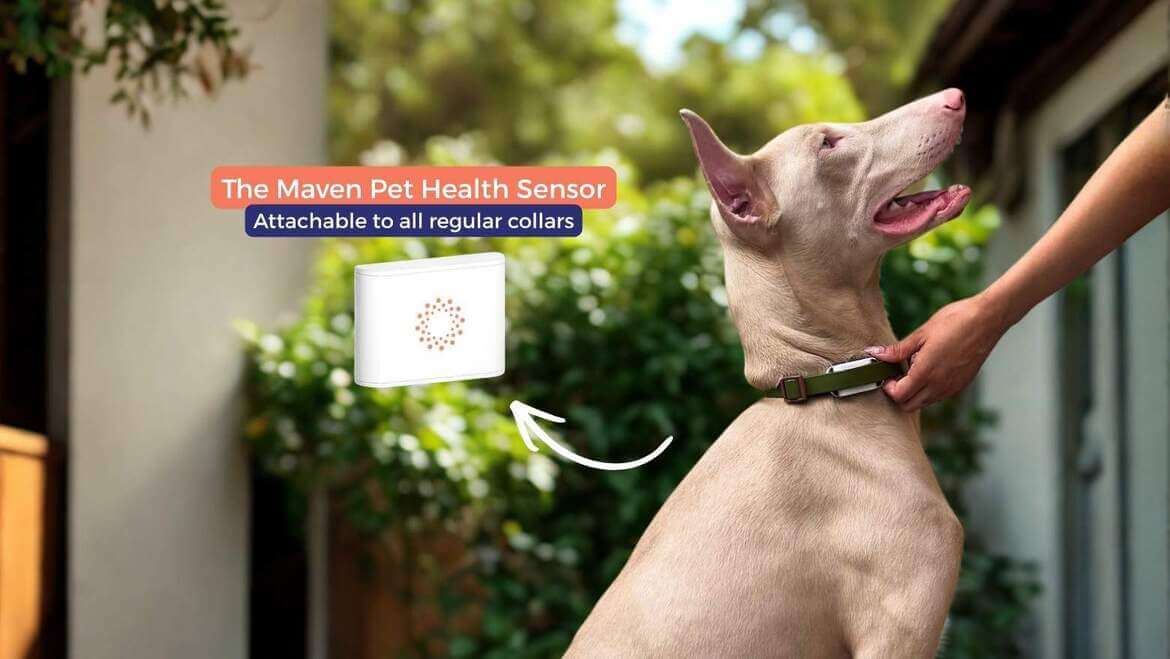
The sensor attaches to whatever collar your dog already wears. It's small and light. Most dogs stop noticing it within an hour of putting it on.
The first week, Maven builds a personalized baseline for heart rate and activity, so what counts as elevated is based on your dog specifically, not a generic average. Breathing rate is tracked continuously too, and a personalized baseline for it is on our roadmap.
If your dog's resting readings cross 30 breaths per minute, the clinical reference point vets use, or a custom threshold you've set for your dog, you get a notification. Not a scare. A heads-up with enough time to call your vet before it becomes urgent.
Download your dog's monthly health report PDF directly from the app, or share trend charts on the spot. Show your vet actual numbers instead of "she seemed to be breathing a little heavy last week."


What people say after they started tracking their dog's breathing
"I got the Maven sensor for my 14-year-old Chihuahua mix with heart and trachea issues. It gave me back peace of mind, I can track her RRR, BPM, drinking, and activity anytime and know instantly if something's wrong. Highly recommend!"
"My 12-year-old was diagnosed with a heart murmur. Now I can actually see when he's within a safe resting respiratory rate or when he's creeping into unsafe territory and make a better call about what to do."
"After my dog's CHF diagnosis, Maven gave me the confidence to keep an eye on her breathing without living in constant panic. I just check the app instead of lying awake listening to her breathe."
Everything about heavy breathing in dogs
Stop counting breaths. Start tracking trends.
One sensor. One app. The breathing data your vet actually needs. Maven is $13.99 a month with the sensor included. 30-day risk-free return policy.
Plans cover 1 pet. 2 and 3 pet options available at checkout. The sensor fits most standard collars and works for both dogs and cats.
You don't have to guess whether this is normal.
Maven tracks your dog's breathing rate automatically, day and night, so the next time something feels off you'll have weeks of real data instead of one uncertain count. Set it up tonight, and stop lying awake listening for changes you can't reliably measure anyway.
Start for $13.99/month30-day risk-free return policy · Free worldwide shipping · Cancel anytime