Save 30%! Subscribe to the Annual Plan for just $13.99/month!
Save 30%! Subscribe to the Annual Plan
for just $13.99/month!
Sleep & activity monitoring for dogs

Why is your dog restless at night?

A little tossing and turning is normal. But pacing, whining, or waking up again and again is one of the ways pain, anxiety, or cognitive changes first show up, often before anything else looks different during the day. The direct answer: occasional restlessness after excitement or a change in routine is normal. Restlessness that repeats night after night, or comes with pacing and can't-settle behavior, is not. Keep reading to see what a night's rest can look like when the normal pattern is off, the real causes sorted by how worried to be, and how Maven tracks your dog's nights automatically.

★★★★★ 4.8/5 on Trustpilot
Trusted by 10,000+ families
Try it right now

When did the restlessness actually happen?

Think back to last night, or the last time it happened. Tap roughly when your dog was restless. The timing alone tells you a lot about what's likely behind it.

5 PM6 AM

This is a quick gut-check, not a diagnosis. What actually matters is whether the timing repeats night after night, which is exactly what continuous tracking is built for.

You just flagged one night. Maven tracks the timing every night.

A quick tap tells you about tonight. Maven's sensor tracks your dog's rest, interruptions, and activity automatically, every night, and learns what's actually normal for your dog specifically, so a real change in timing or frequency stands out instead of getting lost in a string of ordinary nights.

See how Maven tracks it automatically →
Could this be something more?

Nighttime restlessness can be a great ally in catching these conditions early

Restlessness isn't a disease on its own, it's usually a symptom of something else happening in your dog's body or mind. These are the conditions vets check for first when a dog's nights won't settle down.

🩹
Pain or discomfort (arthritis, injury, dental)

A dog who can't get comfortable lying down, or who keeps shifting position, may be dealing with joint pain, an injury, or dental discomfort that's harder to ignore once the day's distractions are gone.

🧠
Cognitive dysfunction (sundowners) in senior dogs

Similar to dementia in people, canine cognitive dysfunction disrupts a dog's sleep-wake cycle and can cause disorientation, pacing, vocalizing, and waking up more often during the night, worse in the evening or overnight.

😟
Anxiety or a stress disorder

Separation anxiety, noise phobias, or a change in the household can all show up as nighttime pacing, whining, or an inability to settle once things get quiet.

💧
Cushing's disease or kidney disease

Both conditions can increase thirst and urination, which often shows up first as a dog waking up needing to go outside more often overnight.

🍽️
Digestive discomfort

Gas, bloating, or an upset stomach can make it hard for a dog to settle, and in some cases can point to a more serious issue that's worth same-day attention if it's paired with a distended belly or retching.

Why is my dog restless at night?

The real causes, sorted by how worried to actually be

Restlessness shows up for a lot of reasons, and there's almost always something behind it, even when it's mild. The trick is context: how long has it been going on, does it happen every night or just once, and is anything else different about your dog lately. Here's the fuller picture, organized the way a vet would actually think about it.

🏠
Normal
A change in routine or environment

A new home, a guest staying over, travel, or an unfamiliar noise outside can all disrupt one night's sleep. It should settle down once the trigger is removed or within a couple of days. If it's making your dog highly anxious, it's worth seeking advice from your vet.

Normal
Excitement or an eventful day

A busy day, a visitor, or a change in schedule can leave a dog a little wound up at bedtime. It usually settles on its own within an hour or two.

🌙
Normal
Normal light waking between sleep cycles

Dogs naturally surface between sleep cycles throughout the night. A brief shift or stretch that settles back into rest within a minute or two isn't cause for concern.

🎾
Worth watching
Not enough exercise or mental stimulation

A dog with pent-up energy from an under-active day is more likely to get up often, walk around, chew on things, or vocalize at bedtime instead of settling. Worth watching if it's a pattern rather than a one-off.

🚪
Worth watching
Needing the bathroom more often at night

Drinking more water before bed, aging, or a mild bladder issue can all mean more nighttime trips outside. If it's a new and consistent pattern, it's worth mentioning at your next check-up.

🩹
Call your vet
Pain or discomfort

Chronic pain from arthritis or an acute event such as an injury or abdominal pain can make it hard to find a comfortable position, especially once distractions fade at night.

😟
Call your vet
An anxiety or stress disorder

Persistent nighttime anxiety, not tied to an obvious trigger like a storm, can be its own condition rather than a passing phase, and is often manageable once identified.

🧠
Call your vet
Cognitive dysfunction (sundowners) in senior dogs

New disorientation, pacing, vocalizing, or waking up more often during the night, especially if it's worse in the evening, can point to canine cognitive dysfunction, a distinct condition from typical aging that's worth describing to your vet in detail.

The Maven Study, 2026

A restless night leaves a pattern we can see.

There's no universal "normal" number of times a dog moves overnight. But there is a healthy baseline, and a way to tell when a specific dog has drifted from their own. Here's what our own data across thousands of real dogs shows.
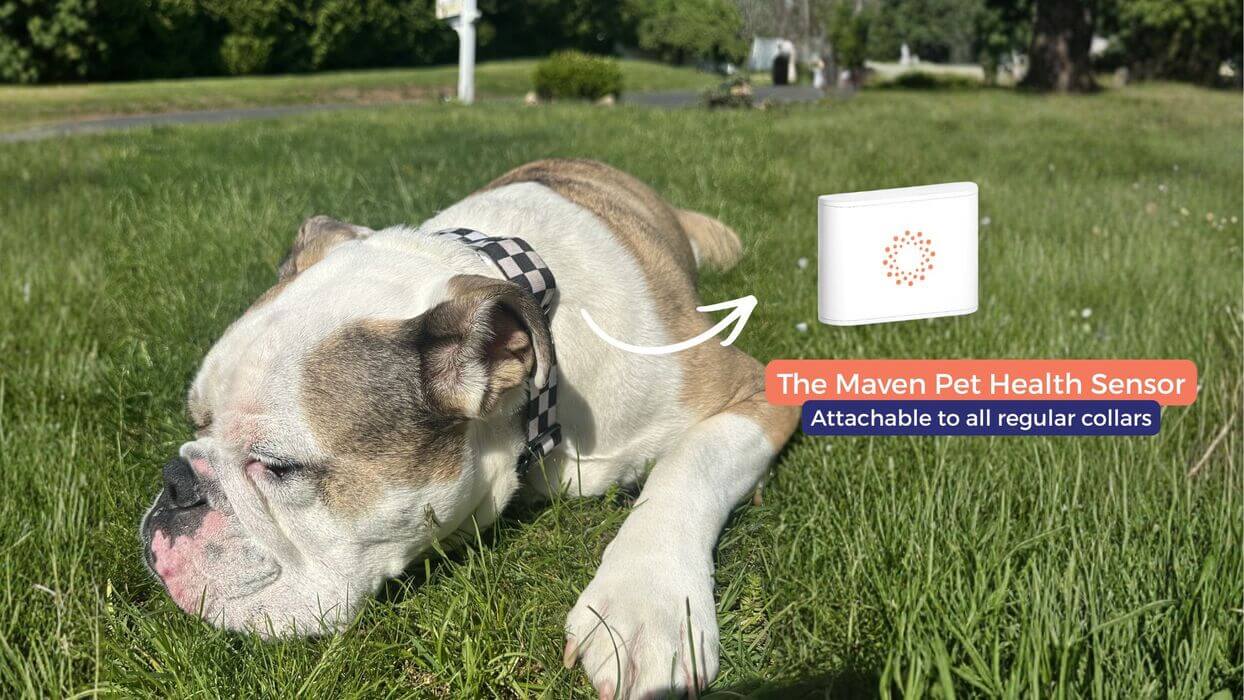
Maven Pet sensor clipped to a dog's collar
The Sleep Score Baseline
94-95
is where healthy dogs typically score on Maven's nightly Sleep Score.
Across 488 healthy dogs, the average Night Sleep Score (0-100) sits at 94.5, with a median of 97. The score is measured against each dog's own rolling baseline, so a drop is meaningful for that specific dog, most often driven by more frequent rest interruptions, not a cross-dog ranking.
n=488 dogs · data from Apr 2026
Puppies vs. Grown Dogs
127%
of their daily activity goal is what puppies typically hit, more than any other age group.
Puppies routinely overshoot their activity goal, while adult dogs complete about 71% of theirs and senior dogs about 74%. A dog who's chronically under-active during the day is more likely to be restless once the lights go out.
n=1,282 healthy dogs · June 2026
Two Vitals, One Picture
83%
of healthy dogs have both resting heart rate and breathing rate in the calm zone at once.
Dogs with a known chronic condition are about 2x more likely to run an elevated resting breathing rate, and have 3x higher odds of both vitals being elevated at the same time, an early signal most people have no way to track from home.
n=1,378 / 1,285 healthy dogs · June 2026
A quiet night looks different for every dog. Maven learns yours.
Because the Night Sleep Score is measured against your own dog's rolling baseline, not a population average, a dip means something changed for your dog specifically, most often more frequent interruptions.
See Your Dog's Numbers →
About the data. Findings from Maven Pet's June 2026 activity, sleep, and vitals population study, based on continuous at-home monitoring. Night Sleep Score baseline from 488 healthy dogs (metric data begins April 2026); Activity Health Goal findings from 1,282 healthy dogs; heart rate and breathing rate findings from 1,285 and 1,378 healthy dogs respectively. "Healthy" means no chronic condition declared at onboarding. Activity Health Goal completion is measured against an already personalized, size- and age-calibrated target, not raw activity volume.
Peer-reviewed, not just self-reported

Independent researchers put Maven to the test. Here's what they found.
The Research
Can a sensor actually catch a pain flare-up before you notice it?
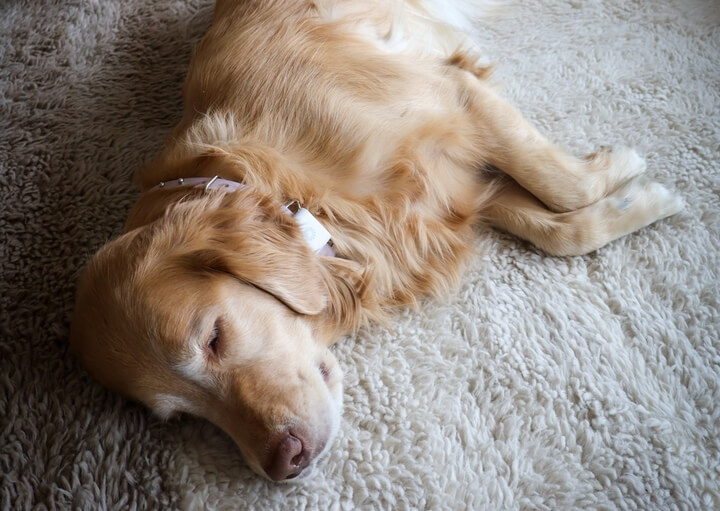
A dog wearing the Maven Pet sensor on its collar

Independent researchers, including three of Maven's own veterinarians, tracked five dogs with diagnosed osteoarthritis for up to four months using the Maven sensor's activity data, the same signal that shows up as pacing and restlessness at home.

Nine real clinical events happened during the study. In eight of them, the sensor's activity data lined up with when the flare-up started, worsened, or improved. In one case, the drop in activity showed up before the owner noticed anything was wrong.

Read the study → Animals (MDPI) · 2025
5
Dogs monitored for up to 126 days on the Maven sensor
8/9
Clinical events where sensor deviations lined up with real symptom changes
1
Case where the sensor flagged the decline before the owner noticed
Full citation. Sacoor C, Leitão S, Domingues C, Babo J, Sá CM, Cabeças R, Queiroga FL. "Continuous Activity Monitoring Using a Wearable Sensor in Dogs with Osteoarthritis: An Exploratory Case Series." Animals. 2025;15(18):2639. DOI: 10.3390/ani15182639. Three co-authors are Maven Pet veterinarians. Funded by Maven Pet.
Noticing vs. Maven

You can't watch them all night. Maven does.

You already notice when a night feels off, that's not the problem. The problem is telling one restless night apart from a real pattern, and remembering enough detail to describe it accurately weeks later at the vet.

👀
Watching and remembering
Only catches it when you're already awake to notice
Hard to tell one restless night apart from a real pattern
Easy to explain away as "maybe the neighbor's dog barked"
No record to show your vet beyond "he seemed off last week"
Misses whatever happens after you fall back asleep
Maven Pet tracker
Tracks nighttime movement and rest continuously, without disturbing them
Learns what a normal night looks like for your dog specifically
Flags a drop from that baseline automatically, day or night
Weekly trend charts and a monthly health report PDF ready for the vet
Tracks activity, sleep, heart rate, and resting breathing rate in one place
How it works

Set it up in minutes. Your dog's baseline is ready in 7 days.

1
Clip the sensor to your dog's collar

The sensor attaches to whatever collar your dog already wears. It's small and light. Most dogs stop noticing it within an hour of putting it on.

2
Maven learns your dog's sleep baseline in 7 days

The first week, Maven builds a personalized baseline for your dog's nighttime rest and activity, so a change means something for your dog specifically, not a generic average.

3
Get a heads-up if a night looks different

If your dog's Night Sleep Score drops from their own normal, or activity drifts off pattern, you get a notification. Not a scare. A heads-up with enough time to look into it before it becomes urgent.

4
Bring real data to your vet

Download your dog's monthly health report PDF directly from the app, or share trend charts on the spot. Show your vet actual nights instead of "he seemed restless last week."

Real dog parents, real stories

Watch Maven in the real world

Maven Pet dog parent story
Dog parent story
Maven Pet in action
Maven in action
Maven Pet review
Pet parent review
From dog parents who've asked the same question

What people say after they started tracking their dog's nights

Trustpilot
Excellent · 4.8 out of 5 · based on 415 verified reviews
★★★★★

"I have a rescue mutt with trauma and sound sensitivities. The sleep charts and activity timeline have helped ease my anxiety about his nighttime pacing. The customer support team is fantastic and responsive."

★★★★★

"It's great for keeping an eye on breathing, heart rate, sleep, and exercise. If you care about your pet, it's well worth getting insight into what they've been doing overnight, whether that's pacing or snoozing."

Read all reviews on Trustpilot →
Common questions

Everything about nighttime restlessness in dogs

Occasional restlessness after excitement, a change in routine, or an off day is normal and usually settles within a night or two. It's worth investigating when it happens repeatedly, comes with pacing or whining that won't settle, or shows up alongside other changes like increased thirst, reluctance to lie down, or disorientation.
Healthy dogs typically score in the mid-90s on Maven's 0-100 Night Sleep Score, which is computed against each dog's own rolling baseline rather than a fixed scale. A little movement overnight is normal. The score is most useful for spotting when a dog dips below their own normal, which is most often driven by more frequent rest interruptions.
Worry less about one restless night and more about a pattern: restlessness that repeats night after night, comes with pacing, circling, or whining that won't settle, or is paired with pain signs like limping or reluctance to be touched, increased thirst or urination, or disorientation, especially in senior dogs. Those combinations are worth a call to your vet.
Common causes include pain or discomfort making it hard to find a comfortable position, anxiety or stress, needing to go to the bathroom more often (which can point to Cushing's disease or kidney issues), and, in senior dogs, canine cognitive dysfunction, sometimes called doggy dementia or sundowners, which often causes disorientation and pacing worse in the evening.
Maven's sensor clips to your dog's existing collar and continuously tracks nighttime movement, rest time, and activity. Each morning it computes a Night Sleep Score from total rest time, longest unbroken rest, and the number of interruptions. Because the score is measured against your dog's own rolling baseline, a drop means something changed for your dog specifically, not a generic average.
It's possible, especially in senior dogs. Cognitive dysfunction often shows up as new pacing, circling, or disorientation that's worse in the evening or overnight, sometimes called sundowning. It's a distinct condition from typical restlessness and is worth describing to your vet in detail if it's new and persists for more than a few days.
Yes. The app generates a monthly health report PDF covering all of your dog's tracked signals, or you can share trend charts directly from the app during an appointment. Bringing weeks of real sleep and activity data instead of a one-time impression changes what your vet can actually act on.
Get started

Stop wondering. Start tracking their nights.

One sensor. One app. The nighttime data your vet actually needs. Maven is $13.99 a month with the sensor included. 30-day risk-free return policy.

Most popular · Save 30%
Annual plan
$13.99/mo
Billed annually
That's $167.88/year
Get started
Monthly plan
$19.99/mo
Billed monthly
6-month minimum commitment
Get started
Everything included in both plans
24/7 activity and sleep monitoring
Heart rate and respiratory rate tracking
Personalized baseline for your dog
Monthly health report PDF for vet appointments
Alerts when readings go above your dog's normal range
Free worldwide shipping

Plans cover 1 pet. 2 and 3 pet options available at checkout. The sensor fits most standard collars and works for both dogs and cats.

Your next step

You don't have to lie awake wondering why.

Maven tracks your dog's nighttime activity and rest automatically, so the next time something feels off you'll have weeks of real data instead of one uncertain night. Set it up tonight.

Start for $13.99/month

30-day risk-free return policy · Free worldwide shipping · Cancel anytime