Signs Your Dog’s Health Is About to Decline (Vet Verified)

As loving dog owners, we know our pets better than anyone. But when it comes to illness, the earliest warning signs are often easy to miss. Dogs are instinctively wired to hide discomfort. That means the first signs your dog’s health is about to decline often appear as small behavior changes rather than obvious symptoms. Recognizing these subtle shifts early can make the difference between prompt, effective treatment and managing a more advanced, complex disease later on.
What Are the Signs Your Dog’s Health Is About to Decline?
The earliest signs your dog’s health is about to decline are usually subtle changes in behavior, sleep, appetite, mobility, or resting vital signs. You may notice reduced activity, disrupted sleep, drinking more water, or slight personality shifts before obvious symptoms appear. Tracking patterns over time helps identify illness early and supports timely veterinary care.
Key Takeaways
- Dogs rarely show dramatic symptoms first.
- Small behavior changes often signal early illness.
- Changes in sleep, appetite, and mobility matter.
- Vital sign trends such as heart rate and respiratory rate can shift before visible symptoms.
- Monitoring patterns over time allows earlier veterinary intervention.
“Dogs rarely show dramatic symptoms at first. More often, illness begins with subtle shifts in behavior, energy, or resting vital signs. Tracking those patterns makes early intervention possible.” – Carolina Domingues, DVM, Veterinarian at Maven Pet
Why Do Subtle Changes Matter So Much?
According to the American Veterinary Medical Association and veterinary teaching hospitals such as Cornell University College of Veterinary Medicine, early disease detection significantly improves outcomes.
Many chronic conditions, including kidney disease, heart disease, arthritis, endocrine disorders, and some cancers, develop gradually. Before clear symptoms appear, the body compensates. What you see at home are:
- Slight energy dips
- Small appetite fluctuations
- Minor sleep disruptions
- Mild behavior changes
These are often dismissed as normal aging or temporary changes. However, consistent pattern changes deserve attention.
−20%
Activity drop,
early senior years
−37%
Activity drop,
advanced senior years
Holds true
Even in dogs with
no diagnosed condition
Even in dogs with no diagnosed condition, daily activity drops meaningfully with age, about 20% lower once a dog reaches early senior years and 37% lower in advanced seniors compared to their adult baseline. That decline is normal aging, not automatically a red flag. A sudden or unusually steep drop outside that pattern is the one worth mentioning to your vet.
Source: Maven Pet internal data, life-stage comparison across tracked dogs.
See how Maven tracks activity→What Are the Early Signs Your Dog’s Health Is About to Decline?
Here are the most common early signs of illness in dogs.
1. Reduced Activity or Stamina
- Shorter play sessions
- Lagging behind on walks
- Reluctance to jump or climb stairs
- More time spent resting
A gradual drop in activity may signal pain, cardiac changes, metabolic disease, or systemic illness.
2. Changes in Sleep Patterns
- Sleeping more than usual
- Restlessness at night
- Pacing or difficulty settling
- Waking more frequently
Sleep disruptions can be linked to discomfort, anxiety, cognitive changes, or respiratory issues.
3. Subtle Appetite Changes
- Leaving small amounts of food
- Eating more slowly
- Sudden pickiness
- Increased thirst
Increased water intake, in particular, can be an early indicator of kidney disease, diabetes, or other endocrine disorders. Veterinary centers like Texas A&M Veterinary Medical Teaching Hospital emphasize that rising water consumption often appears before other clear symptoms.
“I got the Maven sensor for my 14-year-old Chihuahua mix with heart and trachea issues. It gave me back peace of mind – I can track her RRR, BPM, drinking, and activity anytime and know instantly if something’s wrong. Highly recommend!”

★★★★★
Chiara De Luca
Titti
4. Mobility Shifts
- Stiffness when standing
- Hesitation before jumping
- Slower transitions from lying down
- Favoring one limb
- Consistently licking the same joint or limb
These may reflect early arthritis, muscle weakness, or neurologic changes.
5. Vital Sign Changes at Rest
Even before you see behavior shifts, internal changes may occur:
- Elevated resting heart rate
- Increased resting respiratory rate
- Disrupted rest cycles
Veterinary resources such as VCA Animal Hospitals note that rising resting respiratory rate can be an early marker of heart or lung disease.
What Behavioral Changes in Dogs Signal Illness?
Behavior often shifts before physical symptoms appear.
Watch for:
- Increased clinginess
- Withdrawal or hiding
- Irritability or unusual aggression
- Reduced interest in interaction
- Anxiety without a clear trigger
These changes in dog behavior meaning illness are frequently overlooked because they can seem emotional rather than medical. Discomfort, hormonal shifts, and neurological changes often affect mood first.
If your dog just seems off, trust that instinct.
What Physical Signs Do Owners Often Miss?
Not all early symptoms are dramatic. Some are easy to overlook.
Subtle Physical Clues:
- Mild weight loss
- Duller coat
- Slight bad breath
- Occasional coughing
- Increased scratching
- Small changes in bathroom habits
Because these shifts happen gradually, they are harder to notice without consistent observation.
When Should You Call Your Veterinarian?
Call your veterinarian if:
- A behavior change lasts more than a few days
- Appetite or water intake shifts persist
- Resting breathing seems faster than normal
- Activity level drops noticeably
- Multiple small changes occur together
Early conversations allow your veterinarian to:
- Establish baseline bloodwork
- Monitor trends
- Rule out emerging conditions
- Begin treatment sooner if needed
Veterinary guidance consistently stresses that early evaluation improves long term outcomes.
If you are unsure, it is always appropriate to ask.
How Maven Helps Detect Early Health Changes
Because many early warning signs are pattern based, tracking trends makes detection easier.

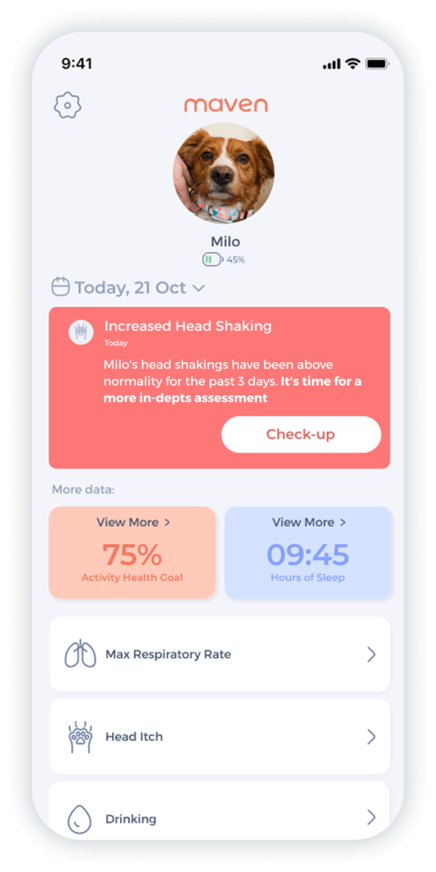
Monitor heart rate, respiratory rate, activity & rest, drinking, itch behavior.
The Maven Pet Health Monitor continuously tracks:
- Activity levels
- Rest patterns
- Heart rate
- Resting respiratory rate
- Scratching behavior
- Water intake
Rather than relying on guesswork, Maven establishes a personalized baseline for your dog. When meaningful deviations occur, such as reduced activity, elevated resting heart rate, disrupted sleep, or increased water intake, you are alerted.
This proactive approach supports earlier veterinary conversations and gives owners objective data to share during appointments.
Consistent monitoring strengthens early detection.
FAQ (Vet Reviewed)
The first signs are usually subtle. Reduced energy, sleep changes, appetite fluctuations, or small personality shifts often appear before obvious symptoms.
Many dogs become quieter, clingier, or less playful. Some may sleep more or seem slightly withdrawn before physical symptoms appear.
Yes. Sleeping significantly more or becoming restless at night can signal discomfort, metabolic disease, cognitive change, or respiratory issues.
If a small change lasts more than a few days, worsens, or appears alongside other changes such as appetite or breathing shifts, it is time to consult your veterinarian.
Conclusion: Small Changes Are Big Signals
The most important thing to remember is that illness rarely begins with an emergency.
The earliest signs your dog’s health is about to decline are quiet. They appear as small deviations from your dog’s normal patterns, slightly less energy, more sleep, subtle restlessness, or minor appetite shifts.
When you track those patterns consistently and act early, you give your dog the best chance at a healthier future. Maven can help you in this mission.
Stay observant. Stay proactive. And when something feels different, trust your instincts and your veterinarian.
Maven Pet focuses on improving the quality of life of our pets with technology, using artificial intelligence (AI) to enable proactive pet care. By accurately collecting and monitoring pet data 24/7 and flagging any irregularities, Maven Pet empowers pet parents and veterinarians to stay ahead of potential health issues, ensuring the well-being and longevity of our beloved companions.