
Arrhythmia in Dogs: Symptoms & Causes (Vet Verified)

Noticing unusual signs like weakness, fainting, or an irregular heartbeat in your dog can be concerning. These symptoms may point to arrhythmia in dogs, a condition that affects how the heart beats. Early recognition of arrhythmia, combined with a clear understanding of the condition, helps you make faster and more informed decisions for your dog.
What Is Arrhythmia In Dogs? – The Short Answer
Arrhythmia in dogs refers to an abnormal heart rhythm, where the heartbeat may be too fast, too slow, or irregular. It can be caused by underlying heart disease, systemic illness, or electrical disturbances in the heart. While some arrhythmias are harmless, others can affect blood flow and require prompt veterinary attention.
Key Takeaways
- Arrhythmia in dogs means an abnormal heart rhythm
- Symptoms can be subtle or severe, including weakness, collapse, or irregular pulse
- Causes range from heart disease to electrolyte imbalances
- Some arrhythmias are benign, while others are life-threatening
- Continuous monitoring can help detect early changes in heart rate patterns
What Is Arrhythmia in Dogs?

Arrhythmia refers to any disruption in the heart’s normal rhythm. In a healthy dog, the heart beats in a consistent and coordinated pattern. With arrhythmia, this rhythm becomes irregular.
This may include:
- A heartbeat that is too fast (tachycardia)
- Too slow (bradycardia)
- Irregular or inconsistent timing
Arrhythmias occur when the heart’s electrical system does not function properly, affecting how blood is pumped through the body.
“Arrhythmias in dogs can be difficult to detect because they don’t always cause obvious symptoms. Subtle changes in heart rate patterns can be early clues, which is why consistent monitoring is so important.” — Sara Leitão, DVM, Veterinarian at Maven Pet
What Are the Signs of Arrhythmia in Dogs?
Symptoms can vary widely depending on the type and severity of the arrhythmia. Some dogs show no signs at all, while others may experience serious complications.
Common signs of arrhythmia in dogs:
- Weakness or lethargy
- Fainting (syncope)
- Exercise intolerance
- Irregular or fluctuating pulse
- Rapid or slow heart rate
- Difficulty breathing in severe cases
According to Cornell Vet, all breeds and ages of dogs can get arrhythmias, and the cause and treatment depend upon the diagnosis.
“I got the Maven sensor for my 14-year-old Chihuahua mix with heart and trachea issues. It gave me back peace of mind – I can track her RRR, BPM, drinking, and activity anytime and know instantly if something’s wrong. Highly recommend!”

★★★★★
Chiara De Luca
Titti
What Causes Arrhythmia in Dogs?
Arrhythmias can result from a range of underlying conditions affecting the heart or the body.
Common causes include:
Heart-related conditions:
- Mitral valve disease
- Cardiomyopathy
- Congenital heart defects
Systemic factors:
- Electrolyte imbalances
- Hormonal disorders (e.g., thyroid disease)
- Infections or inflammation
Other triggers:
- Certain medications
- Toxic exposures
- Stress or trauma
In some cases, arrhythmias occur without a clearly identifiable cause.
Is Arrhythmia in Dogs Serious?
The severity of arrhythmia depends on its type and underlying cause.
Mild cases:
- May not affect daily life
- Often require monitoring rather than treatment
Moderate to severe cases:
- Can reduce effective blood circulation
- May lead to weakness, collapse, or organ damage
Life-threatening arrhythmias:
- Can cause sudden cardiac events
- Require immediate veterinary care
Early detection plays a key role in preventing complications and improving outcomes.
How Is Arrhythmia Diagnosed?

Diagnosing arrhythmia requires evaluating the heart’s electrical activity and overall function.
Common diagnostic methods:
- Physical examination (detecting irregular pulse)
- Electrocardiogram (ECG) is used to measure the heart rhythm
- Holter monitoring for continuous heart tracking over 24+ hours
- Echocardiogram to assess heart structure
Because arrhythmias can be intermittent, continuous monitoring is often more effective than a single exam.
How Is Arrhythmia Managed?
Treatment depends on the cause, type, and severity of the arrhythmia.
Management may include:
Medication:
- Antiarrhythmic drugs to stabilize the heart rhythm
- Treatment for underlying conditions
Lifestyle adjustments:
- Controlled exercise
- Stress reduction
Ongoing monitoring:
- Regular veterinary follow-ups
- Tracking heart rate and symptoms at home
In severe cases, advanced interventions may be required.
How Maven Helps
The Maven Pet Health Monitor supports early detection of arrhythmia in dogs through continuous tracking of key health metrics.

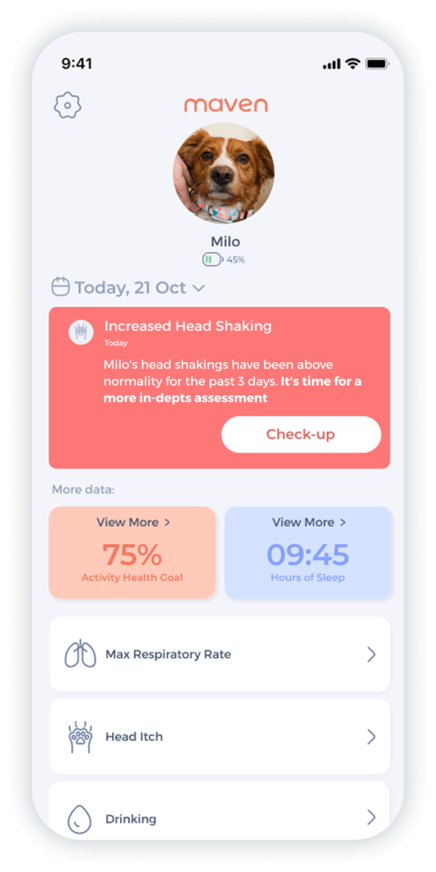
Monitor heart rate, respiratory rate, activity & rest, drinking, itch behavior.
It helps by:
- Tracking heart rate continuously to identify irregular patterns
- Monitoring resting respiratory rate, which may increase with cardiovascular stress
- Measuring activity and rest levels to detect fatigue or reduced stamina
- Building a personalized baseline for your dog’s normal heart rate and behavior
- Sending alerts when deviations occur, such as abnormal heart rate trends
Because arrhythmias can be intermittent and subtle, continuous monitoring provides a step-ahead approach—detecting changes that might not be visible during routine observation or occasional vet visits.
FAQ (Vet-Reviewed)
It is an abnormal heart rhythm where the heartbeat may be too fast, too slow, or irregular.
Common symptoms include weakness, fainting, irregular pulse, and reduced exercise tolerance, although some dogs show no visible signs.
Causes include heart disease, electrolyte imbalances, hormonal disorders, medications, and sometimes unknown factors.
Some arrhythmias are harmless, but others can be serious or life-threatening, depending on their type and underlying cause.
Conclusion
Arrhythmia in dogs can range from mild to serious, but one of the biggest challenges is that it often goes unnoticed in its early stages.
By understanding the signs and causes, and combining veterinary care with consistent monitoring, you can:
- Detect irregularities earlier
- Support faster diagnosis
- Improve your dog’s long-term health outcomes
When it comes to heart health, early awareness and continuous insight make a meaningful difference.
Maven Pet focuses on improving the quality of life of our pets with technology, using artificial intelligence (AI) to enable proactive pet care. By accurately collecting and monitoring pet data 24/7 and flagging any irregularities, Maven Pet empowers pet parents and veterinarians to stay ahead of potential health issues, ensuring the well-being and longevity of our beloved companions.