Acute Kidney Injury in Dogs Explained: Causes & Care (Vet Verified)

Acute Kidney Injury in dogs (AKI) is a potentially fatal condition that refers to the sudden renal damage. It shouldn’t be confused with another form of kidney disease, known as chronic kidney disease (CKD), but it should, nonetheless, be given the attention it deserves. Today, we examine the symptoms of AKI, the causes of the disease, potential treatments, and how you can identify early changes before the condition worsens.
What is acute kidney injury in dogs?
Acute kidney injury in dogs is a sudden decline in kidney function that develops over hours to days and requires immediate veterinary attention. It can result from exposure to toxins, infections, dehydration, or other serious illnesses. Early symptoms may be subtle, but rapid treatment significantly improves the chances of recovery and may prevent permanent kidney damage.
Key Takeaways
- Acute kidney injury in dogs develops suddenly and requires immediate veterinary care.
- Early signs often include lethargy, vomiting, appetite loss, and changes in drinking or urination.
- Common causes include toxins, infections, reduced blood flow, medications, and systemic illness.
- Prompt treatment with IV fluids and targeted therapy can improve survival and may reverse damage.
- Monitoring subtle behavior and hydration changes can help with earlier detection and faster intervention.
Acute Kidney Injury in Dogs: An Overview

Acute kidney injury (AKI) in dogs is a sudden and rapid decline in kidney function that develops over hours to days, impairing the kidneys’ ability to filter waste products, regulate fluids, and maintain electrolyte balance.
AKI is considered a medical emergency because early damage may not immediately show up in bloodwork, but the kidney tissue injury is already underway.
Veterinary sources, like the Department of Clinical Sciences, Cummings School of Veterinary Medicine atTufts University, describe AKI in the “Acute Kidney Injury in Dogs and Cats” paper by Linda Ross, DVM, as progressing through four phases:
- Initiation Phase: Kidney injury begins at the cellular level immediately after the insult.
- Extension Phase: Ongoing inflammation and reduced blood flow worsen cellular damage. Clinical signs may still be subtle and easy to miss.
- Maintenance Phase: Azotemia becomes evident. Urine output may decrease (oliguria), stop (anuria), or vary.
- Recovery Phase: Kidney function improves, and tubules repair. Increased urination (polyuria) is common. Function may fully return, or some impairment may remain.
Increased kidney waste markers, changes in urine output, and an overall imbalance of bodily fluids, among other notable symptoms, typically point to AKI.
+93%
Increase across
all tracked dogs
+45%
Increase in dogs with
no diagnosed condition
Gradual
Is normal. Sudden
jumps are not
Water intake nearly doubles from adulthood to advanced senior years across all dogs Maven tracks. Even among dogs with no diagnosed condition, it still climbs about 45%, so some of that increase is just normal aging. But a sudden or sharp jump outside that gradual curve is one of the more reliable early signals of kidney disease, diabetes, or Cushing’s, and is worth a vet visit rather than a wait and see.
Source: Maven Pet internal data, life-stage comparison across tracked dogs.
See how Maven tracks water intake→Acute Kidney Injury in Dogs: Symptoms to Watch For
The Acute Kidney Injury in dogs symptoms can appear quickly, so it’s important to keep an eye out for them, especially lethargy, anorexia, and vomiting, which, according to an etiology study of KPI, are the three most common symptoms. Pay special attention to:
- Lethargy
- Anorexia
- Vomiting (with or without diarrhea)
- Weakness or unsteadiness
- Mouth ulcers
- Bad breath smelling of chemicals
- Changes in thirst and urination
- Dehydratation
AKI can progress over hours to days, so when you see even the smallest changes in drinking and urination, or the energy levels are not up to their usual self, it could be the right time to call a vet.
Acute Kidney Injury vs Chronic Kidney Disease
The biggest difference between acute kidney injury (AKI) and chronic kidney disease (CKD) is how quickly they develop and whether the damage can be reversed. AKI happens suddenly, whereas CKD takes longer to develop.
The causes of these diseases are also different. AKI is usually triggered by toxin exposure, infection, severe dehydration, heatstroke, or urinary blockage. On the other hand, CKD can come as a result of old age, genetics, or simply wear and tear that the kidneys suffer.
Ultimately, AKI can be reversed if the appropriate therapy is implemented promptly, whereas CKD leaves permanent damage that can’t be reversed.
“I got the Maven sensor for my 14-year-old Chihuahua mix with heart and trachea issues. It gave me back peace of mind – I can track her RRR, BPM, drinking, and activity anytime and know instantly if something’s wrong. Highly recommend!”

★★★★★
Chiara De Luca
Titti
What Causes Acute Kidney Injury in Dogs?
Acute kidney injury in dogs is usually caused by exposure to toxins, infectious diseases, and even medications. Here are the common culprits:
- Reduced blood flow (ischemia) – Severe dehydration, shock, heatstroke, or major blood loss can deprive the kidneys of oxygen and lead to rapid tissue injury.
- Toxins – The usual toxins dogs come into contact with are ethylene glycol (antifreeze), grapes or raisins, heavy metals, certain chemicals, and vitamin D–based rodenticides.
- Infectious diseases – Infectious diseases such as leptospirosis, kidney infections (pyelonephritis), and systemic infections like sepsis can inflame and injure kidney tissue.
- Medications – Certain meds, including antibiotics, chemotherapy agents, NSAIDs, and contrast dyes, can impair kidney function and lead to AKI.
- Systemic illness – Conditions like acute pancreatitis or multiple organ dysfunction syndrome can also impair the kidneys and result in AKI.
AKI won’t come out of the blue. It’s always a reason why your dog started feeling bad all of a sudden, which should prompt you to look for triggers, particularly with the help of a pet health tracker that can provide additional info to your vet and help with diagnosing AKI.
Acute Kidney Injury in Dogs: Treatment Options
The Acute Kidney Injury in dogs treatment is based on addressing the underlying cause and stabilizing the body so that the kidney can recover. If a specific trigger has already been identified, then a specific therapy is administered. For example, a dog with leptospirosis will receive appropriate antibiotics that should limit kidney damage.
It’s also important to apply supportive care. This care includes intravenous (IV) fluid therapy, which is typically required to restore hydration, improve kidney blood flow, and correct the electrolyte and acid-base imbalances.
Monitoring urine output is also essential to assess fluid management and to determine whether oliguria or anuria is present. Dogs may also need support for complications such as vomiting and high blood pressure.
If the kidney function does not improve, dialysis (renal replacement therapy) may be considered.
Prognosis and Recovery Expectations

In a study on the etiology, clinical, and clinicopathologic findings of dogs with AKI, 249 dogs were included. Two-thirds of dogs survived (66%), which suggests that with appropriate therapy, full recovery is expected.
However, it’s worth noting that it depends on the dog’s overall condition, the underlying cause, and how quickly they get treatment. For example, the fatality rate among dogs with anuria is 50%, whereas the fatality rate among dogs without anuria is 28%.
The findings only reinforce the need to remain proactive and involve a veterinarian as soon as you notice any of the symptoms.
How Maven Helps Monitor Early Changes
Since acute kidney injury can begin with small changes such as seeing your dog drinking a bit more, resting longer than usual, or being restless at night, it’s super easy to miss them. Maven’s dog health tracker keeps tabs on activity, rest, and drinking behavior continuously and compares it to your dog’s normal baseline. That makes it easier to spot patterns that might otherwise be brushed off.

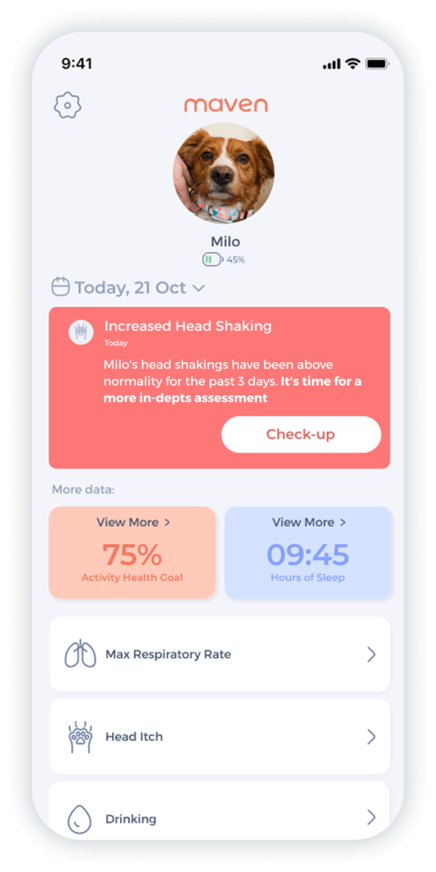
Monitor heart rate, respiratory rate, activity & rest, drinking, itch behavior.
The collar sensor records movement and rest throughout the day and night, so you get clear trends over time. Drinking events are automatically detected and totaled daily, with flags when intake is consistently higher or lower than usual. If changes persist, the pet health app prompts check-ins and can escalate alerts for further review and vet involvement.
Note that Maven doesn’t diagnose kidney injury. It simply helps document shifts in behavior and routine, so you have objective information to share with your veterinarian.
FAQ (Vet-Reviewed)
Yes, acute kidney injury can be reversible if it’s detected early and appropriate treatment is administered. The full recovery depends on the underlying issue and other factors.
AKI develops rapidly, often over hours to days. A dog may appear normal and then become noticeably ill within a short period of time.
Early signs often include lethargy, decreased appetite (anorexia), and vomiting.
Vets normally treat the underlying cause and provide supportive care to stop the disease from progressing and restore hydration.
Conclusion
Acute kidney injury in dogs is a fast-moving medical emergency that can quickly become life-threatening without prompt care. The good news is that many dogs recover when the condition is recognized early and treated aggressively. Paying close attention to subtle warning signs can make a meaningful difference in outcomes.
Staying proactive is key. Regular veterinary care, quick action when symptoms appear, and tools that help you monitor daily patterns all support earlier detection. Maven Pet’s tracking of activity, rest, heart rate, breathing, scratching, and water intake can help you notice changes sooner and provide valuable context to your veterinarian.
Maven Pet focuses on improving the quality of life of our pets with technology, using artificial intelligence (AI) to enable proactive pet care. By accurately collecting and monitoring pet data 24/7 and flagging any irregularities, Maven Pet empowers pet parents and veterinarians to stay ahead of potential health issues, ensuring the well-being and longevity of our beloved companions.