
Stages of Heart Disease in Dogs Explained (Vet Verified)

Congestive heart failure – often broadly referred to as heart disease in dogs – can be challenging to navigate, especially right after diagnosis. Understanding how the condition progresses and the stages it includes can help you make informed decisions, recognize early warning signs, and support your dog’s quality of life. This guide clearly breaks down of the stages of heart disease in dogs, so you know what to expect and when to act.
What are the stages of heart disease in dogs?
The stages of heart failure or heart disease in dogs are classified from A to D, based on risk level, structural changes, and symptoms. Stage A includes dogs at risk but without disease, while stages B1 and B2 show early structural changes. Stage C includes dogs with symptoms, and stage D represents advanced heart failure requiring intensive management.
Key Takeaways
- Heart disease progresses through five stages: A, B1, B2, C, and D
- Symptoms usually appear at Stage C
- Early detection can delay progression and improve lifespan
- Monitoring resting respiratory rate, activity, and heart rate trends is a step ahead
- Tools like continuous health tracking can help identify subtle changes sooner
How are the Stages of Heart Disease in Dogs Classified?

Veterinarians use a standardized staging system to classify heart disease progression, most commonly related to mitral valve disease – a condition that affects the function of the heart valves. Over time, these faulty valves place increased strain on the heart, leading to structural changes as it adapts to maintain effective blood flow. This system helps guide treatment decisions and monitoring strategies.
“Understanding the stage of heart disease helps guide treatment and monitoring effectively. Even before symptoms appear, changes in resting respiratory rate and activity can signal progression.” — Sara Leitão, DVM, Veterinarian at Maven Pet
+11%
Heart rate rise from
normal aging alone
2.5×
More likely chronically
elevated with heart issue
+8.9 bpm
Typical jump with
a known heart condition
Normal aging nudges a dog’s resting heart rate up gradually, about 11% higher by the advanced senior years. A known heart condition does more: affected dogs run up to 8.9 bpm faster than healthy dogs the same size, and are 2.5 times more likely to sit chronically elevated rather than just having the occasional high reading. Aging explains a little of the rise. A heart condition explains a lot more of it.
Source: Maven Pet internal data, 2,382 dogs tracked continuously.
See how Maven tracks heart rate→Stage A: At-Risk Dogs
Dogs in Stage A don’t have heart disease yet, but are at higher risk of developing it.
Common examples:
- Breeds predisposed to heart disease (e.g., Cavalier King Charles Spaniels, Dobermans, Boxers)
What’s happening:
- No structural heart changes
- No symptoms
What to monitor:
- Baseline activity levels
- Resting respiratory rate
- General health trends
Action:
- Routine veterinary check-ups at least twice a year
- Early screenings
“I got the Maven sensor for my 14-year-old Chihuahua mix with heart and trachea issues. It gave me back peace of mind – I can track her RRR, BPM, drinking, and activity anytime and know instantly if something’s wrong. Highly recommend!”

★★★★★
Chiara De Luca
Titti
Stage B1: Early Disease Without Enlargement
At this stage, dogs have early heart disease, but the heart is still normal in size.
What’s happening:
- Mild valve or heart structural changes
- No heart enlargement
Symptoms:
- None
What to monitor:
- Subtle changes in activity
- Slight increases in resting respiratory and heart rate trends
Action:
- Regular monitoring (often semi-annually or more)
- No medication is typically required yet, unless there are already structural changes happening
Stage B2: Heart Enlargement Begins
This is the point where treatment often starts, even if your dog still seems normal.
What’s happening:
- Detectable heart enlargement
- Increased workload on the heart
Symptoms:
- Still often absent
What to monitor:
- Gradual increase in resting respiratory rate
- Reduced stamina or activity
- Changes in heart rate trends
Action:
- Medication is commonly introduced
- Closer veterinary follow-up
Stage C: Symptomatic Heart Disease

Dogs in Stage C show clear signs of heart disease, often due to fluid buildup.
What’s happening:
- Heart function is compromised
- Fluid may accumulate in the lungs (congestive heart failure)
Common symptoms:
- Persistent cough
- Difficulty breathing
- Fatigue or exercise intolerance
- Increased resting respiratory rate
- Reduced appetite
According to VCA Animal Hospitals, dogs with congestive heart failure often show increased respiratory effort and reduced exercise tolerance.
What to monitor:
- Daily resting respiratory rate
- Activity levels
- Sleep patterns
- Appetite and water intake
Action:
- Ongoing medication
- Lifestyle adjustments
- Frequent veterinary visits
Stage D: Advanced Heart Failure
Stage D represents advanced, treatment-resistant disease.
What’s happening:
- Severe heart dysfunction
- Limited response to standard therapies
Symptoms:
- Severe breathing difficulty
- Frequent coughing
- Weakness or collapse
- Significant decline in quality of life
What to monitor:
- Rapid changes in respiratory rate
- Marked inactivity
- Signs of distress
Action:
- Advanced or combination therapies
- Palliative care focus
- Close veterinary supervision
What Changes Between Stages?
As heart disease progresses, the key changes include:
- Structural changes → from a normal heart to an enlarged one with weak muscle walls
- Functional decline → reduced pumping efficiency
- Symptom onset → from silent to clinically obvious
These changes often appear before obvious symptoms, making early detection critical.
What Should Owners Monitor at Each Stage?
Tracking your dog’s health at home plays a major role in early intervention.
Key metrics to monitor:
- Resting respiratory rate (especially during sleep)
- Daily activity levels
- Heart rate trends
- Appetite and water intake
- Sleep and rest patterns
Why this matters:
Subtle shifts in these metrics can signal progression between stages, even before clinical signs appear.
How Maven Helps Track Progression
The Maven Pet Health Monitor provides continuous, real-time insights into your dog’s health.

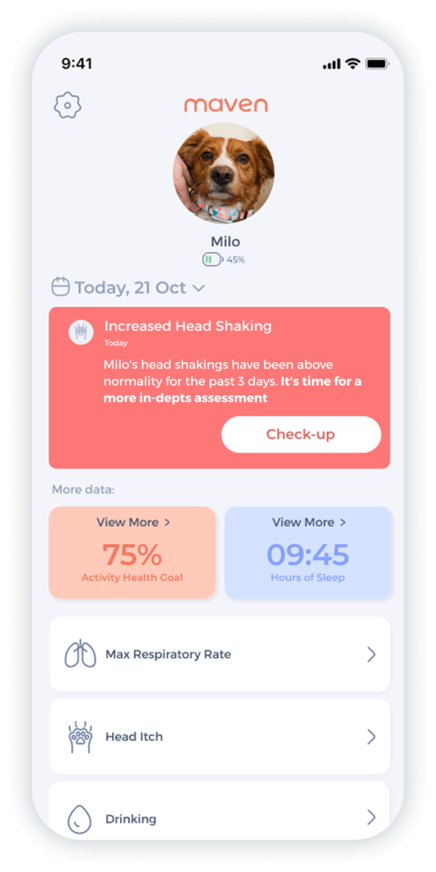
Monitor heart rate, respiratory rate, activity & rest, drinking, itch behavior.
It has:
It also offers:
- Rest patterns
- Activity patterns
- Water intake
As heart disease progresses, dogs often show:
- Rising resting respiratory rate
- Increased rest time
- Reduced activity
- Changes in heart rate trends
Maven builds a personalized baseline and alerts you when these metrics change – helping detect progression earlier and enabling faster veterinary intervention.
FAQ (Vet-Reviewed)
There are five recognized stages: A, B1, B2, C, and D. They range from at-risk dogs (A) to advanced heart failure (D).
Progression varies widely. Some dogs remain stable for years in the early stages, while others progress more quickly depending on the condition and treatment.
Symptoms typically appear in Stage C, when the heart can no longer compensate effectively.
You can track resting respiratory rate, activity, and behavior. Using a continuous monitoring device provides more accurate and consistent insights.
Conclusion
Understanding the stages of heart disease in dogs helps you stay one step ahead. While early stages may show no symptoms, measurable changes often begin long before visible signs appear.
By combining regular veterinary care with consistent at-home monitoring, you can:
- Detect progression earlier
- Start treatment at the right time
- Improve your dog’s quality of life
Heart disease is manageable – especially when you have the right knowledge and tools to act early.
Maven Pet focuses on improving the quality of life of our pets with technology, using artificial intelligence (AI) to enable proactive pet care. By accurately collecting and monitoring pet data 24/7 and flagging any irregularities, Maven Pet empowers pet parents and veterinarians to stay ahead of potential health issues, ensuring the well-being and longevity of our beloved companions.