
Atopic Dermatitis In Dogs: Symptoms & Treatment Options (Vet Verified)

Chronic itching, constant paw licking and recurring ear infections are frustrating for both dogs and their owners. If these signs don’t resolve and seem to flare seasonally or persist year-round, you may be dealing with an atopic dermatitis dog case, which is a common but lifelong allergic skin condition. Understanding the signs early makes management much easier.
What Is Atopic Dermatitis Dog Owners Should Know About?
An atopic dermatitis dog has a chronic allergic skin condition triggered by environmental allergens like pollen, dust mites, or mold. It causes persistent itching, inflammation, and recurring ear or skin infections. Although not curable, atopic dermatitis in dogs can be effectively managed with consistent treatment and early recognition of flare-ups.
Key Takeaways
- Atopic dermatitis is a chronic allergic skin disease.
- Environmental allergens are the primary triggers.
- Diagnosis requires ruling out other causes of itching.
- Canine atopic dermatitis treatment focuses on long-term control.
- Monitoring scratching patterns helps detect flare-ups early.
What Is Atopic Dermatitis in Dogs?

So, what is atopic dermatitis in dogs exactly?
It is a chronic inflammatory skin condition associated with environmental allergies. According to Cornell’s Riney Canine Health Center and Veterinary Partner (VIN) affected dogs have an exaggerated immune response to allergens such as:
- Tree and grass pollen
- Dust mites
- Mold spores
- Environmental debris
Dogs with this condition often have a weakened skin barrier, allowing allergens to penetrate more easily and trigger inflammation.
Most dogs develop signs between 6 months and 3 years of age, though symptoms may worsen over time.
What Causes Atopic Dermatitis in Dogs?
The condition develops due to a combination of:
- Genetic predisposition
- Immune system hypersensitivity
- Skin barrier dysfunction
Peer-reviewed veterinary research confirms that environmental allergens are the main triggers.
Food allergies do not directly cause atopic dermatitis but may coexist and worsen itching. For this reason, veterinarians sometimes recommend elimination diet trials during diagnosis.
“I got the Maven sensor for my 14-year-old Chihuahua mix with heart and trachea issues. It gave me back peace of mind – I can track her RRR, BPM, drinking, and activity anytime and know instantly if something’s wrong. Highly recommend!”

★★★★★
Chiara De Luca
Titti
Common Symptoms of Atopic Dermatitis Dog Owners Notice
The earliest sign is almost always itching and often before visible skin changes appear.
Typical symptoms include:
- Persistent scratching
- Paw licking or chewing
- Face rubbing
- Recurrent ear infections
- Red, inflamed skin
- Hair thinning from over-grooming
Over time, chronic scratching and licking damages the skin further, leading to bacterial or yeast infections.
Many owners also notice disrupted sleep during flare-ups. Nighttime itching may cause restlessness, which is why tracking patterns can be helpful.
How Veterinarians Diagnose Atopic Dermatitis
There is no single test that confirms an atopic dermatitis dog diagnosis.
Veterinarians rely on:
- A detailed medical history
- Age and pattern of symptom onset
- Ruling out parasites and fleas
- Treating secondary infections
- Food elimination trials if indicated
Allergy testing may later help guide immunotherapy but does not confirm the disease itself. Diagnosis is largely clinical and based on exclusion.
How to Treat Atopic Dermatitis in Dogs

When owners ask how to treat atopic dermatitis in dogs, the key point is that treatment manages symptoms as there isn’t a cure for the condition.
Canine atopic dermatitis treatment may include:
- Anti-itch medications
- Short-term corticosteroids during flares
- Allergen-specific immunotherapy
- Medicated shampoos or topical treatments
- Omega-3 fatty acid supplementation
- Treatment of secondary infections
The goal is to:
- Reduce itching
- Prevent infections
- Strengthen the skin barrier
- Improve overall comfort
Most dogs require a tailored, long-term management plan.
Long-Term Management & Flare Prevention
“Atopic dermatitis is a lifelong condition, but with early recognition and consistent management, most dogs can live very comfortable lives.” – Joana Babo, DVM, Veterinarian at Maven Pet
Long-term management focuses on:
- Identifying seasonal flare patterns
- Staying consistent with medication
- Monitoring ear health
- Reducing allergen exposure when possible
Flare-ups often begin with subtle increases in itching before visible skin changes appear. Recognizing these early signs allows for faster intervention.
How Maven Pet Can Help
Objective tracking can make chronic management more proactive. Maven’s pet health tracker monitors scratching frequency along with activity, rest, heart rate, and resting respiratory rate.

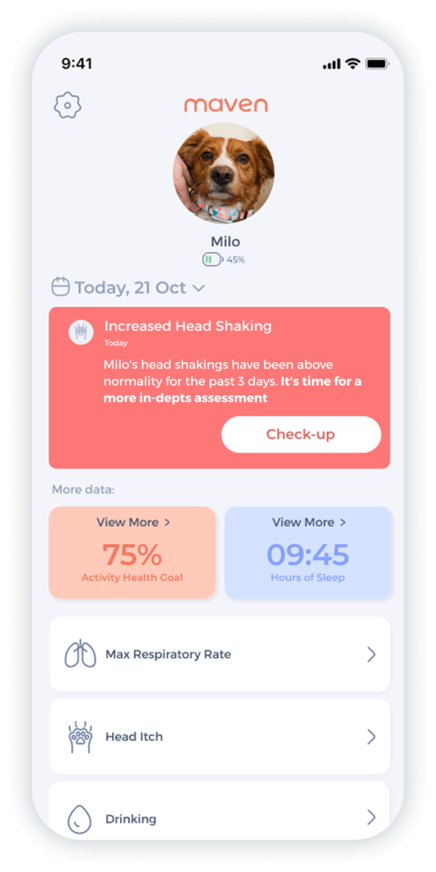
Monitor heart rate, respiratory rate, activity & rest, drinking, itch behavior.
Dogs with atopic dermatitis may show:
- Increased scratching before visible lesions
- Disrupted rest during flare-ups
- Mild heart rate changes during discomfort
By using the Maven pet health app owners can establish a personalized baseline.
When scratching patterns deviate, the dog health tracker provides alerts that help identify flare-ups earlier and evaluate treatment response.
For more information on related conditions, see the Dog Health page about dog skin allergies.
Continuous monitoring adds clarity to long-term allergy management.
FAQ
It is a chronic allergic skin disease triggered by environmental allergens that leads to persistent itching and inflammation and that negatively impacts both the dog and the owners quality of life
No. It is a lifelong condition, but most dogs can live comfortably with proper management.
Long-term care includes anti-itch medication, immunotherapy when appropriate, skin barrier support, and infection control.
Food allergies do not directly cause it but can worsen itching and may occur alongside it.
Increased scratching, rest disruption, new ear infections, or spreading redness may signal a flare-up.
Conclusion
Managing an atopic dermatitis dog requires patience and consistency but it is absolutely manageable.
With early recognition, veterinary guidance, and careful monitoring of scratching patterns, most dogs live very comfortable lives. For that matter dog health trackers can be of great help. Identifying flares early allows treatment adjustments before symptoms escalate.
Chronic doesn’t mean overwhelming. It means proactive care makes all the difference.
Maven Pet focuses on improving the quality of life of our pets with technology, using artificial intelligence (AI) to enable proactive pet care. By accurately collecting and monitoring pet data 24/7 and flagging any irregularities, Maven Pet empowers pet parents and veterinarians to stay ahead of potential health issues, ensuring the well-being and longevity of our beloved companions.