
Environmental Allergies in Dogs: Symptoms & Treatment Guide (Vet Verified)

Allergies are the immune system going haywire to the presence of foreign substances we call allergens. The exposure to these allergens causes different reactions, like itching, coughing, and others, depending on the allergens. Environmental allergies in dogs are among the most common, and today we’ll learn what triggers them, the signs, and how to differentiate them from, say, food allergies. Most importantly, you’ll learn how to track the signs before the allergies flare up.
Key takeaways:
- Environmental allergies often cause itching, redness, and recurring ear or skin problems.
- Seasonal triggers like tree, grass, and weed pollen commonly worsen symptoms.
- Early signs can be subtle, so tracking behavior changes is key.
- Treatment involves reducing exposure, soothing the skin, and working with your veterinarian.
- Maven Pet helps detect allergy flare-ups early by monitoring scratching, activity shifts, and trends.
What Are Environmental Allergies in Dogs?

Environmental allergies in dogs are overreactions of the immune system to things found in the environment, such as pollen, dust mites, mold, or even the grass they roll in every day. Even though these particles are pretty harmless, the dog’s body treats them like invaders, and that overreaction shows up as itching, redness, and all sorts of skin and ear troubles.
Many pups have symptoms that come and go with the seasons, while others struggle year-round depending on what they’re exposed to.
Signs of Environmental Allergies in Dogs
Dogs aren’t shy about showing when something’s bugging them, but allergy symptoms can look a lot like other dog skin allergies or ear problems. Here’s what usually tips owners (and vets) off that environmental allergens are at play.
- Itching or scratching
- Red and inflamed skin
- Frequent paw licking or chewing
- Recurrent ear infections
- Watery eyes
- Sneezing
- Hair loss
- Dry, flaky, or scaly skin
- Musty odor from the skin
If your dog is showing one or more of these signs, especially if they pop up seasonally or stick around despite routine grooming, allergies may be behind it. Because these symptoms overlap with infections, parasites, and other conditions, it’s always wise to loop in your veterinarian, especially if things seem to worsen over time.
“I got the Maven sensor for my 14-year-old Chihuahua mix with heart and trachea issues. It gave me back peace of mind – I can track her RRR, BPM, drinking, and activity anytime and know instantly if something’s wrong. Highly recommend!”

★★★★★
Chiara De Luca
Titti
Dog Pollen Allergy: Common Seasonal Triggers
A pollen allergy in dogs is a reaction to those tiny grains that plants release. When a pooch inhales it or comes into contact with pollen through their skin, their body treats it like a threat, and in comes a sparking inflammation. This is why dogs with pollen allergies itch so much, chew their paws, and break out in red, irritated patches during certain times of the year.
These allergies tend to exacerbate during spring and fall, so mostly during warmer months, since that’s when the plants release pollen. Excessive exposure to it can lead to atopic dermatitis in dogs, so you can expect a lot of scratching, licking, and recurring ear or skin problems.
The typical seasonal triggers include:
- Tree pollen
- Grass pollen
- Weed pollen
- Flower pollen
- Airborne plant debris
How to Treat Environmental Allergies in Dogs
“Dogs with environmental allergies may scratch, lick, or shake their head long before visible redness appears. Tracking these subtle changes helps us act sooner.” — Carolina Domingues, DVM, Veterinarian at Maven Pet
Helping a dog with environmental allergies is all about reducing their exposure to triggers first, and then soothing irritated skin. The treatment also includes topical treatments and medications, as well as allergy testing.
- Allergy testing – Your veterinarian may suggest intradermal or blood testing to pinpoint specific environmental triggers. Knowing the culprits makes long-term management far more effective.
- Skin-focused therapies – These may include topical treatments such as medicated mousses, sprays, or baths designed to strengthen the skin barrier and calm inflammation.
- Targeted prescription treatments – Vets have several therapeutic options they can tailor to your dog’s age, health, and severity of symptoms, especially if they can rely on the data from a dog health tracker that stores and even analyzes the information.
Lifestyle adjustments play a helpful supporting role in allergy care, so regular grooming can keep the coat cleaner and gently remove allergens that cling to the fur. There are also skin balms or paw protectants like non-medical options that can add a layer of comfort.

Treating Environmental Allergies in Dogs at Home
Managing your dog’s environmental allergies at home is mostly about limiting what sets them off and keeping their skin as happy as possible. We are talking about wiping their paws and coat after walks, giving them a soothing bath with a vet-approved shampoo, or freshening up their bedding more often during high-pollen weeks.
It also helps to keep your home environment allergy-friendly. Regular vacuuming, running an air purifier, and staying on top of grooming can all make your dog’s world a bit easier on their skin. None of this is a magic cure, that’s for sure. However, if you combine these habits with your vet’s plan, most dogs will feel noticeably better and less itchy.
How Maven Pet Helps Monitor Skin & Allergy Symptoms
Environmental allergies can ebb and flow so quietly that one day your dog might scratch a little, start shaking its head more the next, or suddenly seem less playful during a high-pollen week. Maven Pet’s pet health tracker steps in as the extra set of eyes (and data) you wish you had.
Instead of just counting steps like a typical activity tracker, Maven learns your dog’s personal “normal,” watches for unusual dips or spikes in behavior, and highlights patterns that often show up during allergy flare-ups.

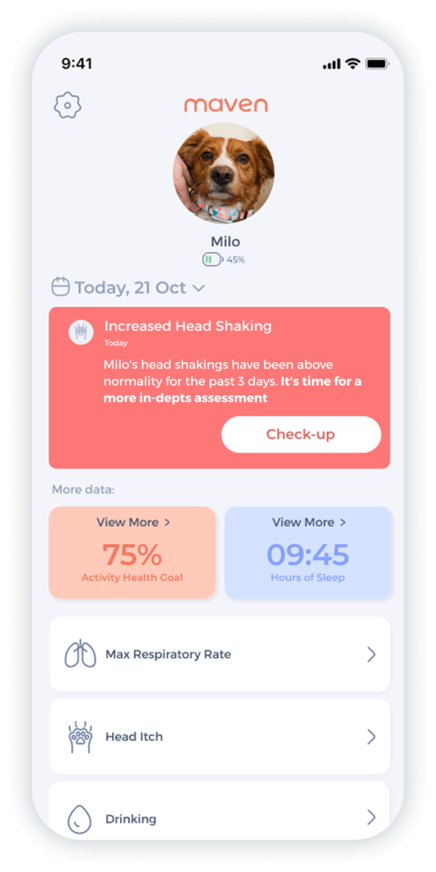
Monitor heart rate, respiratory rate, activity & rest, drinking, itch behavior.
What really sets it apart is its itch tracking. The lightweight collar sensor can recognize head scratching and shaking, then compare each day to your dog’s baseline to flag anything out of the ordinary. Weekly and monthly views on the pet health app make it easy to spot trends, like flare-ups after a windy day or improvements after starting a new vet-recommended skin routine.
And when high-itch days stack up, Maven nudges you with a simple “monitor → checkup → alert” flow, so that you know it’s time to bring in the professional help.
Conclusion
Environmental allergies can make life uncomfortable for dogs, but if you recognize the early signs and understand common triggers like pollen, plus track the behavior changes over time, you can stay ahead of things and minimize the impact of those allergy strikes. Tools like the Maven Pet collar make that job easier by spotting subtle shifts before they turn into a medical emergency. The technology is there to help; just learn how to use it.
Maven Pet focuses on improving the quality of life of our pets with technology, using artificial intelligence (AI) to enable proactive pet care. By accurately collecting and monitoring pet data 24/7 and flagging any irregularities, Maven Pet empowers pet parents and veterinarians to stay ahead of potential health issues, ensuring the well-being and longevity of our beloved companions.