
Flea Allergy Dermatitis in Dogs: Symptoms & Treatment (Vet Verified)

Few things are as frustrating for a dog parent as watching their pet constantly scratch, chew, and suffer from red, inflamed skin. If you’ve noticed your dog is suffering from dog skin allergies, the culprit may be more than just a passing flea: it can be flea allergy dermatitis. Today, we will explain why FAD causes such severe reactions, outline the key symptoms, and provide clear guidance on how to treat flea allergy dermatitis in dogs, from veterinary options to safe home remedies and long-term prevention.
Key Takeaways
- Flea Allergy Dermatitis (FAD) is an allergic reaction to proteins found in a flea’s saliva, not just the bite itself.
- Key symptoms include intense itching focused around the tail base, hind legs, and inner thighs.
- Effective treatment involves aggressive flea control, anti-inflammatory medication, and soothing topical therapies.
- Long-term prevention is mandatory. Once a dog has FAD, they must be on year-round, reliable flea control.
- A pet health tracker like Maven Pet can monitor scratching patterns, providing early alerts for flare-ups.
What Is Flea Allergy Dermatitis in Dogs?

Flea allergy dermatitis in dogs is a specific type of allergic reaction. It’s not the flea bite that causes the problem; it’s the flea saliva.
When a flea bites a dog to feed, it injects a small amount of saliva into the skin.
This saliva contains proteins and antigens. In a dog with FAD, the immune system overreacts to these proteins, identifying them as a major threat.
This exaggerated immune response is what causes the intense inflammation and itching.
Because the reaction is triggered by the protein antigen, a dog with FAD can experience severe, widespread itching and skin damage from the bite of only one or two fleas, making the condition often much worse than the visible flea infestation might suggest.
What Are the Symptoms of Flea Allergy Dermatitis?
FAD is characterized by a very specific and intense pattern of irritation. Recognizing the signs of flea allergy dermatitis is often the first step in diagnosing your itchy dog.
- Intense itching
- Hair loss
- Redness and inflammation
- Small, red bumps or pimple-like lesions
- Thickened skin
- Scabs and crusts
Flea saliva tends to concentrate near the back half of the dog’s body, which is where FAD symptoms are usually most pronounced:
- Tail base
- Rump and hind legs
- Inner thighs and groin
- Abdomen
“I got the Maven sensor for my 14-year-old Chihuahua mix with heart and trachea issues. It gave me back peace of mind – I can track her RRR, BPM, drinking, and activity anytime and know instantly if something’s wrong. Highly recommend!”

★★★★★
Chiara De Luca
Titti
Why FAD Causes Severe Itching
When a dog’s immune system responds to the flea saliva proteins, it releases powerful inflammatory chemicals, including histamine, that cause the blood vessels to dilate and the nerve endings to become highly stimulated.
The result is a sensation of intense, unbearable itchiness.
Because the reaction is allergic, the itching persists long after the flea has finished feeding and is disproportionately severe compared to the size of the bite.
This sustained, self-inflicted trauma from scratching and chewing is what leads to secondary infections and the breakdown of the skin barrier.
How to Treat Flea Allergy Dermatitis in Dogs
Effective treatment for FAD requires a two-pronged approach: eliminating the fleas and controlling the allergic reaction itself.
1. Eliminating the Fleas
The first and most critical step in how to treat flea allergy dermatitis in dogs is total flea eradication.
- Talk to your vet to get a highly effective, fast-acting, prescription-strength product (oral or topical).
- Vacuum daily and use vet-recommended premise sprays or professional extermination to clean the environment.
2. Controlling the Inflammation and Itch
Once the flea source is addressed, the focus shifts to stopping the immediate allergic reaction with vet recommended anti-inflammatory medications and antibiotics or antifungals if the skin had secondary bacterial or yeast infections.
How to Treat Flea Allergy Dermatitis in Dogs at Home

While veterinary medication is essential for breaking the severe itch cycle, flea allergy dermatitis home care can significantly increase your dog’s comfort.
- Use soothing, medicated shampoos containing ingredients like oatmeal or colloidal sulfur. Follow your vet’s instructions on frequency, as over-bathing can dry out the skin.
- Applying a cool, wet compress to localized “hot spots” can provide immediate relief from the heat and pain.
- If your dog is aggressively chewing or licking a specific area, an Elizabethan collar (cone) may be needed temporarily to prevent further self-mutilation and allow the skin to heal.
- Wash all dog bedding, blankets, and plush toys in hot water weekly to help kill any remaining fleas and remove allergens.
Dog Itchy Skin Home Remedy: What’s Safe?
When looking for a home remedy for itchy dogs, stick to gentle, proven methods and always check with your vet before applying anything to broken skin.
- Safe Soothing Options:
- Colloidal oatmeal baths
- Diluted apple cider vinegar (never use on open sores or raw skin)
- What to AVOID:
- Tea tree oil: Highly toxic to dogs, even in small amounts.
- Excessive human topical creams: Many contain ingredients like zinc oxide or pain relievers that are toxic if licked and ingested.
Long-Term Prevention & Flea Control
For a dog with FAD, prevention is the only cure. Since the reaction is triggered by a single bite, your flea control strategy must be consistent.
- Year-round protection
- Rely exclusively on fast-acting, high-quality prescription flea and tick preventatives.
- Maintain a clean home
How Maven Pet Helps Track Allergy Flares
“Dogs with flea allergy dermatitis often scratch far more than owners realize. Tracking scratching patterns can help us catch flare-ups early.” — Joana Babo, DVM, Veterinarian at Maven Pet
Managing FAD means staying ahead of flare-ups, and the key early indicator is often an increase in scratching that owners might miss while sleeping or away from home.

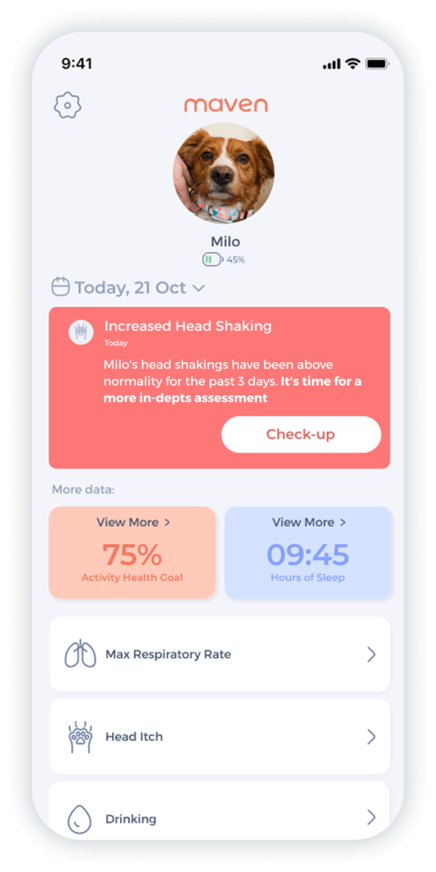
Monitor heart rate, respiratory rate, activity & rest, drinking, itch behavior.
The Maven Pet Health Monitor is a dog health tracker that provides objective data to help you and your veterinarian manage dog skin allergies.
- Scratching frequency tracking: Maven Pet tracks the frequency and intensity of scratching, barking, and shaking. A sudden increase in scratching can alert you to a potential flea exposure or allergy flare-up before severe skin damage occurs.
- Rest and activity monitoring: Excessive scratching and discomfort often lead to poor sleep. The tracker helps identify changes in your dog’s rest patterns and activity levels, which are proxies for overall comfort.
- Sharing data with your vet: The objective data collected by the pet health app provides your vet with a clear, unbiased picture of the severity of the itching over time, helping them make more accurate treatment adjustments.
Takeaways Recap
- Make year-round, prescription-strength flea control non-negotiable for all pets.
- Work with your vet to use anti-inflammatory medications to break the itch-scratch cycle and prevent secondary infections.
- Use safe remedies like colloidal oatmeal baths and keep bedding clean.
- Use the Maven Pet Health Monitor to track subtle, yet significant, increases in scratching and changes in comfort levels.
Maven Pet focuses on improving the quality of life of our pets with technology, using artificial intelligence (AI) to enable proactive pet care. By accurately collecting and monitoring pet data 24/7 and flagging any irregularities, Maven Pet empowers pet parents and veterinarians to stay ahead of potential health issues, ensuring the well-being and longevity of our beloved companions.