Hotspots On Dogs Explained: Causes, Treatment & Relief (Vet Verified)

Does your dog have a raw, oozing sore that appeared out of nowhere? You’re most likely worried, so let’s talk about the probable cause: hotspots on dogs. These are a common, but painful, skin condition caused by excessive licking and chewing. The best way to rid your furry friend of this issue is by understanding the “itch–lick–scratch” cycle. So today we’re going to talk about what hotspots on dogs are, what causes them, and what you can do to help your pet.
What Is a Hotspot on a Dog?
Hotspots on dogs, scientifically known as acute moist dermatitis, are localized areas of skin inflammation and bacterial infection. They are caused by obsessive licking, chewing, or scratching of a specific spot, breaking the skin barrier and allowing bacteria to flourish.
Key Takeaways
- Speed is critical: Hotspots can double in size in just a few hours if the dog continues to lick them.
- Identify the trigger: Hotspots are a symptom of health issues like dog skin allergies, fleas, or moisture.
- Pain management: Prioritize your dog’s comfort during treatment.
- Prevention: Monitor scratching behavior with a dog health tracker to catch a hotspot before it becomes a major infection.
What Causes Hotspots on Dogs?
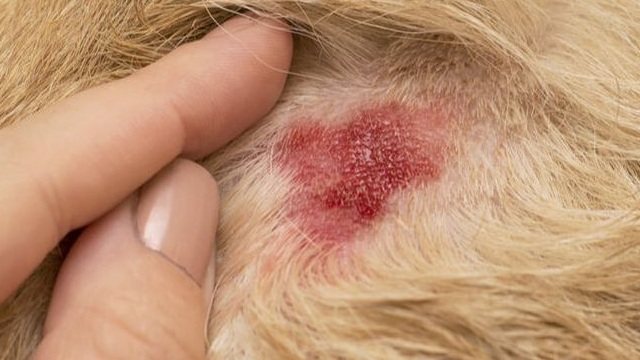
A hotspot is essentially the skin’s “overreaction” to an initial irritation. It begins as a small itch and escalates as the dog tries to soothe the area by licking or biting. This introduces moisture and bacteria into the broken skin, creating a warm, damp environment where infection thrives.
While the dog’s scratching causes the physical wound, there is always an initial “itch” that starts the process. Let’s look at the of the causes behind hotspots:
- Environmental or food allergies
- Flea allergy dermatitis
- Irritation caused by external factors, such as moisture or an accessory
- Ear infections
- Boredom or stress
- Poor grooming
How Do You Treat Hotspots on a Dog?
“Hotspots can worsen rapidly once a dog starts licking or scratching the area. Identifying and addressing the itch early is key to preventing severe skin infections.” — Carolina Domingues, DVM, Veterinarian at Maven Pet
If you catch the lesion early, you may be able to begin treatment at home. You can follow these steps:
- Trim the Area: Carefully clip the hair around the hotspot to allow the wound to breathe. This prevents moisture from being trapped against the skin.
- Cleanse Gently: Use a mild, water-based antiseptic or a saline solution to flush the area. Avoid using stinging agents like alcohol or hydrogen peroxide.
- Apply a Protective Barrier: Use a vet-recommended topical spray or cream designed for acute moist dermatitis.
- Use an Elizabeth collar: This helps prevent your dog from licking, which allows the the affected area to heal faster
It’s important to be cautious here: clipping the hair and cleaning the wound can be incredibly painful for the dog. Even the gentlest pet may snap or bite due to the intensity of the pain. If your dog seems agitated, stop immediately and see a vet.
“I got the Maven sensor for my 14-year-old Chihuahua mix with heart and trachea issues. It gave me back peace of mind – I can track her RRR, BPM, drinking, and activity anytime and know instantly if something’s wrong. Highly recommend!”

★★★★★
Chiara De Luca
Titti
How to Cure Hotspots on Dogs Naturally: What’s Safe vs Risky
If you’re wondering how to cure hotspots on dogs naturally at home, here are some tips:
- What’s safe:
- Cool chamomile or black tea compresses for 5 to 10 minutes
- Pure aloe vera gel
- Diluted apple cider vinegar
- Oatmeal baths
- What’s risky:
- Essential oils (like tea tree)
- Thick ointments
- Alcohol
When Dog Hotspots Are an Emergency
Seek emergency care if:
- The hotspot covers a large percentage of the dog’s body.
- The dog is lethargic or has a fever.
- The wound is deep, foul-smelling, or showing signs of necrosis (dark, dying tissue).
- Your dog seems to be in pain.
How Maven Helps Detect Hotspots Early
The key to avoiding the pain of a full-blown hotspot is intervention during the “itch” phase. The Maven Pet Health Monitor acts as a 24/7 digital guardian for your dog.

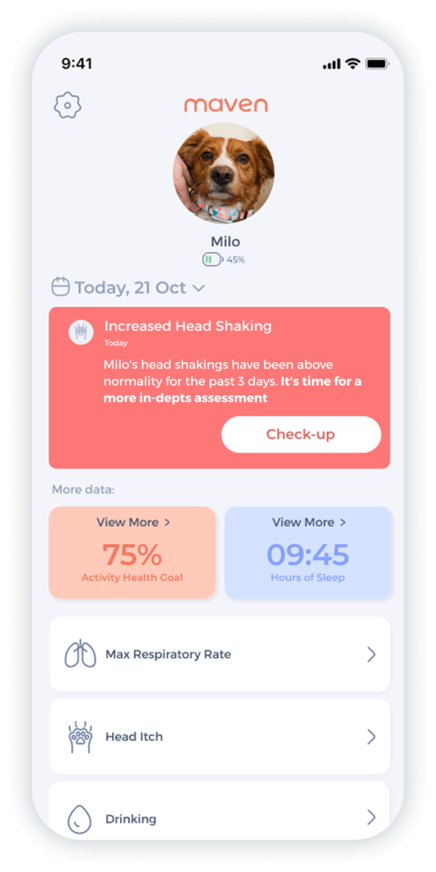
Monitor heart rate, respiratory rate, activity & rest, drinking, itch behavior.
By using this pet health tracker, you can monitor:
- Scratching and Licking Frequency: Maven detects these obsessive behaviors before a lesion even forms.
- Activity Levels: Discomfort often leads to a drop in activity, which Maven flags against your pet’s baseline.
- Rest Patterns: Pain and itching disrupt sleep; Maven tracks these deviations to alert you to hidden discomfort.
- Vitals: Changes in heart rate and resting respiratory rate can indicate stress or systemic inflammation.
You can check the data on Maven’s pet health app and share it with your vet for a proper diagnosis.
FAQs (Vet-Reviewed)
Bacteria like Staphylococcus thrive in warm, moist environments. When a dog licks a sore, they provide constant moisture and heat, allowing the infection to move across the skin like wildfire.
Rarely. Because the “itch–lick–scratch” cycle is self-reinforcing, most hotspots will continue to expand until the dog is physically prevented from licking.
No, hotspots themselves are not contagious. However, if the cause is a parasite like fleas or mange, those can spread to other animals.
With proper treatment and a cone, most hotspots begin to dry out within 48 hours.
Conclusion
Managing hotspots on dogs requires a blend of immediate wound care and long-term vigilance. Make sure to keep the area clean, dry, and protected from further licking so you can help your dog recover quickly.
Remember that the best way to “treat” a hotspot is to prevent it from happening in the first place by monitoring your dog’s skin health and scratching habits with a high-tech dog health tracker.
Maven Pet focuses on improving the quality of life of our pets with technology, using artificial intelligence (AI) to enable proactive pet care. By accurately collecting and monitoring pet data 24/7 and flagging any irregularities, Maven Pet empowers pet parents and veterinarians to stay ahead of potential health issues, ensuring the well-being and longevity of our beloved companions.