
Heart Arrhythmia in Dogs: Types & Treatment (Vet Verified)

A diagnosis of heart arrhythmia in dogs can raise many questions. What type is it? How serious is it? And what happens next? While arrhythmias vary in severity, understanding the condition, treatment options, and how to monitor it over time can help you manage your dog’s health with more confidence.
What is a heart arrhythmia in dogs?
Heart arrhythmia in dogs refers to an abnormal heart rhythm caused by disruptions in the heart’s electrical system. It can result in a heartbeat that is too fast, too slow, or irregular. Some arrhythmias are mild, while others affect circulation and require treatment and ongoing monitoring.
Key Takeaways
- Heart arrhythmia in dogs affects the rhythm and timing of heartbeats
- There are different types, including fast, slow, and irregular rhythms
- Causes often include underlying heart disease or systemic conditions
- Treatment depends on severity and underlying cause
- Continuous monitoring helps track progression and guide care decisions
What Is Heart Arrhythmia in Dogs?

Heart arrhythmia occurs when the electrical signals that control the heartbeat become disrupted. This affects how the heart contracts and pumps blood.
In a healthy heart:
- Electrical signals follow a consistent pathway
- The heartbeat is regular and coordinated
With arrhythmia:
- Signals may be too fast, too slow, or irregular
- Blood flow may become less efficient
Some arrhythmias are incidental findings, while others are linked to more serious cardiac conditions.
“When a dog is diagnosed with a heart arrhythmia, ongoing monitoring becomes essential. Tracking trends like heart rate and resting respiratory rate can help detect changes early and guide treatment decisions more effectively.” — Sara Leitão, DVM, Veterinarian at Maven Pet
What Are the Different Types of Cardiac Arrhythmia in Dogs?
There are several types of cardiac arrhythmia in dogs, classified based on how they affect heart rhythm.
1. Tachyarrhythmias (Fast Heart Rate)
- Abnormally rapid heartbeat
- Can reduce effective blood pumping
- Examples: atrial fibrillation, ventricular tachycardia
According to VCA Animal Hospitals, atrial fibrillation is a condition where the atria contract rapidly and in an uncoordinated way. In most dogs, atrial fibrillation develops as a result of underlying heart disease.
2. Bradyarrhythmias (Slow Heart Rate)
- Slower-than-normal heart rate
- May lead to weakness or fainting
- Examples: sinus bradycardia, heart block
3. Irregular Rhythms
- Unpredictable or inconsistent heartbeat
- May occur intermittently
- Can be harder to detect
“I got the Maven sensor for my 14-year-old Chihuahua mix with heart and trachea issues. It gave me back peace of mind – I can track her RRR, BPM, drinking, and activity anytime and know instantly if something’s wrong. Highly recommend!”

★★★★★
Chiara De Luca
Titti
What Causes Heart Arrhythmia in Dogs?
Arrhythmias are often linked to underlying health conditions.
Common causes include:
Cardiac conditions:
- Mitral valve disease
- Dilated cardiomyopathy
- Congenital heart abnormalities
Systemic factors:
- Electrolyte imbalances
- Endocrine disorders (e.g., thyroid disease)
- Inflammation or infection
Other contributors:
- Certain medications
- Toxic exposures
- Age-related changes
In some cases, no clear cause is identified, especially in mild or intermittent arrhythmias.
How Is Heart Arrhythmia Treated?
Treatment depends on the type of arrhythmia and its underlying cause.
Common treatment approaches:
Medication
- Antiarrhythmic drugs to regulate heart rhythm
- Medications to treat underlying conditions
Monitoring and follow-up
- Regular veterinary evaluations
- ECG or Holter monitoring
Lifestyle management
- Controlled activity levels
- Reduced stress
Not all arrhythmias require treatment. Some are monitored over time without intervention unless they progress.
What Is the Prognosis for Dogs With Heart Arrhythmia?

Prognosis varies depending on several factors:
- Type of arrhythmia
- Underlying cause
- Response to treatment
In mild cases:
- Dogs may live normal lives with minimal intervention
In more serious cases:
- Ongoing treatment is required
- Quality of life depends on management and monitoring
How Do You Monitor a Dog With Heart Arrhythmia?
Because arrhythmias can be intermittent, they are not always detected during routine exams.
Key things to monitor:
- Heart rate trends over time
- Resting respiratory rate
- Activity levels and stamina
- Episodes of weakness or fainting
Continuous monitoring provides a more complete picture than occasional clinical readings.
How Maven Helps
The Maven Pet Health Monitor supports long-term management of heart arrhythmia in dogs through continuous, real-world data.

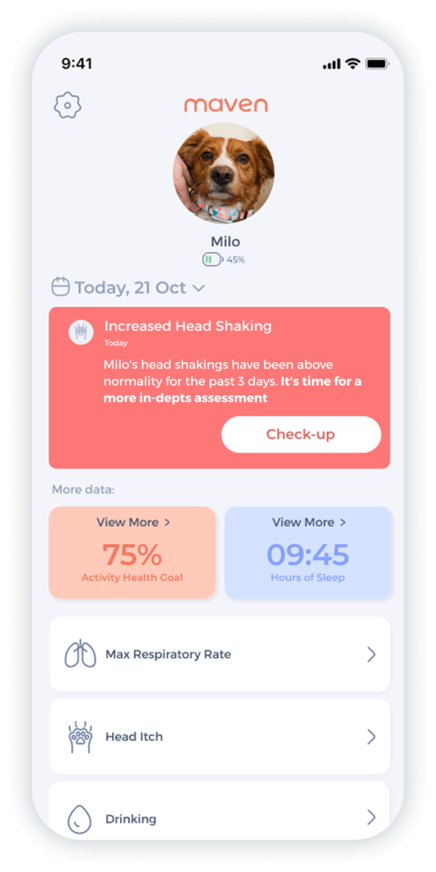
Monitor heart rate, respiratory rate, activity & rest, drinking, itch behavior.
It helps by:
- Tracking heart rate continuously to identify irregular rate trends
- Monitoring resting respiratory rate, which may signal worsening cardiac function
- Measuring activity and rest patterns to assess tolerance and recovery
- Building a personalized baseline for accurate comparison over time
- Sending alerts when changes occur, such as sustained increases in heart rate
This allows both owners and veterinarians to make decisions based on consistent data, not just isolated clinic measurements.
FAQ (Vet-Reviewed)
It is an abnormal heart rhythm caused by disruptions in the heart’s electrical system, leading to irregular, fast, or slow heartbeats.
They include tachyarrhythmias (fast), bradyarrhythmias (slow), and irregular rhythms that may occur intermittently.
Treatment may involve medication, managing underlying conditions, and regular monitoring, depending on severity.
Yes, many dogs live normal lives, especially with mild arrhythmias or proper management and monitoring.
Conclusion
A diagnosis of heart arrhythmia in dogs does not always mean a poor outcome—but it does require attention, understanding, and consistent monitoring.
By combining:
- Veterinary care
- Appropriate treatment
- Continuous health tracking
You can better manage your dog’s condition and respond to changes early.
When it comes to heart health, staying informed and tracking trends over time gives you a clear advantage—and helps ensure your dog receives the right care at the right moment.
Maven Pet focuses on improving the quality of life of our pets with technology, using artificial intelligence (AI) to enable proactive pet care. By accurately collecting and monitoring pet data 24/7 and flagging any irregularities, Maven Pet empowers pet parents and veterinarians to stay ahead of potential health issues, ensuring the well-being and longevity of our beloved companions.