Exercise Intolerance in Dogs: Signs & Causes (Vet Verified)

Does your dog slow down long before the walk is over? Do they lag behind, sit down unexpectedly, or seem exhausted after only light play? These moments can be easy to dismiss, but they may be telling you something important. Exercise intolerance in dogs is one of the earliest warning signs that an underlying health issue is developing, and catching it early can make a real difference.
Quick Answer: Exercise intolerance in dogs means a dog tires more quickly than expected during physical activity, often stopping, lagging, or struggling to breathe during walks or play. It can be caused by heart disease, respiratory problems, anemia, obesity, or joint pain, and may signal a serious condition that needs veterinary evaluation.
Key Takeaways
- Exercise intolerance is often one of the first signs of heart or lung disease in dogs.
- Symptoms include excessive panting, coughing, lagging, and slow post-exercise recovery.
- Common causes range from cardiovascular disease to anemia, obesity, and joint problems.
- A pet health tracker can detect declining activity trends before symptoms become obvious.
- Always consult your veterinarian if you notice a change in your dog’s stamina or energy.
What Is Exercise Intolerance in Dogs?
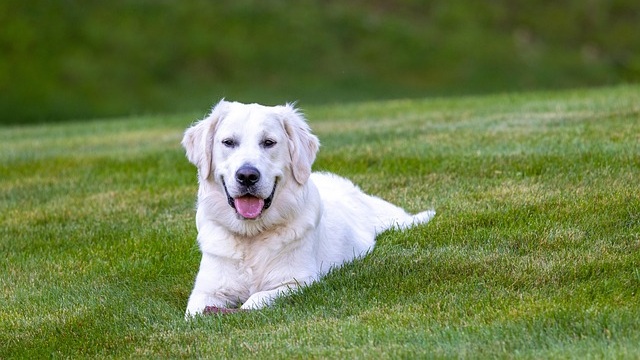
Exercise intolerance occurs when a dog is unable to sustain normal levels of physical activity for their age, breed, and fitness level. Rather than simply being a lazy day, exercise intolerance reflects an underlying limitation, whether that is the heart not pumping efficiently, the lungs not delivering enough oxygen, the muscles not receiving adequate blood flow, or the joints making movement painful.
It is important to distinguish exercise intolerance from normal fatigue. A dog that is tired after an unusually long hike is behaving normally. A dog that struggles to complete a familiar walk, or who seems winded by routine play, may be showing early signs of a health problem worth investigating.
What Are the Symptoms of Exercise Intolerance in Dogs?
Symptoms can be subtle at first, which is why many owners overlook them for weeks or even months. The most common signs include:
- Tiring or slowing down much sooner than usual during walks or play
- Excessive or labored panting that does not resolve quickly after rest
- Coughing during or after physical activity
- Sitting or lying down mid-walk without wanting to continue
- Pale, blue-tinged, or grayish gums after exertion
- Weakness, stumbling, or apparent muscle fatigue
- Longer than usual recovery time after light exercise
- Increased time spent sleeping or resting throughout the day
If you notice any of these signs, particularly a combination of them, it is worth tracking them carefully and speaking with your vet. A dog activity tracker can help you document patterns over time rather than relying solely on memory.
“I got the Maven sensor for my 14-year-old Chihuahua mix with heart and trachea issues. It gave me back peace of mind – I can track her RRR, BPM, drinking, and activity anytime and know instantly if something’s wrong. Highly recommend!”

★★★★★
Chiara De Luca
Titti
What Causes Exercise Intolerance in Dogs?
There are several potential underlying causes, and they vary considerably in severity:
- Heart disease: Conditions like dilated cardiomyopathy or mitral valve disease reduce the heart’s ability to pump blood efficiently. Dog heart disease is one of the most common causes of exercise intolerance, particularly in middle-aged and older dogs.
- Respiratory conditions: Chronic bronchitis, laryngeal paralysis, or collapsing trachea can limit oxygen intake during exertion.
- Anemia: Reduced red blood cell counts mean less oxygen is delivered to muscles, causing fatigue even with minimal effort.
- Obesity: Excess body weight puts additional strain on the heart, joints, and respiratory system.
- Orthopedic problems: Arthritis, hip dysplasia, or cruciate ligament injuries can make movement painful, causing dogs to stop or slow down to avoid discomfort.
- Metabolic disorders: Conditions like hypothyroidism or Addison’s disease affect energy production and muscle function.
- Neuromuscular diseases: Certain conditions such as degenerative myelopathy can weaken muscle control or coordination, reducing a dog’s capacity for sustained activity.
“Exercise intolerance is often one of the earliest signs that something isn’t right, especially with the heart or lungs. Subtle changes like decreased activity or an increase in resting respiratory rate can appear before more obvious symptoms, making continuous monitoring incredibly valuable.” – Carolina Domingues, DVM, Veterinarian at Maven Pet
When Should You Be Concerned About Reduced Stamina?
Any noticeable, consistent change in your dog’s stamina warrants attention. You should contact your veterinarian promptly if your dog collapses or faints during exercise, shows blue or white gums, coughs persistently after activity, or experiences sudden and severe exercise intolerance rather than a gradual decline.
For more gradual changes, the key question is: is this new? A dog that has always been low-energy is different from one that used to love long walks and now struggles to get around the block. As Cornell University College of Veterinary Medicine notes, visible signs of a heart problem can appear only after significant disease has already developed, making early tracking all the more important. A dog health tracker can help you spot when a meaningful shift is taking place, even if the change is too subtle to notice day to day.
How Will Your Vet Find the Cause of Exercise Intolerance?
Your veterinarian will take a full history and conduct a physical examination, paying close attention to heart and lung sounds, mucous membrane color, and body condition. Depending on what they find, diagnostics may include:
- Blood work and urinalysis to check for anemia, infection, metabolic issues (e.g., dysregulated blood glucose levels), or organ dysfunction
- Chest X-rays to evaluate heart size and lung condition
- Electrocardiography (ECG) to assess heart rhythm
- Echocardiography (cardiac ultrasound) for detailed heart structure evaluation
- Orthopedic examination if joint pain is suspected
- Thyroid panel or other hormonal testing if a metabolic disorder is possible
Bringing objective data to your vet appointment, such as activity logs or resting respiratory rate trends captured by a pet health app, can meaningfully support the process by showing how patterns have evolved over time.
How Can You Help a Dog With Exercise Intolerance?
Management depends entirely on the underlying cause, which is why veterinary diagnosis comes first. General steps that may help include:
- Following your vet’s guidance on appropriate exercise levels and activity modifications
- Managing weight through a vet-recommended diet if obesity is a contributing factor
- Administering prescribed medications for heart, respiratory, or metabolic conditions
- Providing joint supplements or pain management for orthopedic causes
- Monitoring resting respiratory rate at home, as an increase can signal worsening heart or lung conditions
- Considering physical rehabilitation, which Texas A&M veterinary specialists recommend for improving strength, joint mobility, and stamina in affected dogs
Above all, avoid the temptation to push a dog through fatigue. If your dog is stopping, that is important information, not stubbornness.
How Maven Helps
The Maven Pet Health Monitor is designed to catch early changes in activity, rest, heart rate, and resting respiratory rate, often before they become visible to the naked eye.
- Tracks activity levels continuously, identifying declines in stamina or reduced daily movement
- Monitors rest patterns, revealing increases in fatigue or longer post-exercise recovery times
- Measures heart rate trends to help detect cardiovascular strain during normal routines
- Tracks resting respiratory rate, a key early indicator of heart or lung problems
- Builds a personalized baseline for each dog, enabling meaningful comparisons over time
- Sends alerts when deviations occur, such as reduced activity or a rising resting respiratory rate

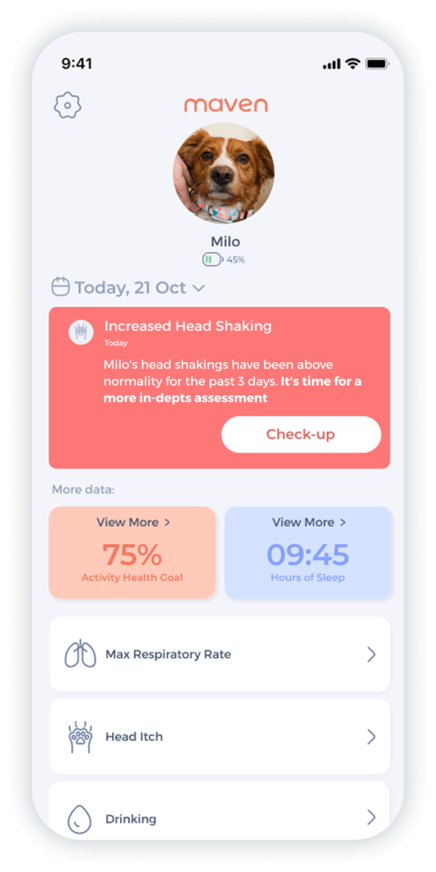
Monitor heart rate, respiratory rate, activity & rest, drinking, itch behavior.
This kind of continuous monitoring supports early detection of exercise intolerance patterns, often before symptoms become visible, giving owners and veterinarians a head start on diagnosis and treatment.
FAQ (Vet-Reviewed)
Exercise intolerance in dogs means a dog cannot sustain normal physical activity for their age and breed without tiring excessively, stopping early, or showing signs of respiratory or cardiovascular stress.
Common symptoms include slowing down or stopping during walks, excessive panting, coughing after activity, pale or bluish gums, weakness, and a longer recovery time after light exercise.
The most common causes are heart disease, respiratory conditions, anemia, obesity, orthopedic pain, and metabolic disorders such as hypothyroidism or diabetes mellitus.
You should be concerned if the change is new, consistent, or getting worse over time. Sudden or severe exercise intolerance, especially alongside coughing, breathing difficulty, or gum color changes, needs urgent veterinary attention.
In many cases, yes. Treatment depends on the underlying cause and may include medication, weight management, physical therapy, or activity modification. Early detection leads to better outcomes.
Conclusion
Exercise intolerance in dogs is not something to wait out. Whether the cause is cardiovascular, respiratory, metabolic, or orthopedic, early identification gives your dog the best chance at effective treatment. Pay attention to subtle changes, track activity trends with a dog health tracker, and do not hesitate to bring those observations to your veterinarian. Your dog cannot tell you when something feels wrong, but their behavior can.
Maven Pet focuses on improving the quality of life of our pets with technology, using artificial intelligence (AI) to enable proactive pet care. By accurately collecting and monitoring pet data 24/7 and flagging any irregularities, Maven Pet empowers pet parents and veterinarians to stay ahead of potential health issues, ensuring the well-being and longevity of our beloved companions.