Dog Separation Anxiety: Signs, Causes, and Solutions (Vet Verified)

You come home to chewed furniture, a soiled floor and complaints from the neighbours about barking. It’s easy to assume your dog has been misbehaving, but before jumping to that conclusion, it’s worth asking a different question: was your dog distressed? Dog separation anxiety is far more common than many owners realise, and what looks like naughtiness is often a genuine emotional struggle.
Dog Separation Anxiety – The Short Answer
Dog separation anxiety, nowadays called separation-related anxiety (SRA) by the veterinary community, occurs when a dog becomes genuinely distressed when separated from the people they are attached to. Signs include barking, destruction, house soiling and pacing, and they occur specifically during owner absence. Early recognition and consistent training are key to improvement.
Key Takeaways
- Dog separation anxiety affects an estimated 14-17% of dogs and is one of the most common canine behavioural disorders
- Up to 8 out of 10 dogs find it difficult to cope when left alone, but half show no obvious signs
- The defining feature is that distress behaviours occur only (or predominantly) during owner absence
- It’s not the same as boredom or frustration, though those can produce similar-looking behaviours
- Graduated desensitisation, predictable routines and positive reinforcement are the foundations of management
- Punishment on return always makes the problem worse, as does leaving a dog to “cry it out”
What Is Dog Separation Anxiety?
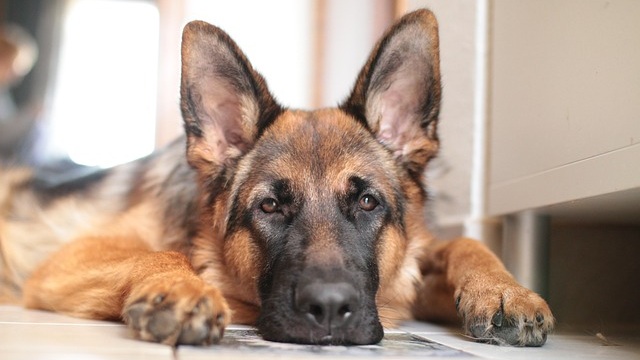
It’s a genuine emotional disorder and not a behaviour problem rooted in disobedience. The veterinary community prefers the terms separation-related anxiety (SRA) or separation-related problems (SRPs), as they better capture the range of emotional states involved (anxiety, fear, frustration or panic).
Separation-related anxiety occurs when a dog becomes distressed in the absence of their caregiver. Their behaviour is driven by genuine distress, not spite. Crucially, research suggests that 8 out of 10 dogs find it hard to cope when left alone, yet half show no obvious signs, making a video camera one of the most reliable diagnostic tools available to owners.
What Are the Signs of Separation Anxiety in Dogs?
The most recognisable symptoms are destruction, house soiling and barking. But the full picture includes: destructive behaviour near doors or exits, howling or whining during absence, house soiling in an otherwise house-trained dog, excessive excitement on return and less visible signs like trembling, salivating, pacing or refusing food when alone.
The defining feature is that signs occur specifically during owner absence. If destructive behaviour or elimination occurs both when owners are home and away, other causes should be considered first.
“I got the Maven sensor for my 14-year-old Chihuahua mix with heart and trachea issues. It gave me back peace of mind – I can track her RRR, BPM, drinking, and activity anytime and know instantly if something’s wrong. Highly recommend!”

★★★★★
Chiara De Luca
Titti
What Causes Separation Anxiety in Dogs?
Several contributing factors have been identified:
- Over-attachment: dogs that follow their owner everywhere and rarely spend time alone are at higher risk
- Aversive training: puppies whose owners used punishment when responding to undesired behaviour had an increased risk of separation-related behaviours
- Fussing on reunions: puppies whose owners fussed over them on return were six times more likely to develop separation-related behaviours
- Life changes: moving house, routine shifts or returning to work can all trigger the condition
Destructive behaviour near exits points to anxiety, while random chewing around the home may indicate frustration or under-stimulation. They require different approaches.
“Separation-related problems and anxiety are more than occasional whining when an owner leaves. Consistent behavioral changes, especially those that occur only during periods of separation, can help identify anxiety early and guide more effective intervention.” — Joana Babo, DVM, Veterinarian at Maven Pet
Is Separation Anxiety Different in Puppies?
Yes, 46.9% of puppies displayed separation-related behaviours at six months of age in RVC research. Puppies sleeping 9 or more hours in a crate or restricted space were less likely to develop them, while aversive training and fussing on reunion significantly increased risk. Introducing positive, structured alone-time from puppyhood is one of the most effective forms of prevention.
How to Fix Separation Anxiety in Dogs
There is no quick fix, but the following steps have strong evidence behind them:
- Graduated desensitisation: gradually increase alone time from seconds upward, only extending duration when the dog stays calm
- Desensitise pre-departure cues: perform departure signals (keys, shoes) without leaving, until they are no longer triggering for the dog
- Exercise before departure: walk your dog before leaving and return about 30 minutes before departure; a tired, fed dog settles more easily
- Provide enrichment: long-lasting food toys reserved only for alone time create a positive association with solitude
- Seek veterinary support when needed: for moderate to severe cases, medication such as fluoxetine or clomipramine can support a retraining programme
What Mistakes Can Make Separation Anxiety Worse?
- Punishing on return: your dog cannot connect your anger with earlier behaviour and will only become more anxious before the next departure
- Leaving them to “cry it out”: dogs left without support only learn that being alone is distressing; stress hormones can take days to reduce, and some learn to suffer in silence
- Excited greetings: keep arrivals calm; both punishment and excitement on homecoming reinforce the emotional contrast between absence and presence
- Progressing too fast: never increase absence duration if the dog showed distress at the previous level
How Maven Helps
The challenge with dog separation anxiety is that the distress happens when you are not there to see it. The Maven pet health tracker monitors your dog continuously, building a personalized baseline and alerting you when something changes.
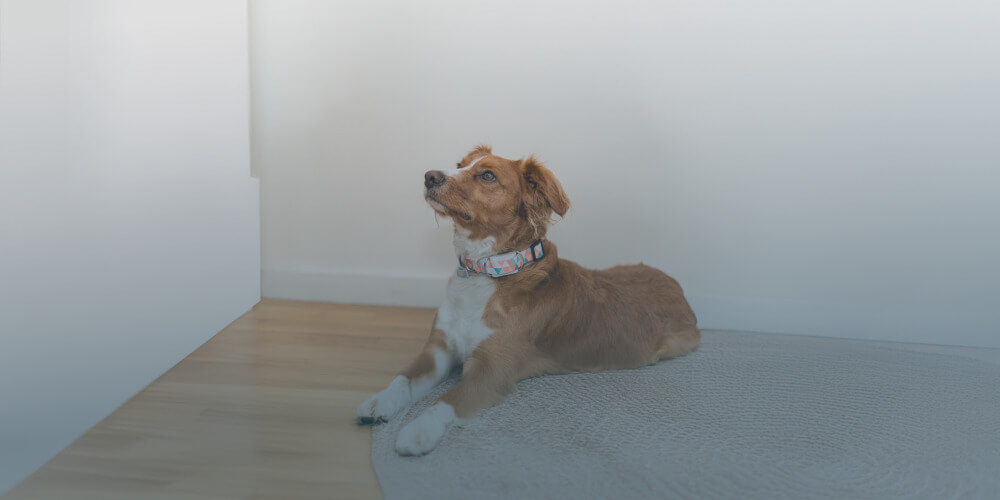
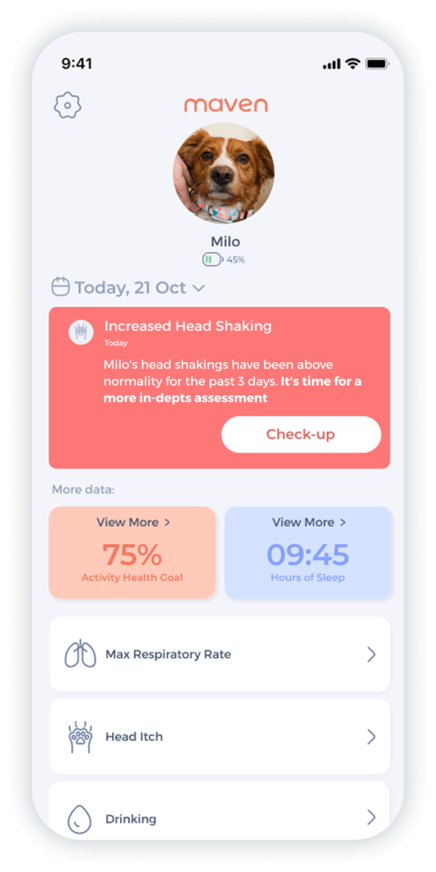
Monitor heart rate, respiratory rate, activity & rest, drinking, itch behavior.
The Maven pet health app combined with a dog health tracker help detect pacing, restlessness or inactivity. The dog activity tracker identifies disrupted rest through the dog sleep tracker, and flags physiological stress through heart rate and resting respiratory rate trends, even in dogs that appear outwardly calm. For owners working through a desensitisation programme, Maven’s data provides objective evidence of improvement over time.
FAQ (Vet-Reviewed)
Key signs include barking or howling when alone, destructive behaviour near exits, house soiling, pacing and excessive excitement on return. Less visible signs include trembling, refusing food, and repetitive behaviours like paw licking. The defining feature is that signs occur specifically during owner absence.
Anxiety-driven destruction typically happens near exit points shortly after departure; boredom-driven destruction tends to occur randomly. Dogs with separation-related anxiety often also show physiological signs like salivation or trembling. A camera recording during absence is the most reliable way to find out.
The most effective approach combines graduated desensitisation with a predictable routine, pre-departure exercise, departure cue desensitisation and reward-based training. In moderate to severe cases, veterinary-prescribed medication may be needed alongside behavioural intervention.
Yes. Nearly half of puppies show separation-related behaviours by six months. Aversive training, excessive fussing on reunion and insufficient alone-time training are the biggest risk factors. Starting early with positive, gradual alone-time training is one of the most effective forms of prevention.
Mild cases may improve within weeks; more severe cases can take months. Medication can help accelerate progress. Look for certified help and always work at the dog’s pace. Never push to longer absences if distress is still present at shorter ones.
Conclusion
Dog separation anxiety is a genuine welfare concern, not a training failure. It cannot be resolved by punishment or by leaving a dog to cope alone. With early recognition, consistent training and the right tools to observe what your dog experiences in your absence, most dogs can learn to feel significantly more comfortable when left alone.
Maven Pet focuses on improving the quality of life of our pets with technology, using artificial intelligence (AI) to enable proactive pet care. By accurately collecting and monitoring pet data 24/7 and flagging any irregularities, Maven Pet empowers pet parents and veterinarians to stay ahead of potential health issues, ensuring the well-being and longevity of our beloved companions.