Ringworm Treatment for Dogs: Symptoms & Care (Vet Verified)

Ringworm in dogs is manageable when caught early but it requires consistency, patience, and close monitoring to get right. Learn everything about ringworm treatment for dogs – how to treat the disease correctly, how long the treatment takes, how to prevent it from spreading, and when to contact your vet.
Ringworm Treatment for Dogs – The Short Answer
Ringworm in dogs is a fungal skin infection treated with antifungal shampoos, topical creams, and oral medications prescribed by a vet. Treatment typically lasts six to eight weeks. Because symptoms are primarily visual circular patches of hair loss and scaly skin tracking progress through regular photo documentation is one of the most effective ways to measure recovery over time.
Key Takeaways
- Ringworm is caused by a fungus, not a worm, and is highly contagious to other pets and people
- The most visible signs are circular patches of hair loss with scaly, crusty edges
- Treatment requires a combination of topical and oral antifungals, plus thorough environmental cleaning
- Recovery takes weeks consistent treatment and regular visual monitoring are essential
- Isolate an affected dog from other animals and vulnerable household members during treatment
What Are the Signs of Ringworm in Dogs?

Despite its name, ringworm has nothing to do with worms. It’s a fungal infection caused by dermatophytes fungi that feed on keratin found in skin, hair, and nails. Knowing the signs early can make treatment faster and more effective.
Common signs of ringworm in dogs include:
- Circular or irregular patches of hair loss, often with a defined edge
- Scaly, flaky, or crusty skin within or around the bald patches
- Brittle or broken hairs around the lesion border
- Reddened or inflamed skin at the site
- In some cases, darkened or thickened skin over time
Unlike ringworm in humans, ringworm in dogs does not typically cause significant itching. The primary presentation is hair loss and skin changes which means owners need to monitor visually rather than relying on behavioral cues. If your dog is scratching heavily, that’s more likely a sign of dog skin allergies or another condition worth investigating separately.
What Does a Dog With Ringworm Look Like?
The classic appearance is a roughly circular patch of missing fur with a scaly or reddish perimeter, most commonly found on the head, ears, paws, and forelimbs. In mild cases, the lesion may look like a small bald spot that’s easy to dismiss. In more advanced or widespread cases, multiple patches can merge or spread across larger areas of the body.
Puppies, senior dogs, and immunocompromised animals are more susceptible and may develop more severe presentations. Longhaired breeds can also be harder to assess because the hair loss may not be immediately obvious.
“I got the Maven sensor for my 14-year-old Chihuahua mix with heart and trachea issues. It gave me back peace of mind – I can track her RRR, BPM, drinking, and activity anytime and know instantly if something’s wrong. Highly recommend!”

★★★★★
Chiara De Luca
Titti
How to Treat Ringworm in Dogs
Ringworm treatment for dogs is multi-pronged. Your veterinarian will recommend a protocol based on the severity of infection, but most plans include the following, as outlined by VCA Animal Hospitals:
1. Topical antifungal therapy Medicated shampoos (such as those containing miconazole or chlorhexidine) and topical creams or ointments are applied directly to affected areas. These are typically used two to three times per week and should cover both lesions and surrounding skin.
2. Oral antifungal medication For moderate to severe cases, or when topical treatment alone is insufficient, vets prescribe oral antifungals such as itraconazole, terbinafine, or fluconazole. These medications work systemically and are usually administered for several weeks.
3. Environmental decontamination Fungal spores shed from an infected dog can survive in the home for months. Regular vacuuming, washing bedding and fabrics in hot water, and disinfecting surfaces with an appropriate antifungal solution are critical steps to prevent reinfection and household spread.
4. Isolation during treatment Keep infected dogs away from other pets and from children or immunocompromised adults until a vet confirms the infection has resolved.
How Long Does Ringworm Treatment Take?

Treatment typically spans six to eight weeks, though some cases may require longer. According to Texas A&M University Veterinary Medicine & Biomedical Sciences, the infection is not considered resolved until at least two negative fungal cultures are obtained visual improvement alone is not sufficient to confirm clearance.
This is one of the most challenging aspects of managing ringworm: the skin can look markedly better weeks before the fungus is fully gone. Stopping treatment early is a common reason infections return.
How Can You Prevent Ringworm From Spreading?
At home:
- Wear gloves when applying topical treatments
- Wash hands thoroughly after handling an infected dog
- Launder bedding, soft toys, and fabric surfaces frequently
- Disinfect hard surfaces, crates, and grooming tools regularly
- Vacuum carpets and upholstery to remove shed spores
Between animals:
- Isolate the infected dog from other household pets
- Monitor other animals closely for the appearance of lesions
- Notify your groomer or boarding facility if your dog has recently been in contact with others
When Should You Contact a Veterinarian?
Contact your vet if:
- You notice circular or scaly bald patches on your dog’s skin
- Lesions are spreading, increasing in number, or not improving after two weeks of treatment
- Other pets or family members are developing similar skin lesions
- Your dog has a compromised immune system or is very young or very old
- You’re unsure whether the skin condition is ringworm or something else
A definitive diagnosis requires a fungal culture or Wood’s lamp examination home diagnosis based on appearance alone can lead to inappropriate treatment.
“Successful ringworm treatment often depends on early recognition and consistent monitoring. Tracking visual changes through regular photo documentation helps owners and veterinarians assess whether lesions are resolving or progressing over time.” Carolina Domingues, DVM, Veterinarian at Maven Pet
How Maven Helps
Because ringworm progress is primarily visual, keeping a structured photo record is one of the most practical things an owner can do during treatment. The Maven Pet app‘s journal feature lets you capture and date-stamp photos of affected areas day by day, creating a clear visual timeline of how lesions are evolving.
This makes it significantly easier to spot whether patches are shrinking, spreading, or staying the same and gives your vet concrete documentation to review at follow-up appointments rather than relying on your memory alone.
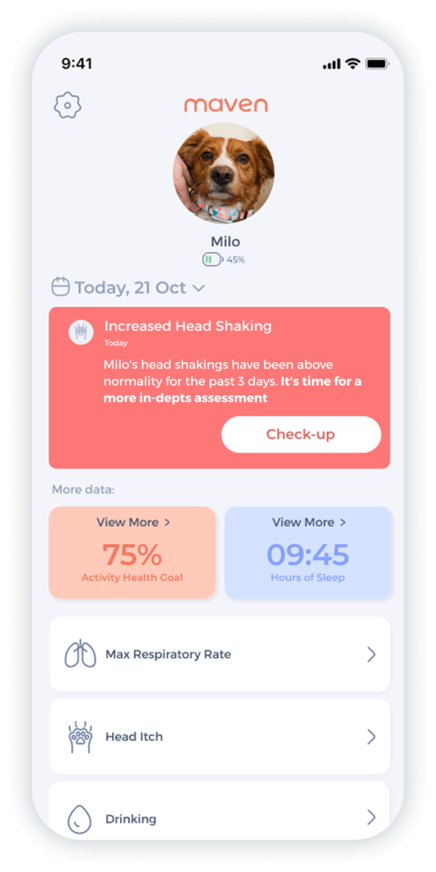
Monitor heart rate, respiratory rate, activity & rest, drinking, itch behavior.
Beyond the journal, Maven’s pet health tracker features help you stay on top of your dog’s overall wellbeing throughout the recovery period:
- Activity tracking monitors daily movement through our dog health tracker, helping you notice if your dog seems less energetic or is recovering well
- Rest pattern monitoring detects changes in sleep quality that could signal discomfort or stress
- Heart rate and resting respiratory rate trends provide additional context around your dog’s general health during a multi-week treatment course
- Personalized baselines mean the app learns what’s normal for your dog specifically, so alerts are meaningful rather than generic
- Deviation alerts notify you when something shifts, helping you decide when to check in with your vet
Used together, the journal and health tracking features give you a fuller picture of how your dog is doing not just at the skin level, but overall across the full course of treatment.
FAQ (Vet-Reviewed)
Treatment involves a combination of topical antifungal shampoos or creams and, in moderate to severe cases, oral antifungal medication prescribed by a vet. Environmental decontamination and isolating the dog from other pets are also essential parts of the protocol.
The most common signs are circular patches of hair loss with scaly or crusty edges, typically on the head, ears, paws, or limbs. Ringworm in dogs does not usually cause significant itching skin and coat changes are the primary indicators. If persistent scratching is also present, consider using a dog itch tracker to document that separately for your vet.
Most cases require six to eight weeks of consistent treatment. Your vet will confirm resolution with fungal cultures visible improvement alone is not a reliable indicator that the infection has cleared.
Yes. Ringworm remains contagious until the fungal infection is fully cleared. Dogs undergoing treatment should be isolated from other pets and contact with vulnerable people (children, elderly, immunocompromised individuals) should be minimized.
Any time you notice unexplained circular bald patches or scaly skin lesions, schedule a vet visit. Early diagnosis and treatment leads to faster resolution and reduces the risk of spreading the infection to other animals or people in the household.
Conclusion
Ringworm treatment for dogs is straightforward when managed carefully but it requires patience and discipline over several weeks. The combination of antifungal medication, consistent topical therapy, and thorough environmental cleaning gives most dogs a full recovery.
What matters most is staying consistent, not stopping treatment early, and keeping a clear record of how your dog’s skin is changing. That’s where tools like Maven’s journal feature make a real difference: day-by-day photo tracking transforms an abstract six-to-eight-week treatment window into a visible, manageable timeline you can share with your vet and act on with confidence.
Maven Pet focuses on improving the quality of life of our pets with technology, using artificial intelligence (AI) to enable proactive pet care. By accurately collecting and monitoring pet data 24/7 and flagging any irregularities, Maven Pet empowers pet parents and veterinarians to stay ahead of potential health issues, ensuring the well-being and longevity of our beloved companions.