Dog Diarrhea: Causes & When to Worry (Vet Verified)

Finding an unexpected mess from your dog is a common reason why owners contact their vet. Most cases are minor and pass quickly, but dog diarrhea can also signal something more serious. Knowing what typically causes it helps you decide whether to watch and wait or make a call.
Why Does My Dog Have Diarrhea – The Short Answer
Diarrhea usually happens because something has disrupted normal digestion – most often dietary indiscretion, a diet change, stress or a mild infection – causing food to move too quickly through the intestines. Most cases are mild and resolve within a couple of days, but diarrhea that’s bloody, persistent or paired with other symptoms like vomiting or lethargy warrants veterinary evaluation.
Key Takeaways
- Diarrhea is a sign, not a disease, and it points to disruption somewhere in the gastrointestinal (GI) tract
- Acute diarrhea (under two weeks) might be mild and even self-limiting; longer episodes are chronic and need a diagnosis
- Bloody diarrhea isn’t necessarily an emergency. It has to be evaluated along with the dog’s overall condition
- Diarrhea alone is less concerning than diarrhea paired with vomiting, lethargy or appetite loss
- Diarrhea lasting more than two days, or any sign of serious illness, is a reason to call your vet
What Is Diarrhea in Dogs?

Diarrhea is a clinical sign and not a disease, and regards unformed or loose stools occurring in larger amounts or more often than usual. It results from faster movement of fecal material through the intestines, combined with decreased absorption of water, nutrients and electrolytes. Clinically, it’s acute under 14 days, and chronic once it persists past that point.
Why Does My Dog Have Diarrhea?
Acute diarrhea is extremely common – one study found an estimated one-year incidence of 8.18%, meaning roughly 1 in 12 dogs is diagnosed annually. The most common accompanying signs were vomiting (44.25%), reduced appetite (27.68%), and lethargy (24.20%), and 80.27% of cases needed only one vet visit to resolve.
“I got the Maven sensor for my 14-year-old Chihuahua mix with heart and trachea issues. It gave me back peace of mind – I can track her RRR, BPM, drinking, and activity anytime and know instantly if something’s wrong. Highly recommend!”

★★★★★
Chiara De Luca
Titti
Common Causes of Dog Diarrhea
- Dietary indiscretion: eating garbage or other irritating materials
- Diet changes: switching foods too quickly
- Infection: bacteria, viruses, coccidia or intestinal worms
- Stress: travel, boarding or environmental changes
- Toxins or irritants: chemicals or poisonous plants
- More serious causes: food allergies, inflammatory bowel disease, organ dysfunction, cancer
How Does Acute Diarrhea Differ From Ongoing Diarrhea?
Chronic diarrhea is a different picture: in a study of 136 dogs with diarrhea lasting three weeks or longer, 90% had a primary enteropathy, with inflammatory causes – most often dietary responsive – accounting for the majority. Anemia, severe hypoalbuminemia and severe hypocobalaminemia were all linked to a poorer chance of recovery, which is why ongoing diarrhea needs a proper workup rather than repeated home guesses.
Dog Bloody Diarrhea: When Is It an Emergency?

Blood in the stool understandably alarms owners, but its presence doesn’t by itself change whether a case is mild, moderate or severe – overall condition matters more. In fact, over 90% of dogs with acute diarrhea, hemorrhagic cases included, have mild disease treatable as outpatients. Black or tarry stool (melena) reflects partially digested blood and can signal a foreign body, infection, trauma, tumor, or ulcer, so blood in a rapidly worsening dog needs an urgent visit.
Dog Diarrhea With No Other Symptoms vs. Diarrhea With Other Signs
A dog with one loose stool who’s otherwise bright and eating is very different from one who’s also vomiting or off their food. Weakness, fever, vomiting, abdominal pain, dehydration, appetite loss and weight loss suggest a more serious cause. Diarrhea alone is often manageable at home briefly, but its absence of other signs isn’t a guarantee it’s harmless – it just calls for close monitoring rather than a same-day emergency.
When Should You Call the Vet?
Contact your vet if you notice:
- Diarrhea that doesn’t resolve within 48-72 hours, or your dog stops eating or becomes lethargic
- Stool that’s black, tarry or contains fresh blood
- Vomiting alongside diarrhea
- Marked lethargy, severe dehydration or significant GI bleeding
- A history suggesting your dog may have swallowed something
What a Veterinarian May Check
Your vet starts with a thorough history and physical exam. For mild, otherwise-healthy cases, further testing may not be needed unless initial treatment fails. When more investigation is warranted, this can include bloodwork, fecal parasite testing and imaging to rule out obstruction or systemic illness.
How Maven Pet Helps Monitor Changes in Your Dog
Only the vet can diagnose what lies behind diarrhea episodes, but Maven can be of great help monitoring the pet’s overall health, clinical signs and recovery. It tracks the broader signals that often shift with a GI upset. The pet health tracker builds a personalized baseline for activity, rest, heart rate, resting respiratory rate, scratching and water intake, alerting you when something deviates.

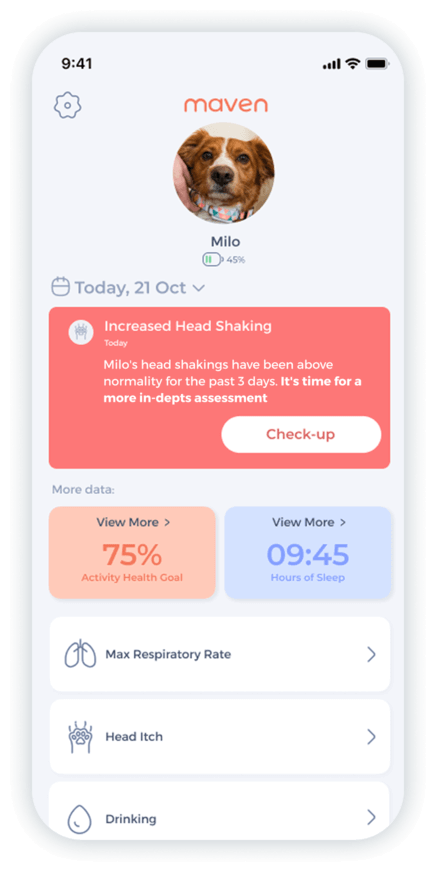
Monitor heart rate, respiratory rate, activity & rest, drinking, itch behavior.
Reduced activity tracked through the dog activity tracker, can flag lethargy that’s easy to miss, while shifts in water intake via the dog drinking tracker can hint at dehydration risk. Resting respiratory rate adds further context against a known normal respiratory rate in dogs.
“A short episode of diarrhea can have many causes, but the pattern matters. It’s important to pay attention to how long it lasts, whether blood is present, and whether there are changes in activity, appetite, hydration, or other behaviors.” – Joana Babo, DVM, Veterinarian at Maven Pet
The pet health app brings this together, giving you and your vet more than memory alone.
FAQ (Vet-Reviewed)
Most often dietary indiscretion, a diet change, stress or a mild infection. Less commonly, a more serious illness.
Acute diarrhea is under two weeks and often resolves in a few days. Past two weeks, it’s considered chronic.
Not automatically – blood alone doesn’t determine severity. Overall condition matters more, so pair it with lethargy or worsening signs before treating it as urgent.
When it persists beyond 48-72 hours, comes with vomiting or lethargy, or your dog stops eating.
Yes. An isolated episode with no other symptoms may be mild and self-limiting, though it’s worth monitoring.
Conclusion
Dog diarrhea is common, and most episodes resolve without drama. What separates a minor upset from something serious isn’t the diarrhea itself, but the bigger picture – duration, blood and whether your dog’s behavior has changed. Watching that pattern, and knowing when to call your vet, is what matters most.
Maven Pet focuses on improving the quality of life of our pets with technology, using artificial intelligence (AI) to enable proactive pet care. By accurately collecting and monitoring pet data 24/7 and flagging any irregularities, Maven Pet empowers pet parents and veterinarians to stay ahead of potential health issues, ensuring the well-being and longevity of our beloved companions.