What to Feed a Dog With Diarrhea: Safe Home Care (Vet Verified)

Standing in the kitchen wondering what’s safe to feed a dog with an upset stomach is a familiar moment for many owners. The right approach is simpler than pet parents may think, but a few details matter around portioning, timing, and which home remedies to skip.
What Should I Feed a Dog With Diarrhea – The Short Answer
What to feed a dog with diarrhea usually comes down to a short period of food withholding followed by a bland, digestible diet such as boiled chicken and rice or vet-prescribed gastrointestinal diet, fed in small, frequent portions. Fresh water should stay available throughout. This works for mild, uncomplicated diarrhea, but isn’t a substitute for veterinary care if symptoms persist or worsen.
Key Takeaways
- Bland diets like boiled chicken and rice are easy to digest
- Small and more frequent meals are gentler than one or two large ones
- Not every home remedy is safe – some human foods can make things worse
- Diarrhea with no other symptoms isn’t necessarily harmless
- If home care isn’t working within a couple of days, call your vet
What to Feed a Dog With Diarrhea?
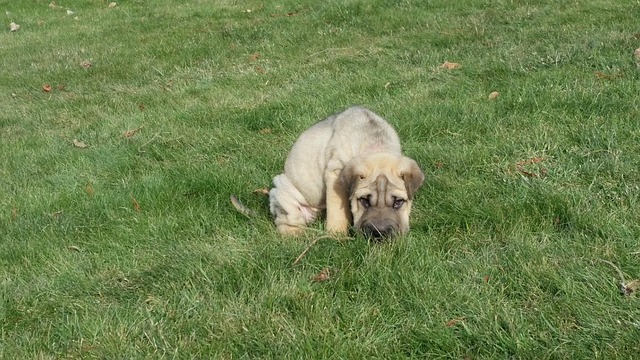
The well-supported approach might be withholding food for 12 to 24 hours, then introducing a bland diet such as boiled chicken and rice (cooked pasta works too) or vet-prescribed gastrointestinal diet. These foods are simple to digest, giving the gastrointestinal (GI) tract a chance to settle. However homemade bland diets aren’t nutritionally balanced and shouldn’t be fed long-term.
Can a Dog With Diarrhea Eat Normally?
Not right away, in most cases. The traditional recommendation is withholding food for 24 to 48 hours before slowly introducing a bland diet, though this window varies by source. This rest is thought to help settle the gut, though it’s reserved mainly for significant vomiting rather than diarrhea alone, since prolonged fasting isn’t appropriate for chronic cases.
“I got the Maven sensor for my 14-year-old Chihuahua mix with heart and trachea issues. It gave me back peace of mind – I can track her RRR, BPM, drinking, and activity anytime and know instantly if something’s wrong. Highly recommend!”
★★★★★
Chiara De Luca
Titti
What to Feed a Dog With an Upset Stomach
A highly digestible, low-fat diet is generally recommended: boiled hamburger with the fat poured off and rice, cottage cheese and rice, or chicken and rice, in roughly a 1:4 ratio, are commonly used. High-fat foods are worth avoiding since fat delays gastric emptying and can worsen the upset.
How Much and How Often Should You Feed a Dog With Diarrhea?
Small, frequent feedings – four to six times a day for three to seven days are recommended over one or two large meals, limiting gastric distension and acid secretion, both of which worsen nausea. Once stools normalize, transition back to your dog’s regular diet over seven to ten days rather than switching abruptly.
What Home Remedy Can I Give My Dog for Diarrhea?
Beyond the bland diet, options are limited. For ongoing loose stool, a vet-recommended fiber-supplemented therapeutic diet might be beneficial. Dogs with chronic large bowel diarrhea fed a fiber-rich food showed significant improvement in stool consistency within 24 hours, with 68% reaching complete resolution by day 56. This is a decision for your vet, since the right fiber type depends on the dog.
What Foods and Home Remedies Should You Avoid?
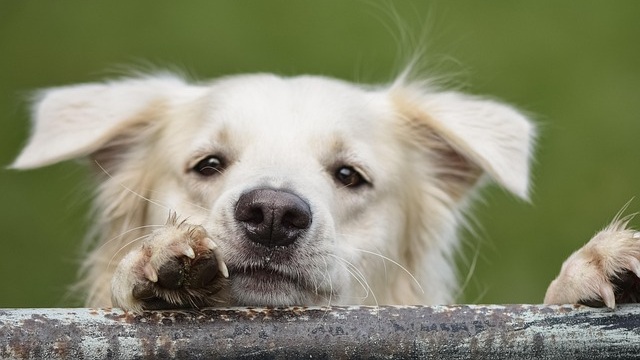
- Dairy and yogurt: intestinal disease often reduces the enzyme needed to digest lactose, and milk or lactose-containing foods can cause osmotic diarrhea as a result
- Rich food or treats: avoid until the diarrhea resolves
- Human OTC medications: Pepto Bismol or Imodium should never be given without veterinary direction
- A new food introduced too quickly: can be part of what caused the problem
Dog Diarrhea With No Other Symptoms: Can You Monitor at Home?
A dog with loose stool but who’s otherwise eating and behaving normally can often be watched briefly. Still, some variation in stool consistency is normal, but frequent liquid or semi-liquid stools persisting more than two days warrant a vet consultation. Absence of other symptoms is reassuring, but not a guarantee.
“If a dog has diarrhea but otherwise seems well, owners can often focus first on hydration, monitoring, and appropriate nutrition. However, the absence of other obvious symptoms does not rule out an underlying problem, so changes in the dog’s overall condition should be taken seriously.” – Joana Babo, DVM, Veterinarian at Maven Pet
Hydration: What to Watch For
Keep an eye out for excessive thirst, dry gums, lethargy and reduced skin elasticity, signaling dehydration. Fresh water should be available at all times, since dehydration can quickly cause electrolyte imbalances and strain the kidneys if severe and uncorrected.
When Feeding at Home Is Not Enough
If a bland diet hasn’t helped within two to three days, or your dog develops vomiting, black or bloody stool, or appetite loss, home feeding has reached its limit.
How Maven Pet Helps Monitor Recovery Trends
Watching how your dog responds while you manage feeding and home care is where Maven adds real value. The pet health tracker builds a personalized baseline across activity, rest, heart rate, resting respiratory rate, scratching, and water intake, then flags meaningful shifts from that baseline.
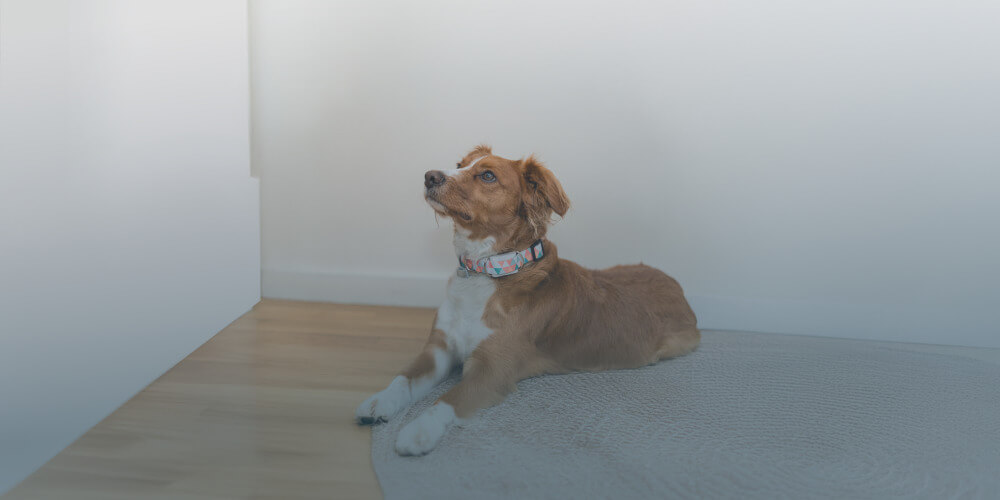
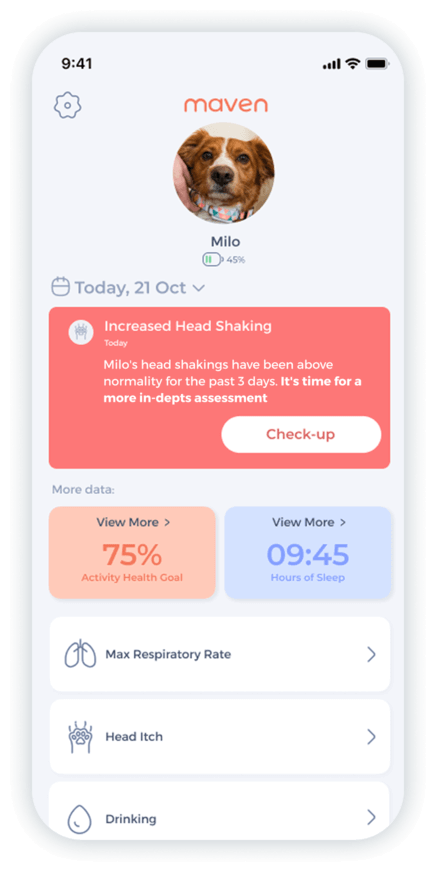
Monitor heart rate, respiratory rate, activity & rest, drinking, itch behavior.
During a bland-diet transition, water intake tracked through the dog drinking tracker can surface early hydration concerns, while activity trends via the dog activity tracker show whether your dog is regaining energy as they recover. Resting respiratory rate monitoring offers another useful reference point alongside the normal respiratory rate in dogs.
All of this lives in the pet health app, turning daily observations into a clearer record to share with your vet.
FAQ (Vet-Reviewed)
A bland, digestible diet like boiled chicken and rice, in small, frequent portions, after briefly withholding food.
Plain, low-fat foods like chicken and rice. Avoid dairy, rich foods, and human medications.
Options are limited – a fiber-supplemented therapeutic diet has supporting evidence for chronic cases, but should be vet-guided.
Yes, and it can often be monitored briefly. Stools persisting more than two days still deserve a vet visit.
If a bland diet hasn’t helped within two to three days, or new symptoms appear, involve your vet.
Conclusion
Feeding a dog through diarrhea comes down to keeping things simple: a short break from food, a bland diet, small frequent portions, and steady access to water. Most mild cases respond well within a couple of days. If they don’t, or your dog’s condition changes, that’s your cue to move from home care to a veterinary visit.
Maven Pet focuses on improving the quality of life of our pets with technology, using artificial intelligence (AI) to enable proactive pet care. By accurately collecting and monitoring pet data 24/7 and flagging any irregularities, Maven Pet empowers pet parents and veterinarians to stay ahead of potential health issues, ensuring the well-being and longevity of our beloved companions.