Dog Incontinence: Causes & Signs in Older Dogs (Vet Verified)

Finding a damp patch on your dog’s bed can be worrying. Many owners assume leaking urine is simply part of aging, but that assumption can delay veterinary care, and incontinence might not be just an issue of senior dogs. This guide explains what dog incontinence looks like, why it happens, and when to call your vet.
Dog Incontinence Causes & Signs – The Short Answer
Dog incontinence is the involuntary leakage of urine, often noticed as wet spots where a dog has been resting or sleeping. It is most common in middle-aged to senior, medium to large-breed spayed females, but any dog can be affected. Causes include a weak urethral sphincter, urinary tract infections, excessive drinking, bladder stones, and spinal disease, so it should never be dismissed as normal aging.
Key Takeaways
- Incontinence is involuntary, unlike a dog choosing to urinate indoors.
- The most common sign is a wet patch where your dog has been lying down.
- A weak urethral sphincter is the most common cause in adults, especially spayed females.
- Drinking more than usual can make leakage worse.
- Straining with little or no urine needs urgent veterinary attention.
What Is Dog Incontinence?
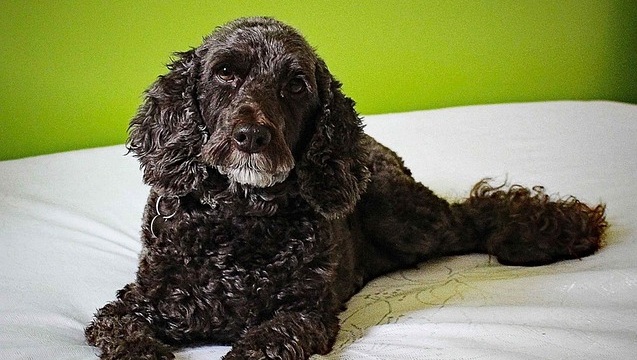
Urinary incontinence is the passive, involuntary leakage of urine, and it can occur in dogs of any age, sex, or breed. It is not the same as a dog deliberately urinating indoors, which can happen with submissive urination, incomplete house training, territorial marking, or the loss of house training linked to canine cognitive dysfunction.
Common signs include:
- Pooling or spotting of urine where your dog has been sleeping or relaxing
- Dribbling urine while walking or after urinating
- Seeming unaware that urine is leaking
Severity varies from an occasional damp spot on bedding to persistent dripping day and night.
What Causes Incontinence in Dogs?
The causes of incontinence fall into two broad groups: problems storing urine in the bladder and problems emptying it. The main causes include:
- Weak urethral sphincter: The muscles that keep the urethra closed lose tone, so urine leaks during rest.
- Urinary tract infection: A common cause in female dogs of all ages.
- Excessive water consumption: Some dogs drink so much that their bladder overflows too easily, for example with diabetes mellitus, Cushing’s syndrome, or kidney insufficiency.
- Spinal or nerve problems: Lumbosacral disorders such as intervertebral disc disease, degenerative myelopathy, or trauma can disrupt bladder control.
- Blockages: Stones, tumors, or prostate disease can stop the bladder emptying, so urine overflows.
- Birth defects: Ectopic ureters, where a ureter opens in the wrong place, are the most common cause in young dogs.
“I got the Maven sensor for my 14-year-old Chihuahua mix with heart and trachea issues. It gave me back peace of mind – I can track her RRR, BPM, drinking, and activity anytime and know instantly if something’s wrong. Highly recommend!”
★★★★★
Chiara De Luca
Titti
Why Is My Old Dog Becoming Incontinent?
Incontinence in senior dogs is common, but age alone is rarely the whole explanation. In older dogs, it is more likely to be caused by a weak sphincter or by a bladder that is not emptying properly, while puppies more often have structural defects.
Several factors raise the risk:
- Spaying: Incontinence can appear anywhere from immediately to 9.5 years after spaying, and large and giant breeds are affected most often.
- Aging and weight: Aging, obesity, and reduced sensitivity of the sphincter’s nerve receptors all contribute to a weak sphincter, which affects up to one in five female dogs.
- Other adult conditions: Bladder tumors, an overactive bladder, partial urethral blockage, and prostate disease in males.
“Urinary incontinence in dogs should not automatically be attributed to aging. Identifying changes early and investigating the underlying cause can help veterinarians determine the most appropriate care for each dog.”
— Joana Babo, DVM, Veterinarian at Maven Pet
How Is Urinary Incontinence Diagnosed?
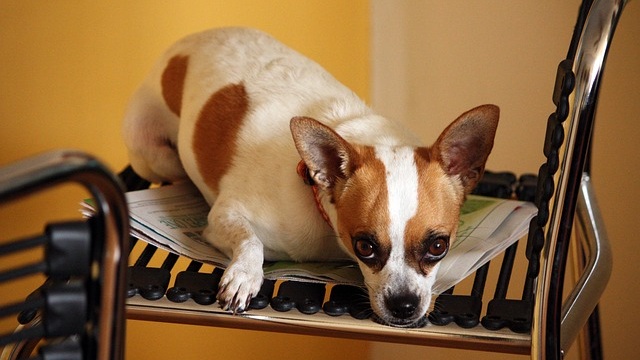
Diagnosing urinary incontinence starts with observations at home. Your vet will want to know where and when leaks happen, what your dog was doing, and how often, and a home video can help.
Tests may include:
- A physical, rectal, and neurological examination
- Urinalysis and a urine culture to check for infection
- Blood tests for conditions that increase urine production, such as kidney disease
- An ultrasound to measure how much urine stays in the bladder after urinating
- X-rays or a bladder camera exam to look for stones or abnormalities
Your vet also needs to tell incontinence apart from frequent urination and increased urine production, as each needs a different plan.
When Should You Worry About?
Any new leakage warrants a vet visit. Call promptly if you notice:
- Straining with a weak stream or no urine at all, which can signal a blockage and should be treated as an emergency
- Blood in the urine or strong-smelling urine
- Drinking or urinating more than usual
- Back pain, weakness, an unsteady gait, or fecal accidents
- Red or sore skin around the genitals
How Maven Pet Helps
Many causes develop gradually, so early changes matter. The Maven Pet Health Tracker learns your dog’s normal patterns and flags when something shifts.
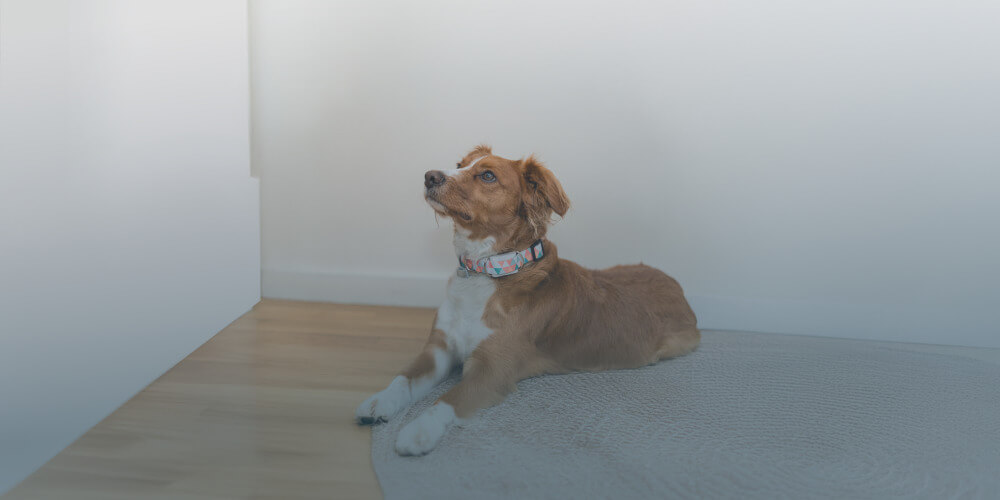
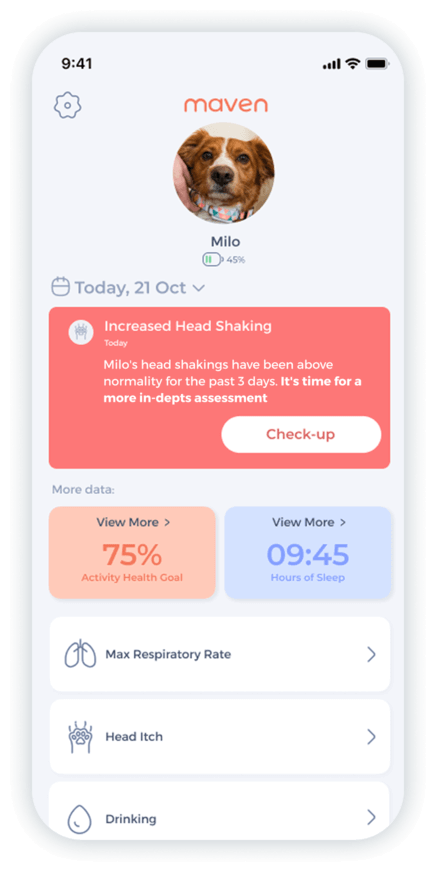
Monitor heart rate, respiratory rate, activity & rest, drinking, itch behavior.
As a dog health tracker, it monitors important variables to help identify and monitor incontinence:
- Drinking behavior: The dog drinking tracker shows changes in drinking patterns that may be relevant to urinary symptoms.
- Activity and rest: Highlights changes in normal activity and rest patterns, with the ability to identify lethargic behavior or sleep restlessness.
- Heart rate and resting respiratory rate: Adds context about overall health.
In Maven’s pet health app you can log each wet spot, when it happened, and what your dog was doing, using the Journal feature, and then bring those notes and the monitoring trends to your vet.
FAQ (Vet-Reviewed)
A weak urethral sphincter is the most common cause in adults. Others include infections, excessive drinking, spinal disease, stones, tumors, and birth defects.
No. It is more common in older dogs, but it usually has an underlying cause your vet can investigate.
Incontinence is involuntary, and the dog is often unaware. Inappropriate urination is deliberate, such as marking or house-training lapses.
As soon as you notice leakage. Go urgently if your dog strains to urinate or produces little or no urine.
Conclusion
Dog incontinence is a sign that something has changed, and shouldn’t be taken as not a normal aging condition. Recording what you see at home and involving your vet early gives your dog the best chance of staying comfortable and dry.
Maven Pet focuses on improving the quality of life of our pets with technology, using artificial intelligence (AI) to enable proactive pet care. By accurately collecting and monitoring pet data 24/7 and flagging any irregularities, Maven Pet empowers pet parents and veterinarians to stay ahead of potential health issues, ensuring the well-being and longevity of our beloved companions.