How Often Do Dogs Need Bordetella Vaccine? (Vet Verified)

A new puppy, an upcoming boarding stay, or a kennel cough immunization that’s slipped past its date: these are the moments pet parents search “how often do dogs need Bordetella vaccine.” The honest answer depends on the vaccine used, your dog’s exposure to other dogs, and your vet’s advice, so there’s no single schedule. Here’s how timing works for puppies, boosters, and overdue vaccines.
How Often Do Dogs Need Bordetella Vaccine? – The Short Answer
Most dogs at risk get a booster about once a year, and higher-risk dogs may be boosted more often, such as before boarding. Puppy timing and how long protection lasts vary by vaccine type and exposure, so confirm your dog’s schedule with your veterinarian and the product guidance.
Key Takeaways
- Most at-risk dogs receive a Bordetella vaccine for dogs booster about once a year
- Higher-risk dogs may be boosted more often, such as before boarding
- Puppy timing depends on the product, and guidance on the first dose varies
- How long protection lasts differs between vaccines
- Check facility requirements early and confirm Bordetella is on your dog’s record
How Often Do Dogs Need Bordetella Vaccine?

Bordetella bronchiseptica is one of the organisms involved in kennel cough, and its vaccine is non-core, meaning it’s given based on risk rather than to every dog. The usual pattern is boosters given annually, or more frequently in high-risk situations, with every six months recommended by some veterinarians.
Formal guidance agrees on annual boosters after the first vaccination, and adds that for dogs at high risk, using combination intranasal vaccines more often than annually, for example before boarding, may be advantageous. Because needs are reassessed at least annually, the schedule can change with your dog’s lifestyle.
When Should Puppies Get the Bordetella Puppy Vaccine?
Guidance on the first dose varies. Vaccination can begin as early as 6-8 weeks of age, while one US guide says the first dose can be given as early as 3 weeks. The number of doses depends on the product.
For at-risk puppies up to 16 weeks old, a combined Bordetella and parainfluenza vaccine is a single intranasal dose, while Bordetella-only products are two injections 2-4 weeks apart, one intranasal dose, or one oral dose. Boosters then follow annually. Follow the product label and your vet’s plan for your puppy.
“I got the Maven sensor for my 14-year-old Chihuahua mix with heart and trachea issues. It gave me back peace of mind – I can track her RRR, BPM, drinking, and activity anytime and know instantly if something’s wrong. Highly recommend!”

★★★★★
Chiara De Luca
Titti
How Long Does Bordetella Vaccine Last?
The annual recommendation rests largely on experimental infections in laboratory beagle puppies, and how well that applies to household dogs is questionable. One natural-history study suggested clinical immunity may last as little as about 6 months, and some guides cite 6 to 12 months.
Product-specific data exists too. In one laboratory study, beagles given a single dose of an oral combination vaccine and challenged a year later were far less likely to show clinical signs, at 9% versus 74% of placebo dogs. That applies to one product in purpose-bred dogs, not every vaccine.
Do Dogs Need a Bordetella Booster Every Year?
Often, but the interval follows risk. Average-risk dogs are generally boosted yearly, while dogs with frequent social exposure may need boosters every 6 months.
Product type matters as well. Intranasal combination and injectable Bordetella vaccines produced equivalent memory responses as boosters in previously vaccinated adult household dogs, with no similar data for oral vaccines.
What Happens If a Dog’s Vaccine Is Overdue?
If a booster has lapsed, don’t guess. For overdue vaccines, the guidance is to follow the manufacturer’s instructions, and when in doubt, vaccinate. Call your vet, bring your records, and ask what your dog’s product requires. Meanwhile, many boarding facilities and groomers require vaccination within the previous 6-12 months, so a lapsed date may affect bookings.
How to Prepare for Boarding or Daycare Requirements
- Ask the facility what it requires and how recent the vaccine must be
- Leave lead time, since oral and intranasal vaccines may begin protecting within about 72 hours, while injectables can take 7-14 days. One guide suggests vaccinating at least two weeks before a stay
- Ask your vet whether an extra pre-boarding booster suits your dog
- Bring records, because proper documentation is essential, and check that Bordetella is listed, since it’s a non-core vaccine
How Maven Helps Between Vet Visits
A vaccine schedule is about prevention, while daily patterns show how your dog is doing. The Maven Pet Health Monitor learns your dog’s personalized baseline for activity and rest, heart rate, resting respiratory rate, drinking and scratching, then flags deviations.

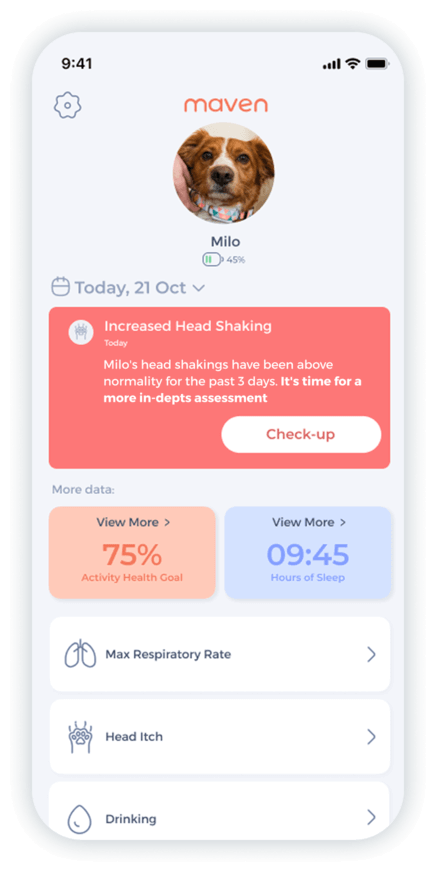
Monitor heart rate, respiratory rate, activity & rest, drinking, itch behavior.
If your dog’s routine shifts after boarding or a busy week at daycare, those trends give you and your vet something concrete to review, and dog-specific health tracking keeps that history in one place. Maven doesn’t track vaccination status, measure immunity, set booster dates, or measure coughing, so keep your own records and confirm timing with your veterinarian and the product information.
“The right Bordetella vaccination schedule depends on the vaccine used and a dog’s exposure to other dogs. Keeping accurate vaccination records and confirming booster timing with your veterinarian helps ensure that preventive care reflects your dog’s individual needs.” — Joana Babo, DVM, Veterinarian at Maven Pet
You can revisit that history anytime in the Maven app, so changes are easy to describe at your next visit.
FAQ (Vet-Reviewed)
Most at-risk dogs get one about yearly, and higher-risk dogs may be boosted more often. Your vet sets the schedule based on the product and exposure.
Sources range from as early as 3 weeks to a start at 6-8 weeks. The product and your vet’s plan decide.
Often treated as about a year, though some guides cite 6-12 months. Duration also depends on the product.
Often, for dogs at risk. Higher-risk dogs may be boosted every six months, and your vet can advise on low-exposure dogs.
Conclusion
So, how often do dogs need Bordetella vaccine boosters? Annual boosters are common, some dogs need them sooner, and puppy timing, product type, and boarding rules all shape the plan. Keep accurate records, check requirements early, and confirm timing with your vet.
Maven Pet focuses on improving the quality of life of our pets with technology, using artificial intelligence (AI) to enable proactive pet care. By accurately collecting and monitoring pet data 24/7 and flagging any irregularities, Maven Pet empowers pet parents and veterinarians to stay ahead of potential health issues, ensuring the well-being and longevity of our beloved companions.