How Much Water Should a Dog Drink a Day? (Vet Verified)

Most dog owners know hydration matters — but knowing exactly how much water your dog needs, and when a change in drinking habits should raise a flag, is a different story. Here is what veterinary science says regarding how much water should a dog drink a day – and how continuous monitoring can help you catch problems before they become serious.
How Much Water Should a Dog Drink a Day? – The Short Answer
A dog should drink approximately 1 fl oz of water per pound of body weight per day. A 20-pound dog needs about 20 fl oz; a 60-pound dog needs around 60 fl oz. Diet, activity level, and temperature all affect this number, and sustained changes in drinking habits often signal an underlying health issue worth investigating.
Key Takeaways
- The general guideline is 1 fl oz of water per pound of body weight per day.
- Dogs on wet food naturally drink less; dogs on dry kibble typically drink more.
- Drinking more than ~1.5 fl oz/lb/day may indicate a medical problem and warrants a vet visit.
- Dehydration signs include dry or sticky gums, loss of skin elasticity, sunken eyes, and lethargy.
- Long-term trends in water intake matter more than any single day’s measurement.
- Tools like the Maven Pet Health Monitor can track intake continuously and alert you to meaningful changes.
A Deeper Look Into How Much Water a Dog Should Drink a Day
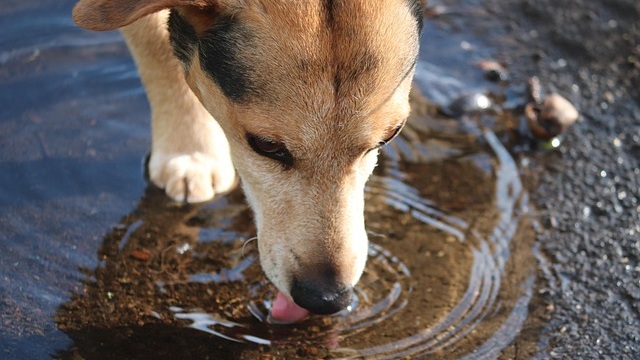
The most widely cited veterinary guideline is 1 fl oz of water per pound of body weight per day. According to the Cornell University Riney Canine Health Center, a dog is officially considered polydipsic when water intake exceeds ~1.5 fl oz/lb/day — so for a 10-pound dog, that threshold sits at around 15 fl oz per day. Sustained intake above that level is worth flagging with your veterinarian.
Active dogs exercising in warm conditions may need up to 50% more water than their resting baseline — sometimes two to three times the volume of their daily food intake. According to Texas A&M University’s College of Veterinary Medicine & Biomedical Sciences, dogs do not always self-regulate drinking effectively, making it important for owners to ensure fresh, cold water is always available, especially after activity.
Here is a quick reference by body weight:
| Dog Weight | Approximate Daily Water Intake |
| 10 lbs | ~10 fl oz |
| 25 lbs | ~25 fl oz |
| 50 lbs | ~51 fl oz |
| 75 lbs | ~74 fl oz |
| 100 lbs | ~101 fl oz |
These are starting estimates. Individual dogs vary, and your dog’s “normal” may fall somewhat above or below these numbers.
What the research says: A peer-reviewed study published in the Journal of Small Animal Practice (English & Filippich, 1980) measured water intake across 50 days in dogs and found a mean daily intake of approximately 0.9 fl oz/lb of free and combined water, rising to an estimated 1.1 fl oz/lb when metabolic water was included. A more recent study published in Frontiers in Veterinary Science (Zanghi & Gardner, 2018) confirmed that dogs on dry food had a mean baseline total water intake of approximately 1.1 fl oz/lb/day, and that individual variation between dogs is significant — reinforcing why tracking each dog’s personal baseline matters more than applying a fixed universal number.
+93%
Increase across
all tracked dogs
+45%
Increase in dogs with
no diagnosed condition
Gradual
Is normal. Sudden
jumps are not
Water intake nearly doubles from adulthood to advanced senior years across all dogs Maven tracks. Even among dogs with no diagnosed condition, it still climbs about 45%, so some of that increase is just normal aging. But a sudden or sharp jump outside that gradual curve is one of the more reliable early signals of kidney disease, diabetes, or Cushing’s, and is worth a vet visit rather than a wait and see.
Source: Maven Pet internal data, life-stage comparison across tracked dogs.
See how Maven tracks water intake→What Factors Affect a Dog’s Water Intake?
Several variables influence how much your dog drinks on any given day:
Diet type. Dogs eating dry kibble need to drink significantly more than dogs on wet or raw food diets, since wet food is typically 65–80% water. A 2025 study published in PLOS ONE (Hutchinson et al., 2025) found that dogs fed fresh food with water added exceeded their calculated daily water requirements and showed measurable changes in urine concentration, highlighting how diet composition directly shapes hydration status.
Activity level. Exercise increases fluid loss through panting and evaporation. A long hike or an energetic play session can meaningfully raise your dog’s daily water requirement. Always offer water during and after physical activity.
Weather and temperature. Heat increases the rate of fluid loss. Dogs pant to regulate body temperature, and panting depletes water stores quickly. On hot days, expect your dog to drink more.
Age. Puppies tend to drink more relative to their size because they cannot yet fully concentrate their urine. VCA Animal Hospitals notes that senior dogs are especially prone to dehydration because they may forget to drink — making access to fresh water and intake monitoring particularly important as dogs age.
Health status and medications. Certain medications and health conditions directly alter thirst. If your dog has recently started a new prescription, ask your vet whether changes in water intake are expected.
“I got the Maven sensor for my 14-year-old Chihuahua mix with heart and trachea issues. It gave me back peace of mind – I can track her RRR, BPM, drinking, and activity anytime and know instantly if something’s wrong. Highly recommend!”

★★★★★
Chiara De Luca
Titti
What Is Considered Too Much or Too Little Water?
Too little: Signs of dehydration in dogs include dry or sticky gums, loss of skin elasticity (the “tent test” — pinched skin that doesn’t spring back quickly), sunken or dull eyes, reduced energy, and loss of appetite. Mild dehydration can often be corrected with access to fresh water, but moderate to severe dehydration requires veterinary care, sometimes including intravenous fluids.
Too much: Polydipsia — excessive thirst — is defined by veterinarians as drinking more than ~1.5 fl oz per pound of body weight per day. According to the Cornell University Riney Canine Health Center, when a dog drinks more than normal, it is referred to as polydipsia (PD), and the resulting increase in urination is called polyuria (PU). For a large dog, that polydipsia threshold can mean drinking more than a gallon and a half per day. The condition is frequently paired with excessive urination and is a recognized signal of several underlying health problems.
What Health Conditions Affect Drinking Habits?
Persistent changes in water intake — particularly increases — are often the first observable sign of a systemic health problem. Conditions commonly associated with polydipsia and polyuria include:
- Diabetes mellitus — insufficient insulin leads to elevated blood sugar, excessive thirst, and increased urination. Learn more about dog diabetes and how it affects daily hydration.
- Cushing’s syndrome (hyperadrenocorticism) — Cornell’s College of Veterinary Medicine reports that increased drinking and urination occur in 80–90% of Cushing’s cases, alongside other signs like a pot belly, thinning coat, and lethargy.
- Chronic kidney disease (CKD) — damaged kidneys produce more dilute urine, causing dogs to compensate by drinking more. The International Renal Interest Society (IRIS) — the globally recognized authority on veterinary nephrology — classifies CKD into four stages and identifies increased thirst and urination as early clinical signs in affected dogs. IRIS guidelines recommend that dogs with CKD have unrestricted access to fresh water at all times, as limiting intake can accelerate dehydration and kidney deterioration.
- Pyometra — a uterine infection in unspayed females that can cause significant drinking changes.
- Liver disease — impaired liver function can disrupt fluid regulation and appetite.
- Urinary tract infections — UTIs alter urinary frequency, which can appear linked to changes in intake.
- Diabetes insipidus — according to VCA Animal Hospitals, this rarer condition causes dogs to produce enormous volumes of extremely dilute urine, driving excessive thirst despite consuming large amounts of water.
If you notice your dog consistently drinking more or less than their normal baseline — without an obvious explanation like heat or exercise — schedule a vet evaluation.
How Can You Monitor Your Dog’s Hydration at Home?
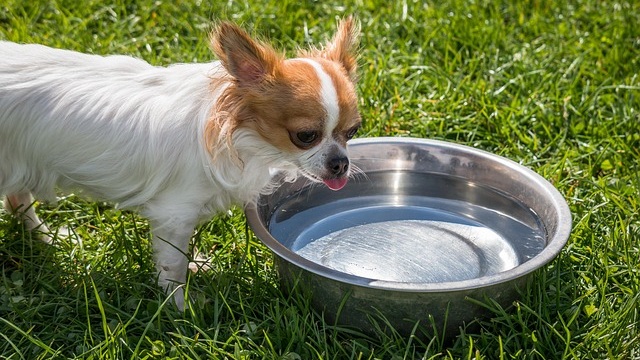
A few simple practices can help you stay informed:
- The skin tent test: Gently pinch the skin between your dog’s shoulder blades and release. In a well-hydrated dog, it snaps back immediately. Slow recoil suggests dehydration.
- Check the gums: Healthy gums are pink and moist. Dry, pale, or sticky gums indicate dehydration.
- Track intake consistently: Measure how much water you add to the bowl and how much remains at the end of the day. Do this for at least a week to establish a reliable baseline. Separate your dog from other pets during this process for accurate readings.
- Watch for concurrent symptoms: Dehydration combined with vomiting, lethargy, or loss of appetite is a veterinary emergency.
Why Water Intake Trends Matter Over Time
A single day’s measurement tells you very little. Dogs naturally drink more after exercise, in warmer weather, or when switching foods. What matters is the pattern over time.
As Carolina Domingues, DVM, Veterinarian at Maven Pet, explains: “A dog’s water intake can vary day to day, but long-term changes are often more important than isolated measurements. Tracking hydration trends can help identify health issues earlier.”
This aligns with the scientific literature. The Frontiers in Veterinary Science study by Zanghi & Gardner (2018) demonstrated that urine concentration — a direct marker of hydration status — only shifted meaningfully when water intake changed consistently over multiple weeks, not after a single day of altered drinking. Individual baselines varied substantially between dogs, further supporting the case for personalized, continuous tracking rather than reliance on population averages.
How Maven Helps
The Maven Pet Health Monitor is a continuous health tracking device designed to detect subtle changes before they become obvious symptoms.
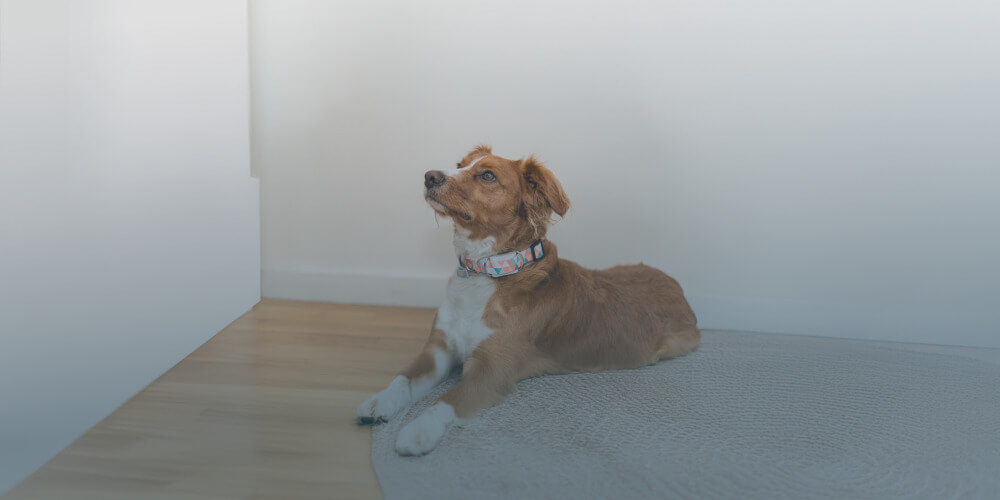
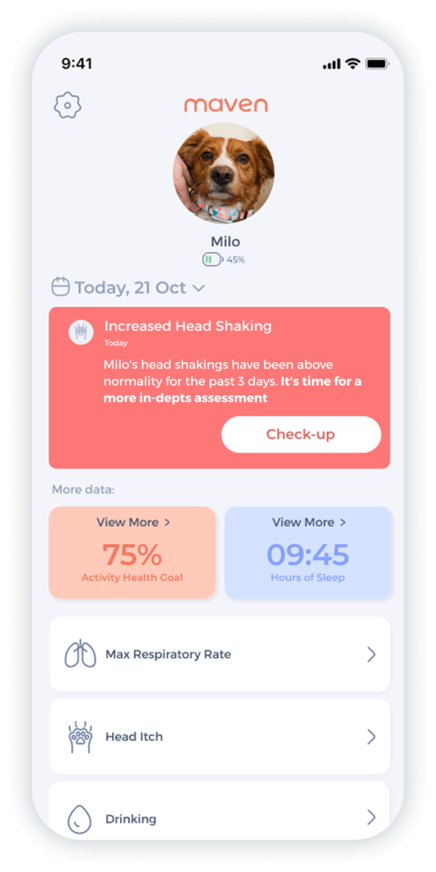
Monitor heart rate, respiratory rate, activity & rest, drinking, itch behavior.
For dog owners concerned about hydration, Maven provides:
- Continuous water intake behavior tracking using a dog drinking tracker that identifies behavioral increases or decreases in drinking over time
- Activity level monitoring, so hydration context is always paired with exercise data
- Resting respiratory rate tracking, which can shift with illness
- Heart rate trend monitoring, which may change with dehydration or stress
- Rest and sleep pattern analysis, helping identify fatigue or discomfort linked to underlying illness
- Personalized baselines built over time for each individual dog
- Automated alerts when intake behavior deviates meaningfully from your dog’s personal norm.
The Maven pet health app makes this data accessible and interpretable for owners, so changes that once required a vet visit to detect can be flagged early — at home, before more obvious symptoms develop.
FAQ (Vet-Reviewed)
The general guideline is approximately 1 fl oz of water per pound of body weight per day. A 50-pound dog should drink roughly 50 fl oz, or just over 6 cups, daily.
Research published in Frontiers in Veterinary Science (Zanghi & Gardner, 2018) found a mean baseline intake of around 1.1 fl oz/lb/day in healthy adult dogs on dry food. Intake above ~1.5 fl oz/lb/day is the clinical threshold for polydipsia. Individual needs vary based on diet, activity, age, and environment.
Increased thirst can result from hot weather, exercise, a diet change, or an underlying medical condition. According to the Cornell University Riney Canine Health Center, sustained increases in water intake that exceed ~1.5 fl oz/lb/day — especially when paired with more frequent urination — warrant veterinary evaluation.
Perform a skin tent test (pinch and release skin at the shoulder blades) and check gum moisture. Dry, sticky gums, slow skin recoil, sunken eyes, and reduced energy are common dehydration indicators. Moderate to severe dehydration requires prompt veterinary care.
Yes. Polydipsia (excessive thirst) is associated with several conditions including dog diabetes, Cushing’s syndrome, kidney disease, liver disease, and urinary tract infections. The IRIS guidelines identify increased thirst and urination as early-stage markers of chronic kidney disease. If your dog is consistently drinking more than their normal baseline, consult your veterinarian.
Conclusion
Understanding your dog’s daily water needs is one of the most practical things you can do for their long-term health. The baseline guideline — around 1 fl oz per pound of body weight per day — is a useful starting point, but it’s the deviations from your dog’s personal normal that matter most. Monitoring water intake continuously, alongside activity, rest, and other health metrics, gives you the kind of insight that can catch problems early. Tools like the Maven Pet Health Monitor make that kind of proactive care achievable at home.
When in doubt, always consult your veterinarian — and make sure fresh, clean water is always within reach.
Maven Pet focuses on improving the quality of life of our pets with technology, using artificial intelligence (AI) to enable proactive pet care. By accurately collecting and monitoring pet data 24/7 and flagging any irregularities, Maven Pet empowers pet parents and veterinarians to stay ahead of potential health issues, ensuring the well-being and longevity of our beloved companions.