
How Long Do Dogs Live With Heart Disease? (Vet Verified)

Hearing that your dog has heart disease can be deeply worrying. One of the first questions many owners ask is: how long do dogs live with heart disease? The answer isn’t always straightforward. Some dogs live for years with careful management, while others may experience faster progression. Understanding what affects lifespan and what you can do, can make a meaningful difference.
How Long Do Dogs Live With Heart Disease? – The Short Answer
How long do dogs live with heart disease? It depends on the type, stage and how early it’s detected. Some dogs live for years with proper care, while others with advanced disease may have a shorter lifespan. Early diagnosis, treatment and monitoring, especially tracking breathing and activity changes, can significantly improve both life expectancy and quality of life.
Key Takeaways
- How long do dogs live with heart disease varies widely depending on severity and type
- Many dogs can live months to years with proper treatment and monitoring
- Early detection plays a major role in improving outcomes
- Subtle changes in breathing and activity often signal progression
- Continuous monitoring helps catch deterioration before symptoms worsen
What Is Heart Disease in Dogs?

Heart disease in dogs refers to conditions that affect how the heart functions and pumps blood. These can be congenital (present at birth) or acquired later in life, such as degenerative valve disease.
One of the most common forms is degenerative mitral valve disease, where the valve becomes less effective over time, leading to blood flow changes and eventual heart enlargement.
As heart disease progresses, the heart becomes less efficient, which can eventually lead to congestive heart failure, which is a stage where fluid builds up in the lungs or body and affects breathing.
How Long Do Dogs Live With Heart Disease?
The question how long do dogs live with heart disease doesn’t have a single answer because outcomes vary significantly.
Some key points:
- Many dogs live months to years after diagnosis, especially with early-stage disease
- Dogs diagnosed before symptoms appear often have longer survival times
- Once congestive heart failure develops survival may be shorter, but still varies depending on treatment and monitoring
Research shows that survival time is strongly influenced by disease stage and how early intervention begins.
In practical terms, this means two dogs with the same diagnosis can have very different outcomes depending on when the disease is detected and how closely it’s managed.
“I got the Maven sensor for my 14-year-old Chihuahua mix with heart and trachea issues. It gave me back peace of mind – I can track her RRR, BPM, drinking, and activity anytime and know instantly if something’s wrong. Highly recommend!”

★★★★★
Chiara De Luca
Titti
What Factors Affect Dog Heart Disease Life Expectancy?
Several factors influence dog heart disease life expectancy:
1. Type of heart disease
Different conditions progress at different rates. For example:
- Degenerative valve disease often progresses gradually
- Some congenital defects or advanced conditions may progress more quickly
2. Stage at diagnosis
Dogs diagnosed early before symptoms appear, tend to live longer.
3. Development of congestive heart failure
Once fluid accumulation occurs the disease is at more advanced stages, is more serious and requires ongoing management.
4. Response to treatment
Medications and interventions can slow progression and improve quality of life.
5. Monitoring and follow-up
Regular tracking of health indicators helps detect worsening early, likely avoiding or delaying clinical signs of becoming severe.
What Are the Stages of Heart Disease in Dogs?

Heart disease typically progresses through stages, even if symptoms aren’t always visible early on.
Common progression includes:
- Early stage: No symptoms, but structural changes may be present
- Preclinical stage: Heart changes detectable, but dog appears normal
- Clinical stage: Symptoms like coughing or exercise intolerance appear
- Advanced stage (congestive heart failure): Fluid buildup causes breathing difficulty
Dogs may remain in early stages for long periods, which is why early detection is so important.
What Are the Early Warning Signs to Watch For?
One of the most important ways to improve outcomes is recognizing early signs.
Common warning signs include:
- Increased resting respiratory rate
- Reduced activity or stamina
- Coughing or breathing changes
- Fatigue during walks or play
- Restlessness or disturbed sleep
These signs often appear gradually and may be easy to miss. Changes in breathing, especially at rest, are among the earliest indicators of worsening heart function.
How Can You Help a Dog Live Longer With Heart Disease?
While you can’t cure most heart conditions, you can take steps to improve both lifespan and quality of life.
Key actions include:
- Regular veterinary check-ups
- Following prescribed medications
- Monitoring breathing and activity daily
- Reducing stress and overexertion
- Maintaining a consistent routine
Early intervention and consistent monitoring are among the most effective ways to slow disease progression.
How Maven Pet Helps
A pet health tracker like Maven can make a significant difference in managing heart disease.

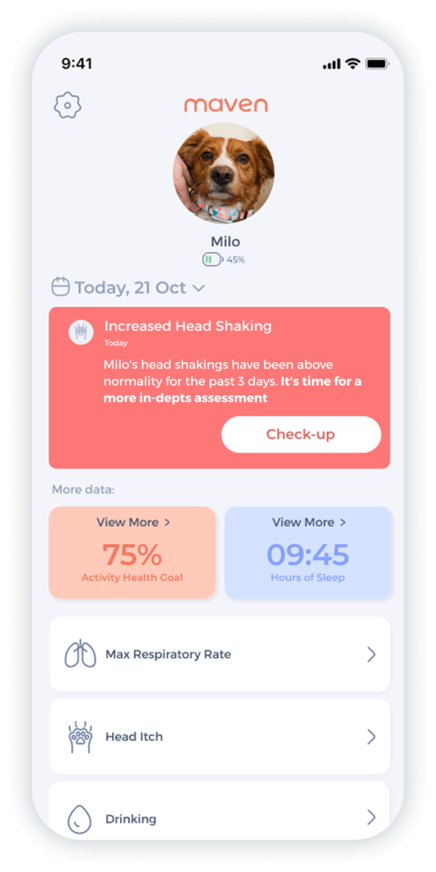
Monitor heart rate, respiratory rate, activity & rest, drinking, itch behavior.
The pet health app paired with a dog health tracker enables continuous monitoring of key indicators:
- Resting respiratory rate is one of the earliest signs of worsening heart function
- Heart rate trends help detect cardiovascular strain
- Activity and rest patterns help identifying fatigue or reduced stamina
Unlike occasional vet visits, Maven builds a personalized baseline for your dog and tracks changes over time.
With alerts for rising respiratory rate or declining activity, owners can act earlier, even before visible symptoms appear, and support better outcomes for dogs with dog heart disease.
FAQ (Vet-Reviewed)
It varies widely. Some dogs live for years with proper management, while others with advanced disease may have a shorter lifespan.
Life expectancy is generally shorter once congestive heart failure develops, but treatment and monitoring can still extend quality time.
Increasing resting respiratory rate, reduced activity, coughing and breathing difficulty are common signs of progression.
Many dogs can live comfortable, active lives, especially when the disease is detected early and carefully managed.
Conclusion
So, how long do dogs live with heart disease? The answer depends on many factors but one thing is clear: early detection and consistent monitoring can make a real difference.
By understanding the condition, watching for subtle changes and using tools that track health trends over time, you can help your dog live longer and better with heart disease.
Maven Pet focuses on improving the quality of life of our pets with technology, using artificial intelligence (AI) to enable proactive pet care. By accurately collecting and monitoring pet data 24/7 and flagging any irregularities, Maven Pet empowers pet parents and veterinarians to stay ahead of potential health issues, ensuring the well-being and longevity of our beloved companions.