
Signs of Anxiety in Dogs: How to Recognize Stress (Vet Verified)

Pacing, panting, hiding or destroying furniture isn’t necessarily misbehaving – they may be signs of anxiety. Recognising the signs of anxiety in dogs early can make a meaningful difference to how quickly they get the support they need.
Signs of Anxiety in Dogs – The Short Answer
The most common signs of anxiety in dogs include panting, pacing, trembling, hiding, excessive barking or whining, and destructive behavior. These signs often occur in response to specific triggers like loud noises, separation or unfamiliar people. Anxiety in dogs is common – research shows more than 84% of dogs show at least mild fear or anxious behavior – and it is treatable.
Key Takeaways
- Signs of anxiety in dogs range from subtle body language changes to more obvious behaviors like destructive activity or house soiling
- More than 84% of dogs show at least mild signs of fear or anxiety in everyday situations, making it one of the most common welfare concerns in companion animals
- Anxiety is not the same as a phobia or a momentary fear, and the distinction matters for how it is managed
- Several medical conditions can cause or worsen anxiety-like behaviors, so a veterinary check-up is important if symptoms are new or worsening
- Behavioral modification, consistent routines and in some cases medication are the most effective tools
- The earlier anxiety is recognised, the easier it is to address before it escalates
What Are the Signs of Anxiety in Dogs?

Dogs communicate anxiety through body language before it becomes obvious behavior. Signs include panting, pacing, trembling, drooling, hiding, destructive behavior, excessive barking or whining, and difficulty settling.
Subtler body language signs include:
- Tail low or tucked, ears pulled back
- Eyes dilated or showing the whites (“whale eye”)
- Low body posture, hesitant movement
- Lip licking, yawning or looking away out of context
- Excessive neediness or clinginess with their owner
Some anxious dogs appear irritable rather than fearful, and they may growl, bark or even bite. This aggressive response stems from a need to create distance from a perceived threat and is most common when escape feels impossible.
What Are Common Dog Stress Symptoms?
Beyond behavioral signs, anxiety triggers a physical stress response. Fear and stress cause an increase in heart rate, respiratory rate, panting and pupil dilation, and can sometimes lead to urination or defecation. Long-term stress can negatively affect the immune system and a dog’s overall quality and length of life, making early recognition especially important. Chronic stress may also present as disrupted sleep, reduced appetite, decreased interest in play, or repetitive behaviors like excessive licking.
“I got the Maven sensor for my 14-year-old Chihuahua mix with heart and trachea issues. It gave me back peace of mind – I can track her RRR, BPM, drinking, and activity anytime and know instantly if something’s wrong. Highly recommend!”

★★★★★
Chiara De Luca
Titti
What Causes Anxious Dog Behavior?
Anxiety may be situational – occurring only in specific contexts – or generalized, manifesting across many situations. Common triggers include:
- Separation: distress when owners leave, one of the most frequently reported forms
- Loud noises: thunderstorms and fireworks are among the most common triggers, with nearly 43% of dogs in a large US study showing some level of noise fear
- Unfamiliar people or dogs: fear of unfamiliar dogs was reported in 47.4% of the same study population
- Lack of early socialisation: dogs not exposed to varied environments during puppyhood are more prone to developing fears
- Negative past experiences: a single frightening event can create lasting associations
“Anxiety may develop insidiously or quickly, and is usually recognized by changes in a dog’s normal routines and behavior. Monitoring trends over time, as well as isolated events, can help pet parents identify stress earlier and seek for specialized help” – Joana Babo, DVM, Veterinarian at Maven Pet
How Can You Tell Anxiety From a Medical Problem?
This distinction matters. Underlying illness or pain can cause or contribute to fear and anxiety, and should always be considered if a dog develops a new or heightened fear response, particularly in adult or senior dogs. Pain in particular can trigger stress responses and behavioral changes without any other obvious clinical signs. Endocrine conditions such as hypothyroidism have also been associated with fear-related behavioral changes in dogs.
If anxious behavior has started recently or is worsening, a physical examination should come before behavioral intervention to rule out any medical contributor.
How to Calm an Anxious Dog

There is no quick fix for anxiety, but several approaches are well-supported:
- Establish a predictable routine: what seems to work best is predictability; consistency helps dogs know what to expect and reduces baseline anxiety
- Use positive reinforcement: rewarding calm behavior and pairing triggers with something positive forms the basis of behavioral modification
- Desensitization and counter-conditioning: gradual, systematic exposure to triggers at low intensity, guided by a professional, can reduce fear over time
- Work with a qualified trainer: a fear-free trainer using positive reinforcement methods is an excellent starting point; avoid trainers who use punitive methods
- Avoid punishment: scolding a frightened dog does not help and can worsen anxiety
When Should You Seek Veterinary or Behavioral Help?
Mild anxiety to a single trigger can sometimes be managed at home. But extreme fears, anxiety in multiple contexts and phobias require professional guidance. Seek support if the behavior has started suddenly, is getting worse, is out of proportion to the trigger, or is affecting your dog’s daily quality of life.
Medications including fluoxetine, clomipramine and trazodone are a solid option when anxiety is severe or when the owner-dog relationship is being affected. Medication is not a last resort. It’s actually important to make behavioral work more effective by reducing baseline anxiety.
How Maven Helps
Anxiety often shows up in patterns before it becomes obvious. Changes in activity, sleep, heart rate and resting respiratory rate over time can all be early indicators, or signs that something is improving.

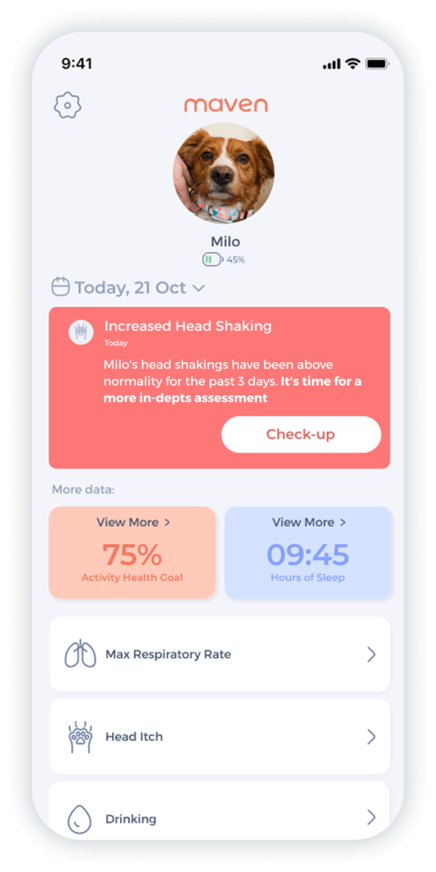
Monitor heart rate, respiratory rate, activity & rest, drinking, itch behavior.
The Maven pet health tracker monitors your dog continuously, building a personalized baseline and alerting you when something shifts. The Maven pet health app combined with a dog activity tracker can help detect pacing, restlessness or unusually low activity. The dog sleep tracker identifies disrupted rest or difficulty settling. Heart rate and resting respiratory rate trends provide objective insight into physiological stress, even when a dog appears outwardly calm. This data supports more informed conversations with vets and behaviorists.
FAQ (Vet-Reviewed)
The most common signs include panting, pacing, trembling, hiding, excessive barking or whining, and destructive behavior. Subtler signs include lip licking, yawning, dilated eye pupils and low body posture. These may occur around a specific trigger or throughout the day in dogs with generalized anxiety.
Physical stress symptoms include increased heart rate, faster breathing, panting, excessive drooling and sometimes urination or defecation. Behaviorally, a stressed dog may refuse food, withdraw, sleep poorly or become restless. Chronic stress can affect health and quality of life over time.
Build a predictable routine, use positive reinforcement to reward calm behavior and work with a qualified trainer to gradually desensitize your dog to triggers. Avoid punishment, which worsens anxiety. Veterinary-prescribed medication can support behavioral progress.
Common causes include separation, loud noises, unfamiliar people or dogs, new environments and lack of socialization as a puppy. Pain, illness and endocrine conditions can also cause or worsen anxiety. A vet check is always a useful first step when anxious behavior appears or changes.
Speak to your vet if the anxiety started suddenly, is getting worse, seems out of proportion to the trigger, or is affecting your dog’s daily life. Your vet can rule out medical causes and discuss medication options, which are often used alongside behavioral support.
Conclusion
The signs of anxiety in dogs are often visible before a problem becomes serious – in body language, behavioral shifts and changes to daily patterns. Research shows that anxious behavior is far more common than many owners realise, but it is also very manageable when recognised early and approached with consistency, appropriate behavioral support and veterinary guidance where needed.
Maven Pet focuses on improving the quality of life of our pets with technology, using artificial intelligence (AI) to enable proactive pet care. By accurately collecting and monitoring pet data 24/7 and flagging any irregularities, Maven Pet empowers pet parents and veterinarians to stay ahead of potential health issues, ensuring the well-being and longevity of our beloved companions.