
DCM / Heart Disease in Dogs: What Vets Look For & What to Monitor at Home

When there is a suspicion or your dog has been diagnosed with a heart condition, it can feel overwhelming, and you may find yourself needing additional answers. Understanding dilated cardiomyopathy (DCM) and heart disease in dogs and what it means for your pet’s daily life is key to staying confident. This guide explains what veterinarians monitor, what causes the condition, and how you can track important changes at home to support your dog’s long-term health.
What does DCM Heart Disease in Dogs Mean?
DCM heart disease in dogs refers to a condition where the heart becomes enlarged and less effective at pumping blood. In dilated cardiomyopathy, early signs can be subtle, including changes in breathing, heart rate, or energy. Monitoring these metrics at home helps detect progression earlier and supports better outcomes alongside veterinary care.
Key Takeaways
- DCM heart disease in dogs often develops gradually, with subtle early signs
- Early detection improves quality of life and management outcomes
- Vets rely on diagnostic tools, but daily changes often happen at home
- Monitoring heart rate, breathing, and activity provides critical insights
- Consistent tracking can support earlier intervention and treatment adjustments
What Is DCM Heart Disease in Dogs?

DCM dog heart disease describes a condition where the heart muscle weakens, and the chambers become dilated, reducing its ability to pump blood efficiently. This leads to poor circulation and can eventually cause fluid buildup in the lungs or abdomen. Over time, this impacts oxygen delivery to the body and can lead to fatigue, coughing, or breathing difficulties.
Some dogs may show no symptoms early on, which is why awareness and monitoring are so important.
+11%
Heart rate rise from
normal aging alone
2.5×
More likely chronically
elevated with heart issue
+8.9 bpm
Typical jump with
a known heart condition
Normal aging nudges a dog’s resting heart rate up gradually, about 11% higher by the advanced senior years. A known heart condition does more: affected dogs run up to 8.9 bpm faster than healthy dogs the same size, and are 2.5 times more likely to sit chronically elevated rather than just having the occasional high reading. Aging explains a little of the rise. A heart condition explains a lot more of it.
Source: Maven Pet internal data, 2,382 dogs tracked continuously.
See how Maven tracks heart rate→What Causes Dilated Cardiomyopathy in Dogs?
The causes of dilated cardiomyopathy in dogs can vary, and in many cases, multiple factors may be involved.
Common causes include:
- Genetic predisposition (e.g., Dobermans, Boxers, Great Danes, Cocker Spaniels)
- Nutritional deficiencies, particularly taurine
- Underlying medical conditions, such as infections
While not all cases of DCM heart disease in dogs are preventable, understanding risk factors helps guide early screening and monitoring.
“I got the Maven sensor for my 14-year-old Chihuahua mix with heart and trachea issues. It gave me back peace of mind – I can track her RRR, BPM, drinking, and activity anytime and know instantly if something’s wrong. Highly recommend!”

★★★★★
Chiara De Luca
Titti
Early Signs Vets Watch For
Veterinarians are trained to detect signs of DCM heart disease in dogs, often before symptoms become obvious.
Early warning signs include:
- Changes in the heart auscultation
Increased resting respiratory rate - Reduced activity or lethargy
- Fatigue after mild exercise
- Coughing
- Changes in appetite
- Restlessness or disrupted sleep
Dilated cardiomyopathy often develops gradually, and the earliest signs may be subtle changes in breathing, heart rate, or energy levels. Early recognition of changes helps us intervene sooner.” — Sara Leitão, DVM, Veterinarian at Maven Pet
These early indicators are critical in dilated cardiomyopathy in dogs, as timely intervention can slow progression.
How DCM Is Diagnosed
Diagnosing DCM heart disease in dogs requires a combination of clinical evaluation and advanced testing.
Common diagnostic methods include:
- Physical examination (listening for murmurs or irregular rhythms)
- Echocardiogram (ultrasound of the heart)
- Electrocardiogram (ECG)
- Chest X-rays
- Blood tests
These tools help confirm dilated cardiomyopathy in dogs and assess severity, guiding treatment decisions.
Living With a Dog Diagnosed With DCM

According to Cornell Vet prognosis of DCM heart disease in dogs is variable, depending upon breed and status at presentation. It doesn’t mean immediate decline. Many dogs live meaningful, comfortable lives with proper care.
Management typically includes:
- Medications to support heart function
- Dietary adjustments
- Controlled exercise routines
- Regular veterinary check-ups
Consistency is essential in managing dilated cardiomyopathy in dogs, especially as the condition progresses over time.
What Dog Parents Can Monitor at Home
One of the most powerful ways to support DCM dog heart disease is through daily observation and tracking.
Key metrics to monitor include:
- Resting respiratory rate (RRR)
- Heart rate trends
- Activity levels
- Sleep patterns
- Energy and behavior changes
Subtle shifts in these areas often appear before clinical symptoms worsen in dilated cardiomyopathy in dogs. Tracking them consistently provides valuable data between vet visits.
How Maven Helps Track Heart Health Changes
Monitoring DCM heart disease in dogs at home becomes significantly easier with continuous tracking tools.

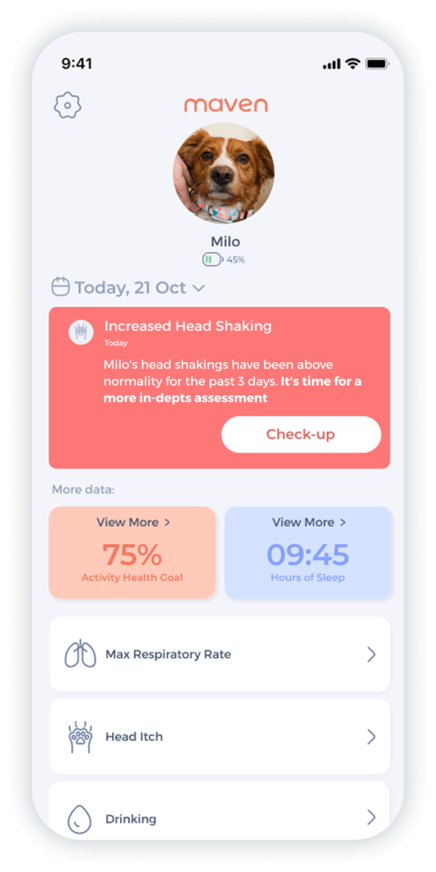
Monitor heart rate, respiratory rate, activity & rest, drinking, itch behavior.
Benefits of using the Maven pet health tracker:
- Heart rate
- Activity levels
- Rest patterns
- Resting respiratory rate
- Scratching and water intake
Dogs with dilated cardiomyopathy in dogs may show:
- Rising resting respiratory rate
- Elevated heart rate trends
- Reduced activity
- Increased rest
The Maven dog health tracker establishes a personalized baseline and alerts you to meaningful changes, helping detect early signs of progression and supporting ongoing disease management.
FAQ (Vet-Reviewed)
Dilated cardiomyopathy in dogs is a condition where the heart becomes enlarged and weakened, reducing its ability to pump blood effectively.
Breeds commonly associated with DCM heart disease in dogs include Dobermans, Boxers, Great Danes, and Cocker Spaniels.
You can track breathing rate, heart rate with a dog heart rate tracker, activity, and behavior changes. Consistent monitoring helps detect progression in dogs with dilated cardiomyopathy.
Life expectancy varies depending on severity and treatment. Early detection and monitoring improve outcomes in dogs with DCM.
Contact your vet if you notice increased breathing rate, fatigue, coughing, or sudden behavior changes linked to dilated cardiomyopathy in dogs.
Conclusion
Understanding DCM heart disease in dogs empowers you to take an active role in your dog’s care. While veterinary diagnostics are essential, daily monitoring provides a clearer picture of how your dog is doing between visits.
By recognizing early signs and tracking meaningful changes, especially in dilated cardiomyopathy in dogs, you can support earlier intervention and better long-term management. Small observations can make a significant difference in your dog’s quality of life.
Maven Pet focuses on improving the quality of life of our pets with technology, using artificial intelligence (AI) to enable proactive pet care. By accurately collecting and monitoring pet data 24/7 and flagging any irregularities, Maven Pet empowers pet parents and veterinarians to stay ahead of potential health issues, ensuring the well-being and longevity of our beloved companions.