Dog Drinking Excessive Water: Causes & When to Worry (Vet Verified)

If you’ve noticed your dog drinking excessive water lately, you’re probably wondering whether it’s just a hot day or something more. Most of the time it’s harmless, but a sustained increase in thirst is one of the earliest signs of change.
Dog Drinking Excessive Water – The Short Answer
A dog drinking excessive water, known medically as polydipsia, can result from heat, exercise, diet, or certain medications, but a persistent, unexplained increase from your dog’s normal pattern can also point to conditions like diabetes, kidney disease or Cushing’s disease. A single warm day rarely matters. A sustained change is worth a call to your vet.
Key Takeaways
- Polydipsia is generally defined as water intake greater than 100 ml/kg per day, though normal intake varies between dogs
- Common causes of dog increased thirst include heat, exercise, diet and certain medications
- Increased thirst is often driven by increased urination first, since the two are closely linked
- Persistent or unexplained increases can signal conditions such as diabetes, kidney disease or Cushing’s disease
- Never restrict a dog’s water access without veterinary guidance, even if you suspect a dog is drinking too much water
What Does Excessive Drinking Mean in Dogs?
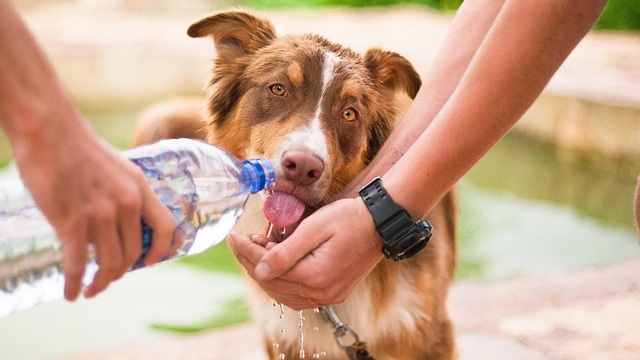
Water intake naturally varies from dog to dog. Healthy dogs typically drink around 40 to 60 ml per kilogram of body weight per day, a range consistent with the 50 to 60 ml/kg/day reported in WSAVA World Congress proceedings, shifting with diet, temperature and activity. A dog is officially considered polydipsic once intake exceeds 100 ml/kg per day.
A fixed cutoff isn’t always useful, though, since some healthy dogs naturally drink more or less than average. A meaningful change from your dog’s usual pattern is often more informative than any single number.
What Causes Increased Thirst in Dogs?
Increased thirst can come from ordinary, temporary factors or an underlying medical condition:
- Heat and activity: warmer weather or a more active day naturally increases water needs
- Diet: dry food contains less moisture than wet food, and high-salt diets can increase thirst
- Medications: glucocorticoids, phenobarbital and diuretics increase water intake, and anticonvulsants can also inhibit the hormone that helps the body conserve water
- Medical conditions: pain, fever, urinary tract infections, diabetes mellitus, kidney disease, Cushing’s disease, Addison’s disease, pyometra, certain cancers, and liver disease commonly increase water intake, with kidney disease, diabetes, and Cushing’s the most frequent culprits
“I got the Maven sensor for my 14-year-old Chihuahua mix with heart and trachea issues. It gave me back peace of mind – I can track her RRR, BPM, drinking, and activity anytime and know instantly if something’s wrong. Highly recommend!”

★★★★★
Chiara De Luca
Titti
What Is Polydipsia in Dogs?
Polydipsia simply means drinking more than normal, closely tied to polyuria (producing more urine). Vets often call the combination “PU/PD” (polyuria/polydipsia). The two are flip sides of the same condition, since what goes out must be replaced by what goes in. In most cases, increased urination happens first, and thirst follows to compensate.
Less commonly, a dog drinks more first, and the kidneys respond by producing more urine to match. One recognized but rare cause is psychogenic polydipsia, a compulsive drinking behavior seen in young, nervous or anxious dogs, sometimes triggered by a stressful event.
Can a Dog Drink Too Much Water?
Until it’s found why the water intake increased, it should be assumed the dog needs the extra water and no restriction should be made. It can cause dehydration or electrolyte imbalances.
That said, in rare cases of psychogenic polydipsia, persistent compulsive drinking can lead to dangerously low blood sodium, with symptoms including weakness, lethargy, tremors, and seizures. This is uncommon, but suspected excessive drinking should still be evaluated rather than managed through water restriction alone.
When Is Increased Drinking a Sign of Illness?
Increased thirst more likely reflects an underlying condition when paired with other changes, such as:
- Needing to go outside more often, or accidents indoors
- Noticeably larger volumes of urine
- Unexplained weight loss or increased appetite
- Lethargy, vomiting or a general decline in energy
Because chronic kidney disease, diabetes mellitus and Cushing’s disease account for many of the more common causes of a dog drinking too much water, these are usually among the first conditions a vet will screen for.
When Should You Call Your Veterinarian?
If increased drinking has lasted more than a few days, keeps recurring, or comes with any signs above, schedule an evaluation rather than wait it out. Diagnosis typically starts with a history and physical exam, followed by urinalysis, a complete blood count and a biochemistry profile to narrow down the cause. Keep water freely available in the meantime rather than restricting it.
How Maven Helps
“An increase in thirst can be easy to overlook because drinking is a normal behavior. What matters is a persistent change from your dog’s usual pattern, particularly when increased drinking occurs alongside changes in urination, appetite, activity or rest.” – Joana Babo, DVM, Veterinarian at Maven Pet
Because what counts as excessive depends on your own dog’s normal pattern, continuous tracking is more useful than a single observation. The Maven dog drinking tracker monitors water intake continuously, building a personalized baseline and alerting you to sustained changes, rather than relying on occasional glances at the bowl.

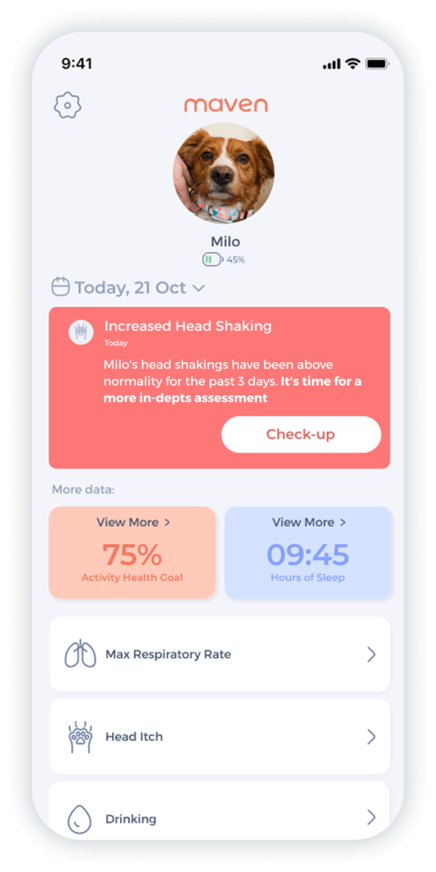
Monitor heart rate, respiratory rate, activity & rest, drinking, itch behavior.
Maven also tracks activity, helping distinguish a temporary rise in drinking after an active day from a persistent, unexplained change. Rest monitoring adds context when drinking increases alongside lethargy or disrupted sleep, while heart rate trends and the dog respiratory rate tracker add physiological signals. Knowing your dog’s normal resting respiratory rate helps you recognize a genuine shift.
Maven doesn’t diagnose polydipsia or its cause, like dog diabetes or dog kidney disease. Its value is in giving you and your vet objective, continuous data to recognize changes early. Pairing the dog health tracker with the pet health app makes this easy to share at your next visit, and the pet health tracker is built around this kind of long-term pattern recognition.
FAQ (Vet-Reviewed)
Healthy dogs typically drink around 40 to 60 ml per kilogram of body weight per day, varying with diet, temperature and activity level.
It often means increased urination is happening first, with thirst increasing to compensate. Either way, a sustained shift is worth mentioning to your vet.
Causes range from heat, exercise and diet, to medications and conditions such as diabetes, kidney disease, Cushing’s disease and urinary tract infections.
Yes, though it’s uncommon. In rare cases of psychogenic polydipsia, excessive intake can lead to dangerously low blood sodium, so persistent increases should be evaluated rather than managed at home.
If the increase lasts more than a few days, keeps recurring, or comes with symptoms like frequent urination, weight loss or lethargy, it’s time for a veterinary evaluation.
Conclusion
A dog drinking excessive water is common, and often has a simple, temporary explanation like heat, activity or a change in diet. But since increased thirst is also one of the earliest signs of several underlying conditions, a persistent or unexplained change from your dog’s normal pattern is worth taking seriously. Tracking your dog’s baseline over time makes it easier to know when a change is meaningful and when to call your vet.
Maven Pet focuses on improving the quality of life of our pets with technology, using artificial intelligence (AI) to enable proactive pet care. By accurately collecting and monitoring pet data 24/7 and flagging any irregularities, Maven Pet empowers pet parents and veterinarians to stay ahead of potential health issues, ensuring the well-being and longevity of our beloved companions.