Dog Not Eating: Causes, Signs & When to Worry (Vet Verified)

A dog skipping a meal is often nothing to worry about. But when a dog won’t eat for more than a day, or refuses food alongside other changes, it can be an early sign something isn’t right. Knowing the difference helps you decide when to watch and when to call your vet.
Dog Not Eating – The Short Answer
A dog not eating can result from mild causes like stress or a routine change, or from more serious issues like dental pain, gastrointestinal disease, or systemic illness. A day or two of reduced appetite with normal hydration usually isn’t urgent, but ongoing refusal, especially with vomiting, lethargy, or weight loss, calls for veterinary evaluation.
Key Takeaways
- Appetite loss ranges from true anorexia (no interest in food) to pseudo-anorexia (wanting to eat but unable due to physical limitations)
- Common causes include stress, dental disease, pain, GI problems, and systemic illness
- A dog not eating but drinking water can still have a serious underlying issue
- Recurring or worsening appetite loss often points to chronic illness
- Appetite changes are most meaningful alongside other shifts in activity, rest, and behavior
Why Is My Dog Not Eating?

Hunger is physically driven, but appetite is mentally driven, which is why the two don’t always match. Vets describe a spectrum of reduced intake: anorexia (no voluntary eating), hyporexia (eating some food, but not enough to maintain weight), and dysrexia (a selective pattern, like losing interest in a food after a few days). There’s also a key distinction between true anorexia and pseudo-anorexia: a dog with true anorexia has no interest in food, while one with pseudo-anorexia is hungry but can’t eat due to pain or difficulty chewing or swallowing.
What Are the Most Common Causes of Loss of Appetite in Dogs?
Reasons why a dog won’t eat range from behavioral to medical and urgent:
- Stress or routine changes: moving home, a new pet or person, or the absence of a family member
- Dental and oral pain: periodontal disease, stomatitis, mouth injuries, and oral tumors
- Pain elsewhere: chronic pain, such as arthritis, can interfere with a dog’s willingness to reach its food bowl
- Gastrointestinal issues: nausea, a GI blockage, or a stomach ulcer
- Systemic disease: kidney, liver, or heart disease, hypothyroidism, Addison’s disease, and cancer, with heart disease specifically tied to worsening disease or medication side effects
- Medications or age: some treatments reduce appetite as a side effect, and older dogs may eat less due to slower metabolism or cognitive decline
“I got the Maven sensor for my 14-year-old Chihuahua mix with heart and trachea issues. It gave me back peace of mind – I can track her RRR, BPM, drinking, and activity anytime and know instantly if something’s wrong. Highly recommend!”

★★★★★
Chiara De Luca
Titti
Why Is My Dog Not Eating but Drinking Water?
A dog can lose interest in food while still drinking normally, since hunger and thirst are controlled by different mechanisms. Continued drinking is reassuring for hydration, but doesn’t rule out a medical cause. Some systemic diseases that reduce appetite, like kidney disease, also alter thirst. If your dog eats little but drinks normally, it’s still worth tracking how long the pattern lasts.
How Long Can a Dog Go Without Eating?
A couple of days is generally not a big problem as long as your dog maintains hydration and recovers promptly, but recurring or worsening loss of appetite often points to chronic illness rather than a passing issue. As a guideline, if your dog hasn’t eaten for more than 24 to 48 hours, schedule a vet visit, since longer refusal raises the risk of dehydration and complications. Don’t wait for the appetite to disappear completely before seeking help – a poor appetite already means a dog is unwell.
What Other Signs Should I Watch For?

Appetite loss is more concerning alongside vomiting, diarrhea, lethargy, reduced activity, sudden weight loss, changes in drinking or bowel habits, or coughing and breathing changes. These accompanying symptoms may indicate a more serious health issue and warrant contacting your vet sooner rather than later.
When Should I Call the Veterinarian?
Any decrease in appetite is a sign that should be taken seriously, since it may indicate a serious condition. Call your vet if your dog hasn’t eaten for more than 24 to 48 hours, shows a gradual decline over days or weeks, exhibits other symptoms (e.g. vomiting, diarrhea, cough), or has a known condition like heart or kidney disease. When in doubt, involve your vet early rather than wait.
How Maven Helps
“A change in appetite is often one of the earliest signs that something is different with a dog. Pay attention not only to whether your dog eats, but also to changes in activity, rest, drinking, and other daily behaviors, as these patterns can help your veterinarian understand what may be happening.” – Joana Babo, DVM, Veterinarian at Maven Pet
Maven doesn’t measure food intake or diagnose why a dog isn’t eating, but it provides surrounding context that makes an appetite change easier to interpret. The Maven pet health tracker continuously monitors your dog and builds a personalized baseline, so meaningful deviations stand out.

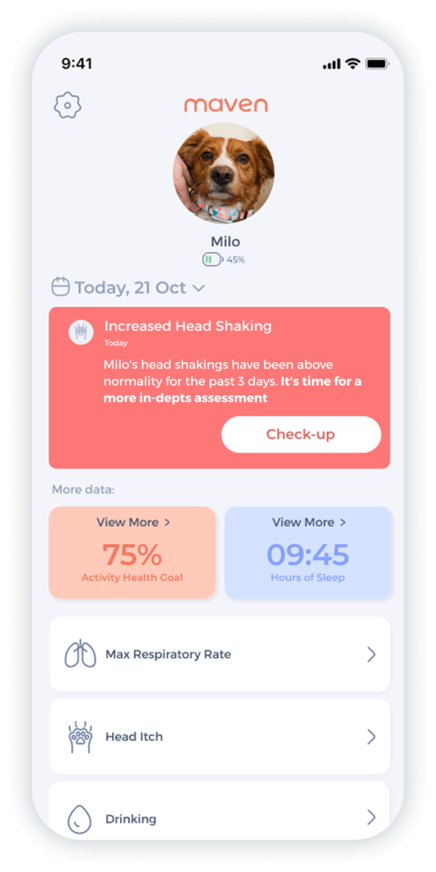
Monitor heart rate, respiratory rate, activity & rest, drinking, itch behavior.
The dog activity tracker can flag reduced movement or lethargy that can come along with appetite loss, while rest monitoring may show disrupted sleep and restlessness. Heart rate trends and the dog respiratory rate tracker add physiological context. Knowing your dog’s normal resting respiratory rate makes a real change easier to spot. Since a dog not eating but drinking water is a common concern, the dog drinking tracker flags whether intake is rising, falling, or steady. Maven also monitors scratching, adding context when discomfort may affect behavior.
Pairing the dog health tracker with the pet health app helps you and your vet see whether a refusal to eat is isolated or part of a broader pattern.
FAQ (Vet-Reviewed)
Reasons range from mild causes like stress or a disliked food, to medical causes like dental pain, nausea, or systemic illness.
A day or two with normal hydration usually isn’t an emergency, but appetite loss over 24 to 48 hours, or is paired with other abnormal symptoms or is recurring, should be evaluated.
Hunger and thirst are controlled separately, so a dog can lose interest in food while drinking normally. This is reassuring for hydration but doesn’t rule out an underlying cause.
Worry sooner if appetite loss lasts more than 24 to 48 hours, keeps recurring, or comes with other symptoms like vomiting, diarrhea or lethargy.
Note how long it’s been going on and whether other symptoms are present, then contact your vet if it doesn’t resolve within a day or two.
Conclusion
A dog not eating can mean anything from a passing blip to an early sign of illness, and the difference often comes down to duration and what else is happening alongside it. Rather than treating loss of appetite as an isolated symptom, look at the full picture: activity, rest, drinking, and other changes in normal patterns. When something feels off or persists, involving your vet early gives your dog the best chance at a quick recovery.
Maven Pet focuses on improving the quality of life of our pets with technology, using artificial intelligence (AI) to enable proactive pet care. By accurately collecting and monitoring pet data 24/7 and flagging any irregularities, Maven Pet empowers pet parents and veterinarians to stay ahead of potential health issues, ensuring the well-being and longevity of our beloved companions.